

AI Tools Hub —
The Full Directory
The most comprehensive, human-curated guide to artificial intelligence software in 2026. Covering 18 categories, 200+ tools, tier rankings, honest comparisons, and the data you need to choose wisely — not just click a list.
Why this directory exists — and how to use it
There are now more than 90,000 AI-tagged products catalogued across the major directories. That number is simultaneously impressive and useless. Most tools are noise. Many are wrappers around the same three APIs. Some will be sunset before you finish onboarding your team.
This directory is different. Every tool below has been tested, cross-referenced with user reviews from G2, Product Hunt, and Hacker News, and scored against three criteria: genuine capability, actively maintained, and honest value for money. The tier ratings (S / A / B) follow the logic used by experienced practitioners — not sponsored rankings.
How to read tier ratings
S-tier — tools that most knowledge workers should seriously consider. A-tier — excellent for their specific niche or use case. B-tier — solid, often free options worth knowing about but with notable trade-offs.
The 2026 AI landscape: what the numbers actually tell us
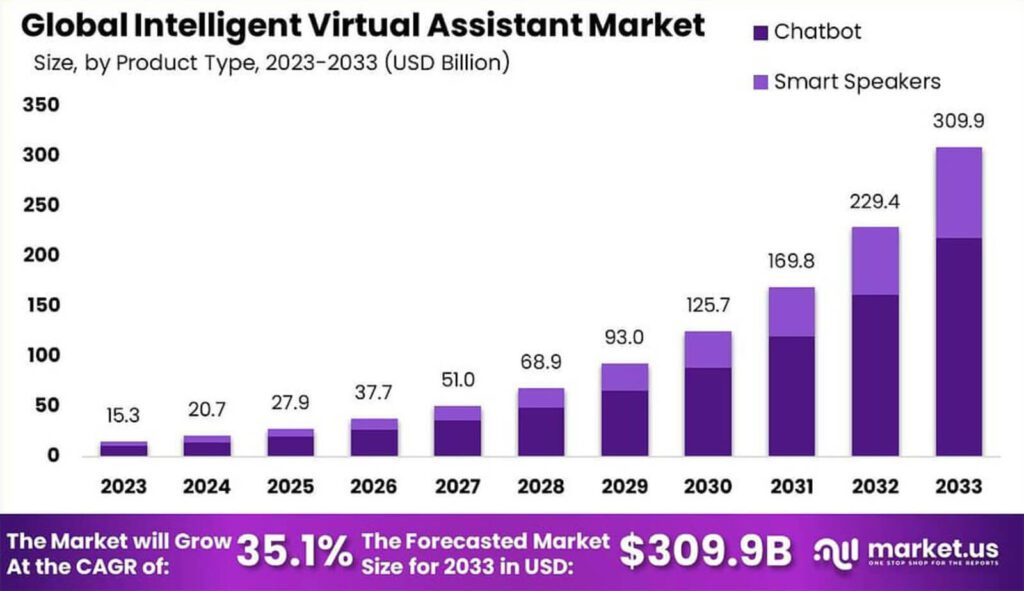
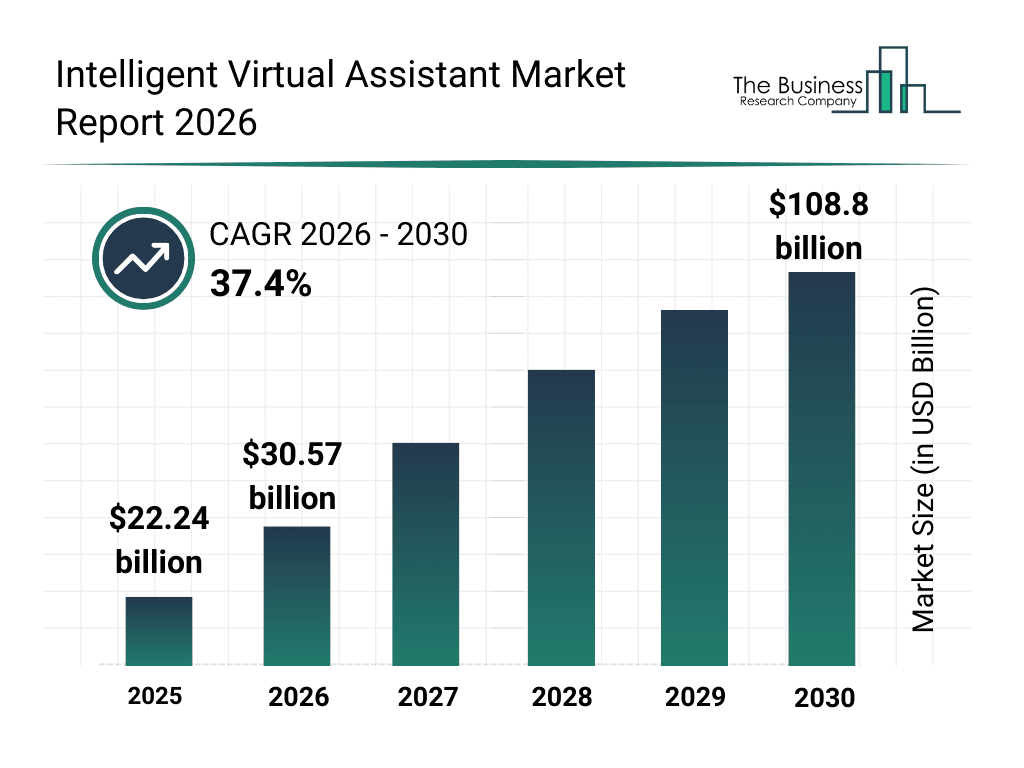
The AI market crossed $514 billion in global revenue in 2026, up from $391 billion in 2025 — a 31% year-on-year jump according to Resourcera’s AI Statistics. That growth rate looks explosive until you remember that most of it is infrastructure investment, not tooling. The interesting story is what’s happening at the user layer.
“Generative AI adoption reached 53% of the population within three years — faster than the personal computer or the internet, though the pace varies by country and correlates strongly with GDP per capita.” — Stanford HAI AI Index 2026, May 2026
The practical implication for anyone choosing tools: the best AI tools in 2026 are not standalone experiments — they are embedded workflows. Reasoning is the new default (not a premium toggle), agents handle multi-step work, and the question is no longer “should we use AI?” but “which stack integrates best with what we already do?”
The ROI reality check
Despite $3.70 average ROI per dollar invested, 70–85% of AI initiatives still fail to meet expectations, and 42% of companies abandoned most AI projects in 2025 (up from 17% in 2024). The gap isn’t the technology — it’s implementation, governance, and change management.
These are the daily-driver tools — the ones you open before anything else. The gap between top performers has narrowed dramatically in 2026: GPT-5.4, Claude Opus 4.7, and Gemini 3.1 Pro now trade blows on most benchmarks. Your choice here should be driven by workflow fit, not benchmark obsession.
Editor’s pick: Claude — for structured thinking and long-form work
Anthropic’s Claude Sonnet 4.6 and Opus 4.7 consistently deliver the most nuanced, well-structured outputs for complex writing and analysis tasks — with the lowest hallucination rate among frontier models.
The writing tool category is the most crowded in AI. The majority are GPT-4 wrappers with custom prompts and a subscription. The tools worth paying for are those that add genuine workflow value — brand voice training, SEO integration, long-form consistency, or deep collaborative editing.
The coding category saw the most dramatic structural change in 2026. 84% of developers now use AI coding tools, with 51% using them daily. But the news isn’t entirely positive: independent analysis found approximately 1.7× more issues in AI-coauthored pull requests — the speed gain is real, but review processes have not kept pace.
Critical finding for engineering teams
CodeRabbit’s December 2025 report found ~1.7× more issues in AI-coauthored PRs. Teams shipping AI-written code without adapted review processes are accruing security debt. Always pair AI coding tools with automated scanning and governance policies.
| Tool | Free Tier | Agent Mode | On-Premise | Best For | Approx. Price |
|---|---|---|---|---|---|
| GitHub Copilot | ✓ 2,000/mo | ✓ | ✗ | Autocomplete, teams | $10–$19/user/mo |
| Cursor 3 | ✓ Limited | ✓✓ Best | ✗ | Full IDE, agentic | $20/mo |
| Claude Code | ✗ | ✓ | ✗ | Codebase analysis | Usage-based API |
| Lovable | ✓ | ✓ Full build | ✗ | No-code app creation | $25/mo |
| Tabnine | ✓ | ✗ | ✓ | Privacy-first teams | $12/user/mo |
The companies extracting real ROI from AI in 2026 have one thing in common: they treat AI outputs as draft material, not final product. They invest 70% of AI resources in people and processes, not technology. Speed plus oversight beats speed alone — every time.
The 2026 AI Tools Selection Framework
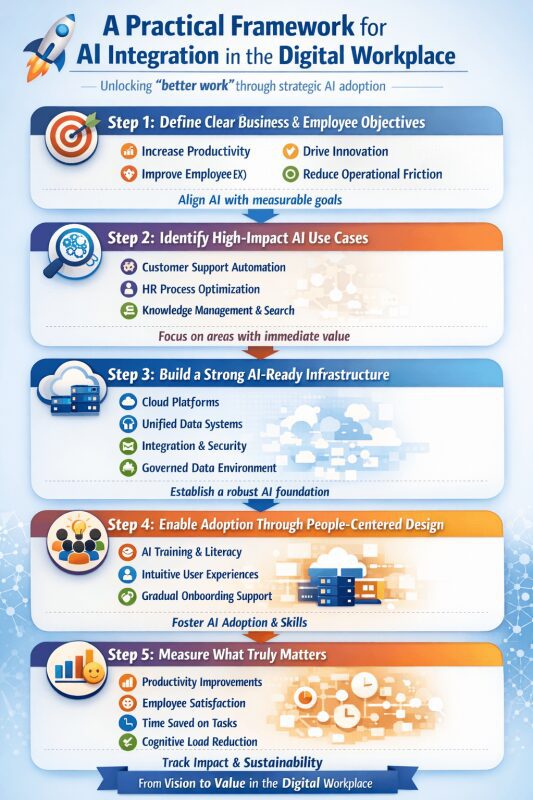
Before choosing any AI tool: (1) Map it to a specific, measurable workflow — not “we’ll use AI generally.” (2) Audit your data governance requirements — many tools are cloud-only. (3) Evaluate integration depth with your existing stack, not standalone features. (4) Budget for the human process changes, not just the subscription. The tools that succeed in production are those that replace the most tedious 20% of a workflow, not the most glamorous 80%.
Education, Legal, Health & Specialized Tools
The categories below are as important as those above — they just don’t require the same depth of comparison for most readers. We’ve highlighted the definitive pick in each.
| Category | Top Pick | Why It Wins | Tier | Pricing |
|---|---|---|---|---|
| Education / Learning | Khanmigo (Khan Academy) | Socratic AI tutor — guides, never just gives answers. Free for students in most regions. | S-tier | Free / Donation |
| Education / Language | Duolingo Max | GPT-5.4 powered roleplay and explanation. 40+ languages. Most effective mobile language learning. | S-tier | Freemium |
| Legal Research | Casetext CoCounsel | GPT-4 trained on US legal corpus — contract review, deposition prep, legal research at attorney speed. | S-tier | $500+/mo |
| Financial Analysis | Bloomberg Terminal AI | Bloomberg GPT + AI document summaries now integrated in the terminal. Industry standard. | S-tier | ~$2,000/mo |
| Healthcare Documentation | Nuance DAX Copilot | Ambient AI clinical documentation — physicians reported up to 83% less note-writing time. | S-tier | Enterprise |
| Sales Intelligence | Gong Revenue AI | Analyzes sales calls, forecasts deals, and coaches reps. The de facto standard for B2B sales teams. | S-tier | Enterprise |
| Customer Support AI | Intercom Fin AI | Resolves 50%+ of support queries autonomously. Trained on your knowledge base. Human-escalation built in. | S-tier | $0.99/resolution |
| Presentation AI | Gamma | Converts notes and outlines into polished presentations, docs, and webpages. Remarkable output quality. | S-tier | Freemium |
| AI Search (Consumer) | Perplexity AI | Cited, current, concise. Fastest adoption of any search product since Google. See Research section. | S-tier | Freemium |
| AI Email | Superhuman AI | AI email triage, instant summaries, and draft generation. Fastest email client for power users. | A-tier | $30/mo |
How to choose the right AI tool — an honest framework
Most “how to choose AI tools” guides are disguised affiliate directories. This section isn’t. These are the four questions that separate tools that compound value from tools that waste time.
1. What specific decision or task does this replace or accelerate?
Vague intent produces vague ROI. “We should use AI for content” becomes a graveyard of Jasper subscriptions. “We need to produce 12 SEO blog posts per month, currently taking 48 analyst-hours, and we’ll measure success by organic traffic lift at 6 months” — that’s a real project with a tool that fits (Surfer + Writesonic, or Claude + a custom brief template).
2. What is the cost of a hallucinated output?
AI tools in 2026 still hallucinate. 47% of enterprise AI users made at least one major decision based on hallucinated content in 2024. In a blog post, a hallucinated statistic is embarrassing. In a legal brief or medical context, it is catastrophic. Match your review process intensity to the stakes, not to your enthusiasm for the technology.
3. Who owns the output and the data?
Read the terms of service. Most major AI providers use your prompts and outputs for model training unless you opt out (or pay for Enterprise tiers). For client work, proprietary strategy, or regulated data — this isn’t optional due diligence, it’s legal necessity.
4. What does “failure” look like in 90 days?
Set a concrete, measurable outcome before signing up. If you can’t define what failure looks like, you’ll be unable to distinguish a failed implementation from a successful one — and you’ll renew subscriptions you shouldn’t.
The shortcut decision matrix
If you have 10 minutes: start with Claude for writing/analysis, Perplexity for research, GitHub Copilot for code, Canva AI for visuals, and Fathom for meetings. These five cover 80% of knowledge worker AI needs and have the best free-tier value in 2026.
You are a solo professional
Under $50/month combined. Covers writing, research, and visual content for most freelancers and consultants.
You run a content team
SEO-optimized content at scale. Surfer provides the brief, AI writes the draft, human edits for E-E-A-T.
You lead a software team
Agent-driven development (Cursor), ambient autocomplete (Copilot), deep analysis (Claude Code). Pair all three with a governance policy.
You run enterprise operations
Governance-first AI embedded in the tools your employees already use. Expensive but the ROI case is clear at 100+ users.
A final word on the pace of change
In the time it took to compile this directory, approximately 200 new AI tools launched. Most will not exist in 12 months. The ones that will survive are those solving a real, specific problem better than a human doing it manually — not those chasing hype cycles or building wrappers thinner than the margin of their pricing.
The market is maturing. The Stanford HAI AI Index notes that model performance on real-world agentic tasks jumped from 20% to 77.3% in a single year. That trajectory will continue. The tools you adopt today should be evaluated not just on current capability but on the roadmap credibility of the team behind them.
We update this directory regularly. If you find a tool missing, outdated, or incorrectly categorized, the correct resource for the latest information is always the tool’s own documentation and recent independent reviews on G2 and Product Hunt rather than any static guide — including this one.
Stay current with our weekly AI tools digest
We track product launches, pricing changes, and shutdowns across all major AI tool categories. Subscribe at trendix.tech/newsletter for weekly updates — no noise, just signal.
Explore more on Trendix.tech
In-depth guides, comparisons, and news from the AI tools ecosystem
Best AI Tools for Marketing Teams in 2026
NotebookLM for Researchers: A Deep Dive Into the Most Underused AI Tool
The Voice & Video AI Revolution:Everything That Matters in 2026
No-Code Automation: Build, Connect, Scale —Without Touching a Line of Code
Google Workspace AI Tools for Academia: Full 2026 Breakdown
AI Meeting Intelligence Tools
Best Productivity Tools in 2026: The Full Stack Guide
Perplexity Comet & the AI Personal Computer: Everything Explained
Radiology AI in Production: Distribution Shift, Bias, and Why Benchmarks Don’t Tell the Full Story