


ChatGPT vs Claude vs Gemini vs Copilot vs Perplexity vs Grok: The Honest 2026 Verdict
Six months of daily testing, real benchmark data, and zero brand allegiances. Here’s which AI tool actually wins — and for which job — right now.
The $20-a-month question has become genuinely hard to answer. In 2023, ChatGPT was the obvious choice for nearly everyone. In 2026, that’s flatly no longer true — and picking the wrong tool for your workflow is an actual productivity tax you pay every single day.
This comparison started because we got tired of reading articles that either crown ChatGPT by default (because it’s famous) or swing to whatever tool is newest (because novelty gets clicks). Neither approach is useful. So we spent the better part of six months running the same prompts through all six major AI assistants, tracking every major model release, and cross-referencing results against independent benchmark organizations like SWE-bench, GPQA Diamond, Vectara’s hallucination leaderboard, and the LMArena Elo rankings.
What we found: there isn’t one winner. There are six tools that are each genuinely best at something specific. The smartest move in 2026 isn’t loyalty to one platform — it’s knowing which tool to reach for based on what you’re trying to accomplish right now.
The 2026 AI Landscape — What Actually Changed
A year ago, most comparisons still treated this as a two-horse race between ChatGPT and everything else. That framing is outdated. The current landscape is genuinely multi-polar, and a few things happened in the past twelve months that reshaped the conversation entirely.
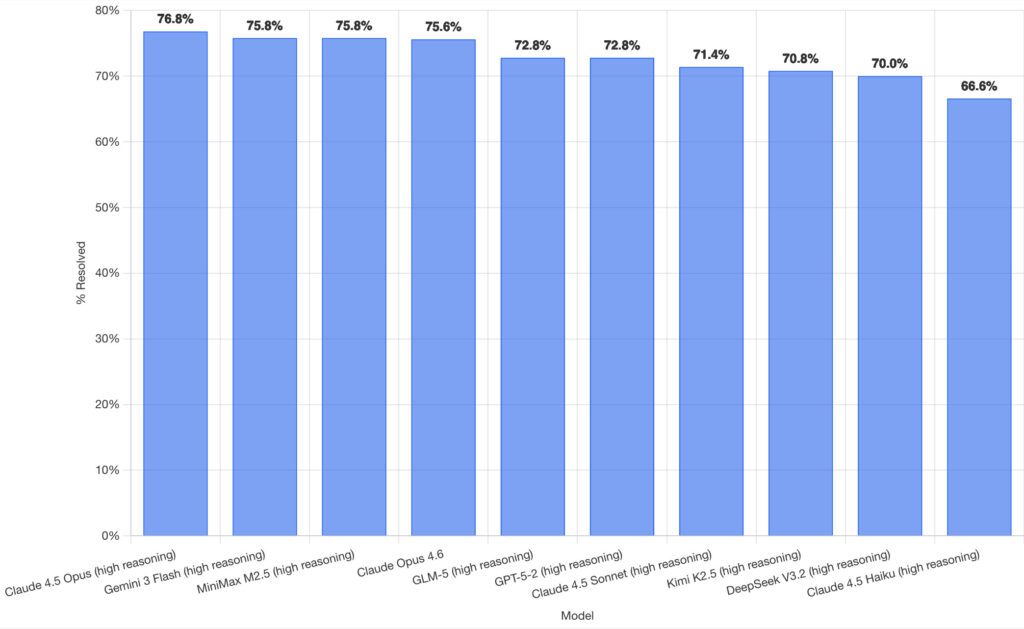
The benchmark gap closed. Six frontier models now score within 1.3 percentage points of each other on SWE-bench Verified — the most respected real-world coding benchmark. The performance differences that exist are real but narrow, which means ecosystem fit, context window size, and pricing matter more than they used to.
Context windows got enormous. A 200K-token context window — which felt like science fiction in 2023 — is now the floor for premium models. Gemini 3.1 Pro’s standard window is 1M tokens. Grok 4’s context window sits at 2M. This means you can feed entire codebases, legal documents, or manuscript drafts into a single conversation without worrying about truncation.
Agentic AI became real. All six tools now offer some form of autonomous action — browser control, file management, code execution, API calls. This isn’t the “soon” feature it was eighteen months ago. Claude Code is running production bug fixes. ChatGPT’s Codex handles DevOps tasks in the terminal. Gemini Deep Research synthesizes 48-page reports on demand. The category has genuinely matured.
Open-source caught up fast. DeepSeek V3.2, Llama 4 Maverick, and Qwen 3 now offer frontier-adjacent performance at a fraction of the cost or entirely for free. For organizations willing to self-host, the commercial model subscriptions are becoming optional rather than mandatory. We won’t cover them in depth here — this comparison focuses on consumer and prosumer SaaS products — but it’s worth knowing the competitive floor just got dramatically lower.
What the Benchmarks Actually Say (May 2026)
Benchmarks are imperfect, and anyone who tells you a model is definitively “the best” based on one score is selling you something. That said, independent evaluations give us a useful signal when the same model consistently scores well across multiple tests. Here’s what the current data shows.
SWE-bench Verified (Real GitHub Issues Resolved)
GPQA Diamond (PhD-level Science Questions)
ARC-AGI-2 (Non-verbal Problem Solving)
Terminal-Bench 2.0 (Agentic Terminal Tasks)
A few things stand out when you look at this honestly. Gemini 3.1 Pro’s GPQA Diamond score of 94.3% is genuinely impressive — it’s leading frontier models on PhD-level scientific reasoning. GPT-5.2’s jump on ARC-AGI-2 is significant too, nearly doubling Gemini’s score on non-verbal problem-solving tasks. And Claude holds SWE-bench leadership on real code quality, which is why it powers the three developer tools most professional programmers actually use daily in 2026: Cursor, Windsurf, and Claude Code.
The halllucination picture deserves special mention. Every reasoning model tested in May 2026 exceeded a 10% hallucination rate on Vectara’s dataset. GPT-5.2, Claude Sonnet 4.5, Grok 4, and Gemini 3 Pro all crossed that threshold. Non-reasoning models like Gemini Flash Lite scored just 3.3%. The lesson: reasoning modes make models smarter but also more prone to confident confabulation. Know which mode you need for a given task.
Tool-by-Tool: The Full Profiles
Rather than a thin overview of each, let’s actually dig in. Each profile below reflects both benchmark data and real-world usage experience — the stuff that doesn’t show up in leaderboards.
ChatGPT’s biggest advantage isn’t raw performance — it’s breadth. It’s the only tool in this comparison that does all of the following in a single interface: generates images (DALL-E 3 and GPT Image 1), transcribes audio, runs code, searches the web, accesses plugins, controls your browser in agent mode, and remembers your preferences across sessions. No other platform matches that feature coverage at the $20 tier.
The memory system is genuinely useful and underrated. After a few weeks with ChatGPT Plus, it starts to feel like talking to an assistant who actually knows you — your writing style, your project context, your preferences. Claude and Gemini don’t have this yet at the consumer tier, and the difference is tangible.
Where does it fall short? Long instruction-following is where ChatGPT struggles most. If you give it a multi-constraint prompt — say, “proofread this and show deletions in red, insertions in blue, and don’t change the original voice” — it tends to miss one or two constraints. Claude handles this kind of granular direction more reliably. Also, OpenAI retired GPT-4o entirely in April 2026, and if you relied on 4o’s particular tone, GPT-5.3 will feel different. Worth knowing before you upgrade.
Strengths
- Persistent memory across sessions
- Best image generation (GPT Image 1)
- Most natural voice output and personality
- Widest plugin and integration ecosystem
- Deep research: 36-page reports, actionable specifics
- GPT-5.2 scores 100% on AIME 2025 math competition
- ARC-AGI-2 leader at 52.9% — best non-verbal reasoning
Weaknesses
- Instruction-following less precise than Claude
- Audio analysis not supported (returns errors on audio uploads)
- Deep Research capped at 30 uses/month for Plus users
- Free tier now shows ads (as of February 2026)
- $200/month Pro tier overkill for most users
There’s a reason Claude powers Cursor, Windsurf, and Claude Code — the three tools that the majority of professional developers in 2026 actually use. Claude Opus 4.6 leads SWE-bench Verified at 80.8%. Claude Sonnet 4.6 delivers 79.6% of that performance at roughly 80% less cost, making it the value play for development teams. That’s not marketing — that’s what the data says.
On writing, Claude is simply in a different category when it comes to following nuanced stylistic instructions. Feed it your best writing samples, tell it to edit a draft in your voice, and it will. ChatGPT tends to “improve” your writing by smoothing out the idiosyncrasies that make it yours. Claude preserves them. This matters enormously if you’re a blogger, ghostwriter, or content strategist whose voice is the product.
The agentic story is compelling too. Claude is the only option that can perform actions on both your browser (via the Claude Chrome extension) and your computer’s folders, files, and desktop (via Cowork). GPT and Gemini offer browser control, but file system access at the desktop level is Claude’s unique territory right now.
The honest weaknesses: Claude doesn’t have persistent memory at the $20 tier. Every conversation starts cold. And despite having Claude Code as a terminal tool, it doesn’t match GPT-5.5 on pure terminal execution benchmarks (59.1% vs 82%). For DevOps-heavy workflows with lots of shell scripting, GPT has an edge.
Strengths
- Best instruction-following of any model tested
- SWE-bench leader (Opus 4.6 at 80.8%)
- Powers Cursor, Windsurf, Claude Code
- 128K token single-pass generation — full manuscripts
- Desktop file system control via Cowork (unique)
- 200K context window (1M in beta)
- Deep research: 7-page reports, 427 sources, synthesized insights
Weaknesses
- No persistent memory at Pro tier
- No native audio or video analysis
- Terminal-Bench lags GPT-5.5 (59.1% vs 82%)
- Opus pricing ($15/$75 per M tokens) is premium
- Less broad plugin ecosystem than ChatGPT
Gemini 3 Pro hit #1 on the LMArena leaderboard at release with roughly a 1501 Elo score. The 1M-token context window — standard, not beta — is the largest among the Big Four commercial models. That’s a meaningful practical advantage: you can paste an entire codebase, legal contract, or 400-page book and ask questions about it without worrying about what gets cut off.
Multimodal is where Gemini genuinely has no peer among closed models. It’s the only tool in this comparison with native support for text, images, audio, and video in a single model at the API level. If you upload a gym workout video and ask for form feedback, it works. An audio recording of you speaking a second language, requesting pronunciation coaching — it works. ChatGPT handles video analysis (though slower) and doesn’t support audio. Claude handles neither natively.
For research, Gemini’s Deep Research is thorough — 48-page, 100-source reports — though the conclusions can read a bit corporate and verbose. If you want comprehensive coverage over actionable specificity, Gemini is your tool. The Google Search integration means it’s also one of the more reliable tools for pulling current, correctly-dated information.
The rebranding situation is worth noting: Google retired the “Gemini Advanced” name in early 2026. It’s now Google AI Pro at $19.99/month — same product, new label. And they quietly doubled included cloud storage from 2TB to 5TB in April, which means if you’re already paying Google for storage, this subscription is essentially a $10 AI upgrade.
Strengths
- GPQA Diamond leader at 94.3% (PhD-level science)
- 1M token context window (standard)
- Native audio and video analysis — only one in this group
- Deep Google Workspace integration (Gmail, Docs, Drive, Sheets)
- 5TB storage included with Google AI Pro
- Gemini 3 Flash: cheapest frontier API at $0.50/$3 per M tokens
- Real-time information via Google Search integration
Weaknesses
- Deep Research conclusions often verbose and generic
- ARC-AGI-2 lags GPT significantly (31.1% vs 52.9%)
- Less useful outside Google ecosystem
- Google AI Ultra at $249.99/month is steep for most users
- Some reports still cite outdated dated info in benchmarks
Copilot’s value proposition is almost impossible to evaluate outside the Microsoft ecosystem — and almost impossible to argue with inside it. If your team runs on Word, Excel, Teams, and Outlook, Copilot is already where you work. The newest Copilot Cowork feature monitors Teams channels and email threads and drafts responses or schedules meetings autonomously. That’s genuinely useful workflow automation, not just a chatbot.
The multi-model architecture is something competitors haven’t matched at enterprise scale. Enterprise users on M365 can toggle between GPT-5.5, Claude 4.7, and Llama 4 within the same interface depending on the task. You’re not locked into one provider’s model. That flexibility is a meaningful enterprise advantage as different tasks benefit from different strengths.
Microsoft’s “Copilot Copyright Commitment” — promising to defend customers if Copilot outputs infringing content — is an enterprise-focused value-add that no other provider explicitly offers at the same level. For legal teams and compliance-heavy industries, this matters.
Where Copilot struggles: outside Microsoft’s ecosystem, it offers little reason to choose it over ChatGPT or Claude. GitHub Copilot for coding remains a separate subscription (~$10/month). And raw AI performance isn’t Copilot’s selling point — ecosystem integration is. If you’re not a Microsoft 365 shop, there’s no compelling reason to make Copilot your primary tool.
Strengths
- Native M365 integration (Word, Excel, Teams, PowerPoint, Outlook)
- Multi-model: GPT-5.5, Claude 4.7, Llama 4 switchable
- Copilot Copyright Commitment for enterprise
- Copilot Cowork: autonomous email/meeting management
- Azure compliance stack (FedRAMP, HIPAA via Azure)
- FreeBasic tier included in Microsoft Edge and Bing
Weaknesses
- Limited value outside Microsoft 365
- GitHub Copilot is a separate subscription
- No significant standalone model upgrades recently
- Performance driven by partner models, not proprietary AI
- Enterprise pricing complex and tied to M365 base plans
Perplexity is the category outlier — it’s less of a chatbot and more of a research engine with a conversational interface. The key differentiator at the $20 tier: it routes your queries across multiple frontier models (GPT-5.2, Claude Sonnet 4.5, Gemini 3 Pro) rather than locking you into a single provider’s ecosystem. You get the best model for each query type, with cited sources attached to every factual claim.
For journalists, analysts, academics, and anyone whose job involves fact-checking before publishing, Perplexity’s source citation system is worth the subscription on its own. You can cross-check results across different underlying models in real time. No other $20-tier tool does this.
The research depth is genuinely impressive for current events. Perplexity still has an edge over ChatGPT’s deep research for time-sensitive topics — when you need correctly-dated information from the past 48 hours, Perplexity is more reliably accurate than any other tool here. ChatGPT’s deep research is more powerful for deep analytical dives, but Perplexity wins on recency and citation quality.
The honest limitations: Perplexity isn’t the right tool for long-form writing, complex code, or multi-turn creative projects. It’s optimized for query-response research workflows, not sustained conversations. If you’re looking for a tool to help write your novel or debug a full-stack application, look elsewhere.
Strengths
- Multi-model routing at $20/month (unique at this price)
- Cited sources on every factual claim
- Best for real-time, correctly-dated information
- 300+ deep research queries/day at Pro tier
- Education plan at $4.99/month for students
- Academic and professional research workflows
Weaknesses
- Not optimized for long-form writing or creative work
- Lacks persistent memory
- No image generation native to platform
- Less useful for coding or multi-turn technical projects
Grok is the most underrated tool in this comparison by people who haven’t actually used it seriously. Its ~4% hallucination rate on Vectara’s benchmark is the lowest among frontier conversational models — a significant gap from the 10%+ rates of GPT-5, Claude, and Gemini in reasoning mode. The 2M-token context window is the largest available anywhere in the consumer market right now.
The real-time X (formerly Twitter) integration is a genuine capability no other tool has. If you’re trying to understand what’s trending in developer opinion, which AI frameworks are gaining adoption, or how the market is reacting to a specific announcement — Grok can pull current, firsthand signals from the platform in ways that search-augmented tools can’t quite replicate. For social media professionals, PR teams, and market researchers, this is a meaningful and practical differentiator.
Grok’s personality is also notably different — more direct, more willing to give blunt assessments, and less prone to the diplomatic hedging that ChatGPT and Claude can exhibit. Whether this is a feature or a bug depends entirely on what you need. For rapid factual queries where you want a straight answer, it’s refreshing.
The pricing structure is unusual: the standalone SuperGrok at $30/month is more expensive than comparable tiers at other providers. SuperGrok Heavy at $300/month is the most expensive consumer AI subscription currently available anywhere. That’s a significant bet on xAI’s development trajectory. For most users, access through X Premium+ at $40/month (which bundles broader X features) makes more sense if you’re already on the platform.
Strengths
- ~4% hallucination rate — lowest frontier conversational model
- 2M token context window
- Real-time X/Twitter data integration
- Grok API: cheapest at $0.20/$0.50 per M tokens
- Direct, no-hedging communication style
- Grok 4 with 128K token memory on SuperGrok
Weaknesses
- Most expensive entry tier ($30/month standalone)
- Strength is narrow — tied to X platform value
- Smaller plugin and integration ecosystem
- Less strong on nuanced creative and writing tasks
- SuperGrok Heavy at $300/month hard to justify
2026 Pricing: The Complete Breakdown
One of the stranger dynamics in AI right now: ChatGPT Plus, Claude Pro, Google AI Pro (formerly Gemini Advanced), and Perplexity Pro have all converged on exactly $20 per month. This almost certainly isn’t coincidence. It’s what happens when several well-funded companies are racing for the same mainstream audience and are all trying to occupy the same “not too expensive, not too cheap” mental anchor.
At that $20 price point, the differences aren’t cost — they’re what you actually get for your money. Here’s the complete breakdown.
| Tool | Free Tier | Standard ($20/mo) | Power Tier | Enterprise |
|---|---|---|---|---|
| ChatGPT | GPT-5.3 with ads (US); limited usage | $20/mo (Plus) or $8/mo Go tier | $100/mo (Pro 5×) $200/mo (Pro max) | $25-30/user/mo (Team) Custom (Enterprise) |
| Claude | Daily caps; Sonnet 4.6 access | $20/mo (Pro) $17/mo annual | $100/mo (Max 5×) $200/mo (Max 20×) | SSO + role-based access; custom knowledge bases |
| Gemini / Google AI | Limited Gemini 3 Flash access | $19.99/mo (AI Pro) +5TB storage | $249.99/mo (AI Ultra) $124.99 first 3 months | Gemini Enterprise (custom pricing); Google Cloud |
| Copilot | Web access via Bing + Edge; basic chat | $20/mo (Pro) M365 add-on | M365 Copilot: $30/user/mo Custom enterprise | Azure AD, FedRAMP, HIPAA compliance via Azure |
| Perplexity | Basic search with citations; limited queries | $20/mo (Pro) $16.67/mo annual | $200/mo (Max) | Enterprise API; team plans |
| Grok | Limited Grok 3 access | $30/mo (SuperGrok) $40/mo via X Premium+ | $300/mo (SuperGrok Heavy) | $30/seat/mo (Grok Business) |
API Pricing (For Developers)
If you’re building on top of these models rather than using consumer interfaces, the economics look quite different. Here’s what the current API landscape looks like, per million tokens:
| Model | Input ($/M tokens) | Output ($/M tokens) | Context Window |
|---|---|---|---|
| Grok 4.1 | $0.20 | $0.50 | 2M |
| Gemini 3 Flash | $0.50 | $3.00 | 1M |
| Claude Sonnet 4.6 | $3.00 | $15.00 | 200K |
| GPT-5.2 | $1.75 | $14.00 | 128K |
| Gemini 3.1 Pro | $2.00 | $12.00 | 1M |
| Claude Opus 4.6 | $5.00 | $25.00 | 200K |
The Use Case Matrix: Which Tool Wins What
| Task | ChatGPT | Claude | Gemini | Copilot | Perplexity | Grok |
|---|---|---|---|---|---|---|
| Long-form writing & editing | ★★★★ | ★★★★★ | ★★★ | ★★★ | ★★ | ★★★ |
| Complex coding & debugging | ★★★★ | ★★★★★ | ★★★★ | ★★★★ | ★★ | ★★★ |
| Real-time research & fact-checking | ★★★ | ★★★ | ★★★★ | ★★★ | ★★★★★ | ★★★★ |
| Image generation | ★★★★★ | ★★ | ★★★★ | ★★★ | ★★ | ★★ |
| Audio & video analysis | ★★★ | ★★ | ★★★★★ | ★★★ | ★★ | ★★ |
| Microsoft 365 productivity | ★★ | ★★ | ★★ | ★★★★★ | ★★ | ★★ |
| Google Workspace productivity | ★★ | ★★ | ★★★★★ | ★★ | ★★ | ★★ |
| Agentic/autonomous tasks | ★★★★ | ★★★★★ | ★★★★ | ★★★★ | ★★ | ★★★ |
| Social/trending intelligence | ★★★ | ★★★ | ★★★ | ★★ | ★★★ | ★★★★★ |
| Scientific & academic research | ★★★★ | ★★★★ | ★★★★★ | ★★★ | ★★★★★ | ★★★ |
| Memory & personalization | ★★★★★ | ★★ | ★★★ | ★★★ | ★★ | ★★★ |
| API cost-efficiency | ★★★★ | ★★★ | ★★★★★ | ★★★ | ★★★ | ★★★★★ |
How to Actually Choose: The Honest Decision Framework
If you’re still stuck after reading all of the above, here’s how to think about it based on what you actually spend your time doing.
Answer these questions honestly:
Enterprise Considerations: Privacy, Compliance, and Scale
Consumer tier comparisons are useful for individuals and small teams, but enterprise buyers have different criteria. Here’s what matters at scale.
Data Privacy by Provider
ChatGPT Enterprise provides unlimited GPT-5.2 usage with enterprise-grade privacy — OpenAI does not train on customer data in enterprise accounts. ChatGPT’s free tier now includes ads, which is a first among major AI chatbots and signals OpenAI’s consumer monetization strategy is shifting.
Claude Enterprise adds single sign-on, role-based access controls, and admin tools. Uniquely, it allows companies to ingest proprietary knowledge bases for Claude to query — essentially giving you a domain-trained assistant without fine-tuning. Anthropic’s position on API data is explicit: enterprise API data is not used for model training.
Microsoft Copilot is the enterprise compliance story. Governing via Azure Active Directory and Microsoft Graph means it inherits existing IT policies. FedRAMP, HIPAA, and other regulatory framework compliance flows through Azure. For government agencies and healthcare organizations, this is often the deciding factor regardless of raw AI performance.
Gemini Enterprise positions as the “front door” to AI across all business workflows, with Gemini agents that connect securely to Google Workspace, M365, Salesforce, SAP, and other enterprise systems. Google Cloud backs the compliance stack. As of October 2025, Google reports 65% of its existing customers already use some AI tools — which means Gemini Enterprise is often layered on top of existing relationships rather than requiring a net-new vendor relationship.
The Open-Source Wildcard Nobody’s Talking About Enough
Any honest AI tool comparison in 2026 has to address the elephant in the room: open-source models have gotten very, very good.
DeepSeek V3.2, Llama 4 Maverick, Qwen 3, and the newly released GLM-5 from Zhipu AI now offer genuinely frontier-adjacent performance at a fraction of the cost — or entirely for free if you’re self-hosting. For organizations with the technical capacity to deploy their own infrastructure, the commercial model subscriptions are becoming optional rather than necessary.
The tradeoffs are real: self-hosting requires engineering resources, security review, and ongoing maintenance. But the cost economics can be compelling at scale. If you’re building a product that makes tens of millions of API calls per month, the difference between $3/M tokens (Claude Sonnet) and $0.14/M tokens (DeepSeek V4 Flash) is not trivial.
Our take: if you’re exploring open-source, Llama 4 Maverick has the best community support and is the lowest-friction entry point. DeepSeek V3.2 offers the best value if you’re comfortable with a China-based provider. GLM-5 is worth watching but the ecosystem is still maturing. For most teams, the hybrid approach makes sense: commercial APIs for customer-facing workloads where reliability and support matter, open-source for internal tooling and high-volume data processing.
What’s Coming Next: The Honest Forward View
Making predictions in AI in 2026 is genuinely humbling — the landscape moves faster than almost any other technology domain. That said, a few trends are clear enough to state with reasonable confidence.
Agentic AI will eat more of your workflow. Claude’s Cowork, ChatGPT’s Codex, Gemini’s Deep Research, and Copilot’s Cowork are early products in a category that’s going to expand dramatically. Within 12-18 months, the question won’t be “can I ask AI to do this?” but “which AI agent do I trust with this workflow?”
Model routing will become the norm. Tools like Perplexity that send different queries to different models based on task type are ahead of the curve. Most AI interfaces in 2027 will likely route automatically — hard questions to powerful (expensive) models, simple queries to fast (cheap) ones — without requiring users to manually switch between tools.
Pricing will evolve, probably upward at the high end. Analysts predict ChatGPT Plus could rise to $25-30/month by late 2026 or early 2027 as OpenAI’s compute costs compound and free tiers increasingly carry ads. The $200-300/month premium tier market is clearly growing — SuperGrok Heavy at $300 and Claude Max at $200 suggest providers see serious appetite for maximum-compute subscriptions among power users and small businesses.
Context windows will keep growing, making context engineering less critical. When you can feed an entire codebase into a single conversation, the skill of knowing what to include and exclude becomes less necessary. This shifts the competitive landscape toward model judgment quality rather than context efficiency.
One honest uncertainty worth naming
Every reasoning model tested in May 2026 still exceeds a 10% hallucination rate on rigorous evaluation. This is the most important unsolved problem in the field. The models are remarkably capable, but they are not reliable sources of ground truth without verification. Anyone building workflows that treat AI output as definitive fact without human review is taking a real risk — and that hasn’t changed meaningfully despite three years of rapid improvement.
Data Sources & References
- SWE-bench Leaderboard — swebench.com (May 2026)
- Vellum AI — GPT-5.2 Benchmarks Analysis, vellum.ai
- BenchLM.ai — Claude Sonnet 4.6 vs GPT-5.5 Comparison, benchlm.ai (May 2026)
- Field Guide to AI — AI Tools Comparison, fieldguidetoai.com (February 2026)
- IntuitionLabs — Enterprise AI Comparison & API Pricing, intuitionlabs.ai (May 2026)
- Vectara Hallucination Leaderboard — May 2026 data
- LMArena Elo Rankings — lmcouncil.ai
- FindSkill.ai — AI Pricing Comparison 2026, findskill.ai
- Artificial Analysis — Chatbot Benchmarks & Pricing, artificialanalysis.ai
- Medium / Sanjeev Patel — Best AI Models 2026 Ranking, May 2026
More From Trendix
AI Comparisons & Benchmarks: What the Numbers Actually Mean
Emerging AI Tools in: The Intelligence Stack Has Arrived
AI Research Agents: The Definitive Guide for 2025–2026
The Comprehensive Ranking: Best AI Tools 2026
Logseq vs Obsidian in 2026: An Honest Breakdown
https://www.trendix.tech/blog/
25 AI Writing Tools That Create High-Ranking Blog Posts