


The Best AI Tools of 2026:
Every Category, Ranked Honestly
Forty-plus tools evaluated across eight categories — frontier LLMs, coding agents, image generators, productivity platforms, video AI, agentic systems, and more. Real benchmark data, honest trade-offs, and practical verdicts. No sponsored slots, no hype.
Contents
Here’s the problem with most AI tool rankings: they go stale within weeks. The landscape in 2026 moves so fast that a “best tools” list from October 2025 might as well be carved in stone — technically present, but not telling you anything useful. So this guide takes a different approach. We cover what’s actually available and relevant as of May 2026, with benchmark data, real pricing, and honest assessments of where each tool earns its keep and where it falls short.
A few things worth knowing upfront. We’ve organized this by use case rather than by hype. We don’t have a favorite. And we do think the “which AI is best?” framing misses the point for most professionals — the smarter question is which combination of tools handles your actual workflow. With that said, let’s get into it.
01 The State of AI in 2026
If you’re still treating AI tools as optional experiments, you’re now in a meaningful minority. 94% of companies globally now use AI in at least one business function, up from 78% just eighteen months ago. The number of people actively using AI tools has crossed 1.35 billion — roughly 16% of the global population. These aren’t vanity metrics. They reflect a genuine structural shift in how knowledge work gets done.
The generative AI market reached $91.57 billion in 2026, growing 45% year-over-year, with projections pointing toward $400 billion by 2030. More telling than the headline numbers: the behavior inside organizations has changed. 38% of knowledge workers use generative AI daily in 2026, up from 11% in 2024. That kind of adoption velocity has no real precedent in enterprise software history.
But the optimism needs a reality check, too. Only 29% of organizations see significant ROI from generative AI deployments. Lightrun’s 2026 survey found that 43% of AI-generated code changes require debugging in production. And 53% of businesses cite data privacy as their top AI concern. The tools are extraordinary. The workflows around them — the governance, the review loops, the training — still lag behind.
Reasoning is now the default mode, not a premium add-on. OpenAI’s GPT-5.4, Claude Opus 4.7, and Gemini 3.1 Pro all blend extended thinking into their base models. The old “o-series” framing from OpenAI is gone. Agents have graduated from a feature to an entire product category. This changes how you should evaluate tools.
The other shift worth flagging: model identity matters less than stack integration. The best-performing enterprise deployments we see in 2026 combine models across vendors — Gemini for high-volume document processing at lower cost, Claude for complex reasoning and writing, GPT-5 for math-heavy or long-context retrieval tasks. If you’re making a bet on a single model family, you’re probably leaving performance on the table.
02 Frontier Language Models: The Full Ranking
The top tier in 2026 is genuinely crowded. Four models — Claude Opus 4.7, GPT-5.5, Gemini 3.1 Pro, and Grok 4 — are all capable of work that would have seemed implausible even a year ago. None of them wins everywhere. Here’s what the benchmark data actually shows.
| Model | GPQA Diamond | SWE-bench Pro | HLE Score | MRCR (1M ctx) | Price (in/out per 1M) |
|---|---|---|---|---|---|
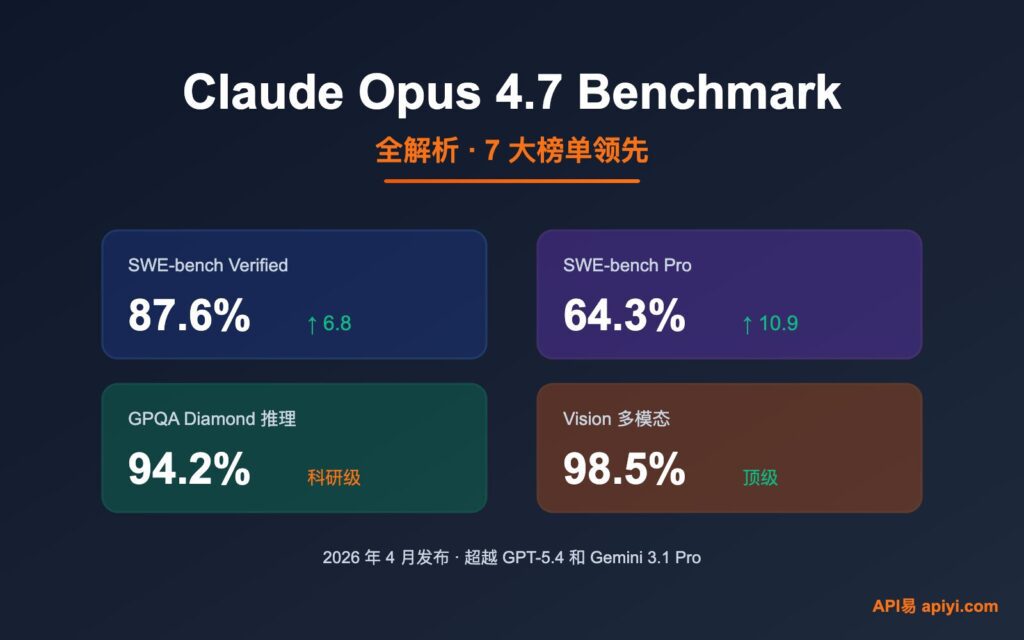
| Claude Opus 4.7 ★ Coding Lead | ~91–92% | 64.3% | 46.9% | 32.2% | $5 / $25 |
| GPT-5.5 Standard | ~92% | 58.6% | 41.4% | 74.0% | $5 / $30 |
| Gemini 3.1 Pro ★ Best Value | 94.3% | 54.2% | 44.4% | N/A pub. | $2 / $12 |
| Grok 4 | ~91% | ~55% | ~40% | N/A pub. | $2 / $15 |
| GPT-5.5 Pro | ~93% | ~60% | ~49% | 74%+ | $20 / $180 |
Claude Opus 4.7 — Best for Code & Complex Reasoning
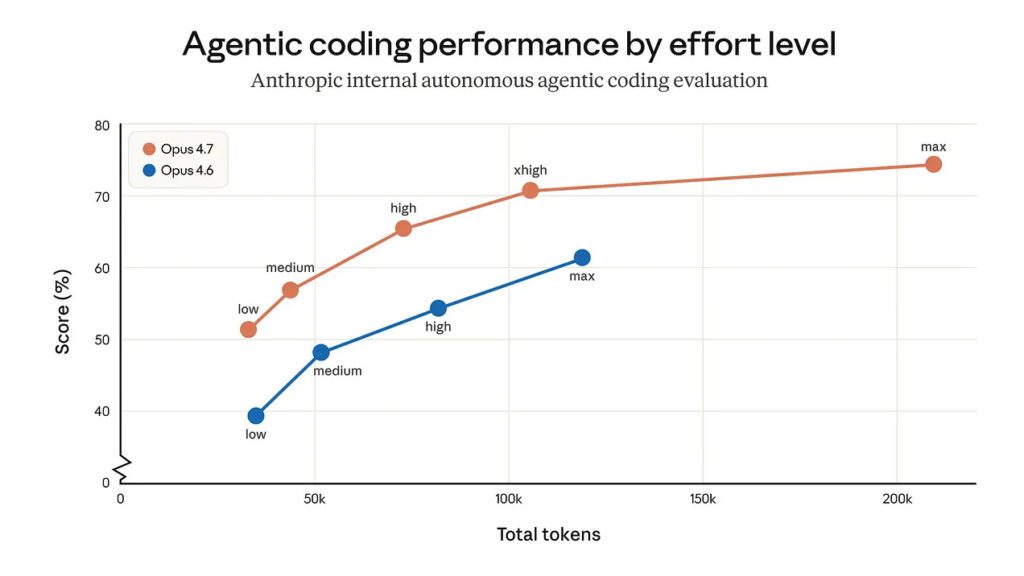
Opus 4.7 launched in April 2026 and currently sits at the top of real-world coding benchmarks — 64.3% on SWE-bench Pro, 87.6% on SWE-bench Verified, and 78% on OSWorld autonomous computer use. The 1M context window is now stable, not beta. Task budgets — letting you set a token-spend ceiling per agentic task — are a genuinely useful addition for teams running long workflows.
For writing quality, Claude maintains its lead. Blind human evaluations conducted in Q1 2026 showed Claude-generated content preferred 47% of the time versus 29% for GPT-5.4 and 24% for Gemini 3.1 Pro. The prose holds its tone across 10,000+ word outputs in a way other models simply don’t. That’s not a marginal difference — it’s noticeable.
The honest downside: it’s expensive at $5/$25 per million tokens, and for long-context retrieval beyond 512K tokens, GPT-5.5’s MRCR score (74% vs Claude’s 32.2%) represents a meaningful capability gap. Know your use case before you commit.
GPT-5.5 — Best for Math, Long Context Retrieval
GPT-5.5 arrived in April 2026 with three headline improvements: a 1M context window (finally matching Gemini), better token efficiency, and improved multimodal reasoning. The clearest win in benchmarks is MRCR v2, where it scores 74% — versus Claude Opus 4.7’s 32.2%. For anyone processing large codebases, legal document corpora, or multi-document research, that gap is real and matters.
At the Pro tier ($20/$180), the math story gets interesting: GPT-5.5 Pro leads on FrontierMath at 52.4%. Financial modeling, scientific computation, formal verification — if your workload is genuinely math-heavy, this is your tool. For everyone else, the Standard tier at $5/$30 per million tokens is competitive with Claude, though Claude is 17% cheaper on output at high volume.
GPT-5.5’s ecosystem advantages — Canvas editor, Operator integrations, the ChatGPT consumer platform — remain significant. 900 million weekly active users means the consumer version keeps improving through sheer scale of feedback.
Gemini 3.1 Pro — Best Price/Performance Ratio
Gemini 3.1 Pro launched February 19, 2026, and immediately set the benchmark on GPQA Diamond — 94.3%, the highest published score among any frontier model on this test of graduate-level scientific reasoning. More striking: its ARC-AGI-2 score doubled compared to Gemini 3 Pro. ARC-AGI-2 is specifically designed to resist training-set contamination, which makes a doubling genuinely meaningful.
The video and audio multimodal story is also Gemini’s strongest differentiator. Video-MME score of 78.2% versus the next best at 71.4% — the largest capability gap in any single category. If image analysis, video understanding, or document processing represents a significant part of your workflow, Gemini 3.1 Pro has a real practical advantage.
At $2/$12 per million tokens, it’s roughly 60% cheaper on output than Claude Opus 4.7 and matches or approaches it on many benchmarks. For high-volume API workloads, this is the rational default. The main limitation: writing quality doesn’t match Claude. Human evaluators consistently rank Gemini prose lower for nuance and tone consistency.
Grok 4 — Best for Real-Time Data
Grok 4 posted 75% on SWE-bench Verified in April 2026 — edging out GPT-5.4 at 74.9% and Claude Opus 4.6 at 74%. The Mensa Norway benchmark saw Grok-4.20 Expert Mode and OpenAI’s GPT-5.4 Pro tie at the top with a score of 145. In raw benchmark terms, Grok 4 is legitimately competitive at the frontier. Its real differentiator, though, is the live data integration. Real-time X/Twitter feeds, current news, live market data — if recency matters to your use case, Grok has structural advantages that none of the other frontier models can match without added tooling.
At $2/$15 per million tokens, it’s accessible. The uncensored-style output can be an asset for certain creative applications. Enterprise features and integrations lag behind OpenAI and Anthropic for now, so it’s not yet the go-to for organizational deployment.
03 AI Coding Tools: Full Ranking
AI coding assistance in 2026 has moved well past autocomplete. The tools worth evaluating now operate as genuine agentic systems — capable of multi-file refactors, autonomous codebase navigation, test generation, and PR review. The category has also fractured meaningfully: IDE-native tools, terminal agents, and plugin extensions are now distinct product philosophies, not just UX variations.
Adoption is not the same as trust. Lightrun’s 2026 survey found 43% of AI-generated code changes require debugging in production, and zero leaders surveyed described themselves as “very confident” in AI-generated code. These tools are extraordinary productivity multipliers — and they require expert oversight to work safely.
Claude Code is a command-line coding agent — not an IDE, not a plugin. You install it, point it at your project, and it reads, writes, and executes code with full codebase awareness. The 1M token context window means it can hold most real-world repositories in memory without chunking or retrieval augmentation hacks. Of all the tools tested extensively across multiple 2026 evaluations, Claude Code consistently shows the strongest contextual awareness across an entire codebase.
Leading on SWE-bench Pro (64.3%), MCP Atlas (77.3%), and OSWorld computer use (78%). For solo developers doing complex work — large refactors, architecture changes, security audits — it’s the clear pick. Usage-based pricing means costs vary considerably; heavy agentic use can add up quickly, but you only pay for what you actually run.
Cursor rebuilt the IDE around AI rather than bolting it on as an extension. Composer mode proposes multi-file edits in a single pass. Tab completions handle routine code. Agent mode runs fleets of agents in parallel through the Agents Window (Cursor 3). For most developers doing everyday work — feature development, component generation, debugging sessions — Cursor handles about 80% of typical development work more smoothly than any alternative.
The model flexibility is a real advantage: you can route between Claude, GPT-5, and Gemini depending on the task. Pro is $20/month with frontier model access; the $200/month Ultra tier makes sense for power users constantly bumping against usage limits. Main limitation: it’s better described as an AI-assisted editor than a truly autonomous agent. Cursor still expects the developer in the driver’s seat.
Copilot remains the most widely deployed AI coding tool, and its 2026 Business plan ($19/user/month) now includes access to both OpenAI and Anthropic models — so you’re not locked into one vendor. The GitHub-native PR review, issue-to-PR workflow, and Copilot Workspace integration make it the lowest-friction option for teams already embedded in GitHub workflows. Free tier includes 50 agent requests and 2,000 completions monthly.
The honest assessment: Copilot’s core autocomplete, while solid, is no longer best-in-class. Both Cursor and Claude Code offer deeper codebase understanding for complex tasks. Where Copilot’s inline suggestions once felt like magic, they now feel like table stakes. The enterprise argument remains compelling — multi-editor support, JetBrains compatibility, mature governance controls, and tight GitHub integration outweigh the raw capability gap for many teams.
Windsurf is the most credible alternative to Cursor for teams that need deep agentic IDE capabilities without paying $20+/month. Its Cascade mode enables multi-step agentic operations across the codebase. Bring-your-own-model support gives it flexibility. At $15/month for Pro, it’s meaningfully cheaper than Cursor with comparable agentic capability for most workflows. Less ecosystem depth, but the core product is genuinely strong.
Use Cursor for daily editing (autocomplete, component generation, quick fixes) and Claude Code in the terminal for complex tasks: large refactors, architecture changes, security audits, cross-file debugging. This split costs $20–$45/month depending on Claude Code usage, and it plays to each tool’s genuine strengths rather than asking one tool to do everything.
04 Image & Video Generation: What’s Actually Worth Using
The image generation space has matured significantly. The old question — “which AI makes the prettiest picture?” — has been replaced by something more practical: which tool produces the right output for the specific job, with acceptable editing flexibility and commercial licensing that won’t create legal headaches later. On the video side, there’s been notable consolidation: OpenAI announced the discontinuation of Sora in March 2026, with API access running until September.
AI Image Generation
Midjourney v8 produces visually stunning results with improved prompt adherence compared to earlier versions. The lighting, depth, and stylistic range remain unmatched for creative professionals who need the highest visual quality. For concept art, campaign visuals, mood boards, and anything requiring genuine artistic range, Midjourney has the highest ceiling in the field. The web app has improved significantly; you’re no longer forced into Discord for everything. Plans start at $10/month for basic and scale to $120/month for Pro.
DALL-E 3 scores 9.3/10 overall in independent 2026 evaluations — the highest overall score in the category — because it combines prompt fidelity, realism, ease of use, and commercial safety better than competitors. For realistic hero images, campaign assets, product-style visuals, and anything where the output needs to exactly follow a detailed brief, DALL-E 3 is more reliable than Midjourney. The conversational editing through ChatGPT (modify specific regions through natural language) is genuinely useful for iterative workflows. Text rendering within images is noticeably better than most alternatives.
Firefly Image Model 5, released April 15, 2026, adds Precision Flow for layout control and AI Markup for vector paths and lighting. Trained exclusively on Adobe Stock and licensed content — which matters enormously if your outputs need to be commercially defensible. The Firefly AI Assistant now orchestrates agentic workflows across Photoshop, Premiere, and Creative Cloud through a conversational interface. Editing capabilities score 9.5/10 in independent 2026 evaluations — highest in the category. For brand and design teams living inside Adobe’s ecosystem, Firefly earns its place as the pragmatic choice.
Ideogram has carved out an indispensable niche: if you need to generate images containing readable text — logos, signage, social graphics, marketing banners — no other tool comes close. Prompt adherence is strong, the free tier is genuinely useful (40 generations/day with commercial rights), and the remix feature allows iterative refinement that doesn’t force complete regeneration. For any workflow involving text-in-image, Ideogram belongs in your toolkit regardless of what primary image generator you use.
AI Video Generation
With Sora being discontinued in April 2026 (OpenAI has pivoted toward enterprise “world models”), the video generation landscape has reshuffled. Here’s what’s actually worth your attention:
With Sora shutting down, Runway Gen-4.5 holds the strongest position for cinematic video generation accessible to creative professionals. Hyper-realistic outputs, precise stylistic control, and an established workflow integration (Canva AI video is powered by Runway) give it broad reach. Professional video workflows in 2026 typically use Runway for source clip generation, then stitch in traditional editors like DaVinci Resolve or Premiere Pro. Most AI-generated video you see online that looks genuinely impressive is a composite of multiple 3–10 second clips, not a single generation.
Pika excels where Runway doesn’t: stylized animation, character work, and 3D-effect video that leans more into creative abstraction than photorealism. Good for social media shorts and stylized brand content. The learning curve is lower than Runway for non-technical creators.
05 AI Productivity & Writing Tools
The productivity AI category has become genuinely useful in 2026 — not just “fast email generation” useful, but measurably useful. HubSpot’s AI Trends 2026 report shows marketers recovering an average 6.1 hours per week from AI-assisted workflows. Teams that adopted AI content tools in 2024 now produce 4.1x more published content per marketer per month than their pre-adoption baseline.
900 million weekly active users means ChatGPT has become the de facto starting point for AI-assisted knowledge work. The Canvas editor for iterative document and code editing is genuinely well-designed — closer to a word processor with AI assistance than a chatbot. GPT-5.4 handles most day-to-day tasks well across writing, research synthesis, and data analysis. For non-technical users who need a single AI tool that does a reasonable job at everything, ChatGPT Plus at $20/month remains the default choice. The breadth of Operator integrations — connecting ChatGPT to calendars, email, and other services — has expanded significantly in 2026.
For sustained long-form writing — reports, research syntheses, strategic documents, legal drafts — Claude maintains a clear lead that shows up in blind human evaluations. Tone consistency across 10,000+ word outputs, structural coherence, and the ability to hold a complex context without drifting are meaningful advantages for professional writing work. Projects feature allows you to give Claude persistent context about your role, preferences, and work — making it significantly more useful for ongoing work than one-off prompting. Cowork, now generally available on macOS and Windows, extends Claude’s capabilities into desktop-level task automation.
If your organization runs on Google Workspace, Gemini Advanced at $19.99/month is the path of least resistance. Native integration in Docs, Sheets, Gmail, and Slides means you’re not context-switching between tools. The image generation quality via Imagen 3 is strong — particularly for high-volume multilingual content workflows. For teams already invested in the Google ecosystem, the integration advantages often outweigh the raw benchmark differences.
Notion AI’s value is contextual — it’s useful specifically because it operates inside your existing Notion workspace. Ask it to summarize project documentation, draft updates from meeting notes, or pull patterns across linked databases, and it leverages context that a generic AI assistant simply doesn’t have. The underlying model quality is good-but-not-frontier. As a standalone AI writing assistant, it’s outclassed; as an embedded knowledge management layer, it earns its place.
06 AI Research Tools
Perplexity dropped advertising from answers in February 2026 and moved to a subscription-first model — a meaningful credibility signal. Perplexity Computer, its multi-agent system, is now available to all Pro subscribers, offering 20+ models, hundreds of connectors, and a dedicated GPT-5.3-Codex coding subagent. The Comet Assistant handles multi-step workflows: opening calendar events, looking up meeting invites, preparing research briefs. Samsung’s Galaxy S26 integrates Perplexity APIs at the platform level. For competitive analysis, due diligence, and research-to-deliverable pipelines, it’s currently the strongest single tool for structured research workflows.
NotebookLM occupies a specific and useful niche: upload your source documents and it generates summaries, Q&A responses, and even audio briefings (the “Audio Overview” podcast feature) grounded entirely in those materials. For academic research, legal document review, or synthesizing proprietary document corpora, the source-grounding dramatically reduces hallucination risk compared to asking a general LLM. Still free with generous usage limits in 2026.
07 Agentic AI Platforms
Agents have moved from feature to product category in 2026. Microsoft Agent 365, launched May 1, 2026, is a dedicated control plane for enterprise agents. The AI agents market is projected to grow at 45.8% CAGR through 2030. Companies adopting agentic AI report 6–10% average revenue increases, with human-AI collaborative teams demonstrating 60% greater productivity than human-only teams.
Zapier’s AI layer wraps its existing automation infrastructure with agent capabilities — so you can build workflows that reason about inputs, make conditional decisions, and take multi-step actions across thousands of connected apps. For non-technical teams wanting to automate complex processes without writing code, it remains the most practical and broadly accessible option. If we had to pick five tools for a startup founder in 2026, Zapier would be among them specifically for its role in connecting everything together.
Launched May 1, 2026 as a dedicated enterprise control plane for deploying, managing, and governing AI agents within Microsoft 365 environments. If your organization runs on M365, this is now the natural layer for agent deployment — Copilot Cowork inside Microsoft 365 is built on Claude’s Cowork desktop tool. For enterprises with existing Microsoft investments, the governance and integration story is compelling.
For technical teams that need full data sovereignty and customization depth, n8n’s self-hosted model is increasingly compelling in 2026. The AI node ecosystem has expanded to include direct integrations with Claude, GPT-5, and Gemini. You pay for your own infrastructure and API costs rather than platform fees, which dramatically changes the economics at scale. The technical barrier to entry is higher than Zapier, but the ceiling is also much higher.
08 Quick Decision Matrix: Which Tool for Which Job
| Use Case | Best Choice | Runner-Up | Why |
|---|---|---|---|
| Complex coding & refactoring | Claude Code | Cursor | Strongest codebase reasoning, 1M context, leads SWE-bench Pro |
| Daily IDE development | Cursor | GitHub Copilot | Best AI-native editing experience; handles 80% of daily work smoothly |
| Long-form professional writing | Claude (claude.ai) | ChatGPT | Leads human evaluations for tone, coherence, output quality at length |
| General productivity / all-rounder | ChatGPT Plus | Gemini Advanced | Broadest ecosystem, Canvas editor, best consumer experience |
| Scientific / PhD-level reasoning | Gemini 3.1 Pro | GPT-5.5 Pro | Leads GPQA Diamond (94.3%), cheapest frontier model at $2/$12 |
| Ultra-long context retrieval | GPT-5.5 | Gemini 3.1 Pro | MRCR 74% vs next best 32.2%; purpose-built for large corpus work |
| Mathematical reasoning | GPT-5.5 Pro | Gemini 3.1 Pro | Leads FrontierMath at 52.4%; financial modeling, formal verification |
| Creative image generation | Midjourney v8 | DALL-E 3 | Highest artistic ceiling; best for concept art and creative campaigns |
| Prompt-accurate image work | DALL-E 3 | Adobe Firefly | Best overall score (9.3/10); reliable for production output requirements |
| Text-in-image / logos | Ideogram 2.0 | DALL-E 3 | Category-specific lead; no other tool handles text rendering as well |
| AI video generation | Runway Gen-4.5 | Pika 2.0 | Best cinematic quality publicly available (post-Sora discontinuation) |
| Research & due diligence | Perplexity Pro | Claude + web search | Verification-first architecture, multi-agent research workflows |
| Real-time information | Grok 4 | Perplexity | Live X/Twitter data, real-time market feeds built in |
| High-volume API workloads | Gemini 3.1 Pro | Claude Sonnet 4.6 | $2/$12 per million tokens; near-frontier quality at 60% lower cost |
| No-code automation | Zapier AI | Make / Integromat | 6,000+ app connections with AI reasoning layer |
| Google Workspace integration | Gemini Advanced | ChatGPT Operator | Native Docs/Sheets/Gmail AI; lowest friction for Google orgs |
09 Final Verdicts & What We Actually Believe
Having spent considerable time with all of these tools, a few things stand out that the benchmarks alone don’t fully capture.
First, the “best model” question is the wrong question for most organizations. The ROI difference between picking the right tool and picking the wrong one is real, but it’s less about which frontier model you choose and more about whether you’ve built effective workflows around it. A well-designed agent system that routes queries, retrieves from your knowledge base, and maintains human review loops will outperform any raw model every time.
Second, there’s a real gap between the tools that impress in demos and the tools that earn trust in production. That 43% figure — AI-generated code changes requiring debugging — is worth keeping in mind. The best AI coding teams we’re aware of aren’t the ones that trust their tools most blindly; they’re the ones that have the tightest review loops and the most thoughtful scope constraints on each AI-assisted task.
Third, free tiers in 2026 are genuinely useful, not just marketing hooks. GitHub Copilot Free (2,000 completions, 50 agent requests/month), Ideogram (40 generations/day with commercial rights), NotebookLM, and Claude’s free tier all deliver real value without payment. If you’re evaluating these tools for your team, start there before committing to paid plans.
If we had to build from zero with a mid-sized professional team: Claude for thinking and writing, Cursor for coding (with Claude Code for complex work), Perplexity Pro for research, Midjourney for visual assets, and Zapier for connecting everything. This stack runs $60–80/month for an individual and covers roughly 90% of knowledge work scenarios with market-leading quality in each category. Adjust from there based on where your actual bottlenecks are.
The honest summary: AI tools in 2026 are extraordinary, maturing rapidly, and still requiring genuine human skill to use well. The teams getting the most out of them aren’t the ones with the most tools — they’re the ones with the clearest sense of which tool belongs to which job. That clarity is genuinely worth building.
Overall Category Leaders at a Glance
Benchmark data: Anthropic Opus 4.7 Model Card · OpenAI GPT-5.5 Announcement · DataCamp Gemini 3.1 Analysis · AI Magicx April 2026 Comparison
Market data: Resourcera AI Statistics 2026 · Companies History AI Market · Medha Cloud Adoption Data · McKinsey Global AI Survey Q1 2026 · Stanford AI Index 2026 · HubSpot AI Trends 2026 · Salesforce State of Marketing 2026
Tool analysis: DIY AI Coding Tools Dataset · Scrimba Coding Assistant Comparison · Built In Six-Month Evaluation · DIY AI Image Generation Dataset 2026
More from Trendix.tech
AI Comparisons & Benchmarks: What the Numbers Actually Mean
AI Image Generators Ranked: Midjourney to Ideogram
ChatGPT vs Claude vs Gemini vs Copilot vs Perplexity vs Grok: The Honest 2026 Verdict
GPT-5.5, DeepSeek V4, Claude Opus 4.7: The month everything changed again
Agentic Workflows: How AI Systems Are Actually Taking Over Knowledge Work
Best AI Tools for Marketing Teams in 2026
Categories
https://www.trendix.tech/blog/
25 AI Writing Tools That Create High-Ranking Blog Posts