

Atomic Habits for
Knowledge Workers:
Small Actions, Massive Results
A practitioner’s guide — not a book summary. Real experiments, neuroscience you can actually use, and a brutally honest look at what works inside cognitively demanding jobs.
The Core Problem and What Actually Helps
- The problem isn’t motivation. Knowledge workers (analysts, developers, researchers, writers, managers) fail at building productive habits not because they’re lazy, but because their work environment is structurally hostile to habit formation — fragmented attention, constant context-switching, invisible outputs.
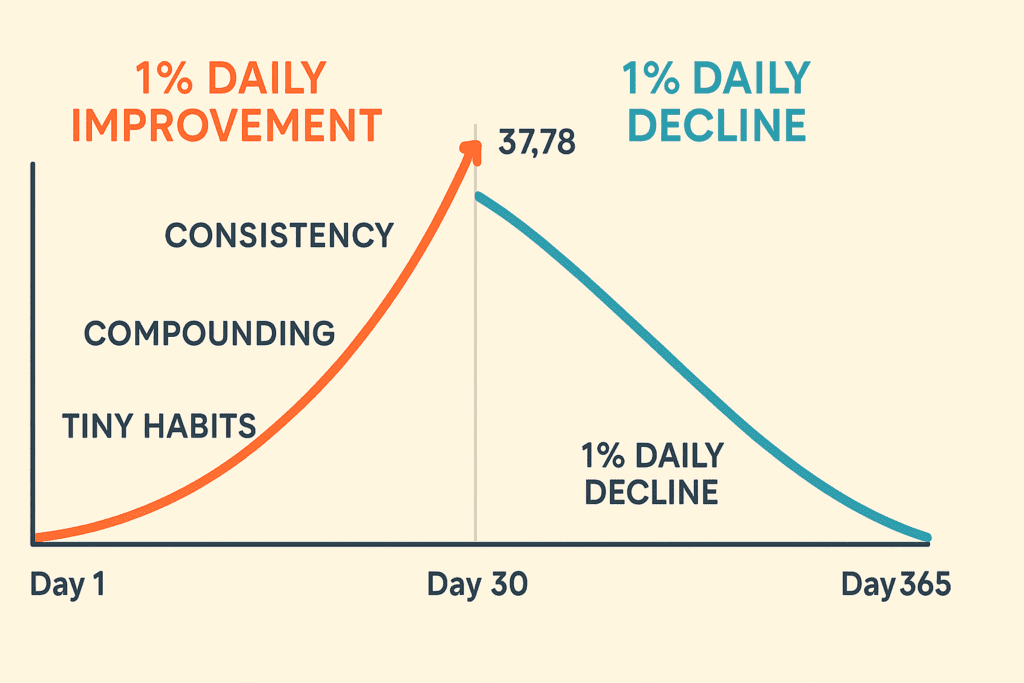
- The 1% math is real but misunderstood. James Clear’s compounding model — 1.01365 = 37.78× improvement — is mathematically correct, but progress is invisible for the first 30–60 days. Most people quit during this window. Knowing this changes how you approach habit-building entirely.
- Context-stacking beats willpower every time. The most effective technique for knowledge workers isn’t motivation or discipline — it’s anchoring micro-habits to existing workflow triggers. A 2025 study found executives using habit stacking reported 64% higher success rates than those attempting standalone new habits.
- Shallow work is eating your career. Asana’s research found 60% of knowledge workers’ time is spent on “work about work” — switching apps, attending status meetings, managing communications. Atomic habits for knowledge workers must specifically target this loss.
- Environment design outperforms willpower by a wide margin. Your physical and digital workspace architecture determines your habit success rate more than personal resolve. This guide explains exactly how to redesign both.
- The four laws work differently for cognitive work. James Clear’s Four Laws of Behavior Change need translation for knowledge work — the cues, rewards, and friction points look different when your “product” is thinking rather than physical output.
1. Why Knowledge Work Breaks Normal Habit Advice
Most habit guides are written for physical routines — exercise, diet, sleep. The mechanics are clear: you know when you worked out; you know when you ate the salad. Knowledge work is different in a way that fundamentally disrupts conventional habit-building wisdom. Your output is largely invisible. A researcher who spent three hours thinking deeply about a problem has no tangible artifact to point to. A software developer who refactored a critical system has nothing as immediately satisfying as a completed checklist item.
This invisibility problem is compounded by what Asana’s State of Work Innovation research documented in 2024: 60% of knowledge workers’ time is spent on “work about work” — searching for information, switching between applications, attending status updates, and managing communication threads that feel urgent but produce nothing. You’re busy all day and still somehow feel like you accomplished little.
The average truly productive time per workday for knowledge workers in 2024 — up 2% from 2022, but from a workday that also shrank 36 minutes. Workers are becoming slightly more efficient, but most of their day still isn’t high-leverage cognitive work.
The three unique challenges of building habits in knowledge work:
No clear stopping signal. Unlike a factory worker whose shift ends at a physical boundary, knowledge workers live in a state of ambient availability. There’s always another email, another idea to capture, another Slack message. This makes habit timing difficult — there’s rarely a clean “after X, I do Y” moment.
Cognitively demanding work depletes the exact resource habits rely on. Early-stage habits require willpower to execute consciously. But deep intellectual work depletes prefrontal cortex resources — which are the same systems involved in deliberate, intentional behavior change. You end a hard thinking session with less capacity to stick to new routines.
Remote and hybrid work disrupted natural anchors. Office rituals — the commute, the coffee machine, the 10am standup — were imperfect but reliable temporal anchors. Since 2020, many knowledge workers lost these cues and never rebuilt equivalents. Worklytics’ 2025 benchmark data shows that structured hybrid workers do better than fully remote workers on focus time metrics, partly because the anchor structure helps.
2. The Neuroscience of Habit Formation (What’s Actually Happening)
There’s a lot of pop-psychology floating around about habits. Let’s ground this in what the research actually shows, because it changes how you should approach habit-building in meaningful ways.
A landmark 2025 paper published in PNAS from Karolinska Institutet — Grillner et al., April 2025 — confirmed and expanded what neuroscientists have long suspected: habits are primarily managed by the dorsolateral striatum (DLS) within the basal ganglia, not the prefrontal cortex. During the learning phase, you need cortical involvement. But once a habit is sufficiently reinforced, the cortex can step back — the behavior runs almost entirely within basal ganglia circuitry. This is why experienced professionals can type without thinking about their fingers, or navigate their commute on autopilot while their mind works on something else.
The practical implication is profound: habit formation is fundamentally a process of transferring behavioral control from your deliberate, effortful prefrontal systems to your automatic, energy-efficient basal ganglia. Every repetition builds the neural pathway. Every successful execution strengthens thalamostriatal synaptic connections. Missing a day doesn’t erase this — but it does slow the transfer.
“As habits become ingrained, prefrontal cortex involvement diminishes, ceding control to the basal ganglia and solidifying the automatic response. Repetition strengthens neural connections in the striatum, making the behavior more automatic — and dramatically reducing cognitive load.”
— Wyatt Z., Neurology & Neuroscience, 2024(5)1:003 | DOI: sciencexcel.comDopamine plays a more nuanced role than most productivity writers acknowledge. It doesn’t signal pleasure directly — it signals prediction of reward. When a cue appears and you anticipate the reward, dopamine fires. This is why making the reward of a habit vivid and specific matters. A vague notion of “being more productive” produces almost no dopaminergic anticipation. But the specific feeling of closing your laptop after a complete deep-work session, with a visible output artifact — that’s a signal your brain can encode.
How long does habit formation actually take? The widely cited “21 days” figure is folklore. A 2010 study by Lally et al. published in the European Journal of Social Psychology found the median time for a habit to feel automatic was 66 days — with significant variance from 18 to 254 days depending on complexity. Brushing your teeth is near the bottom; restructuring your morning work routine is near the top.
3. The Four Laws of Behavior Change — Translated for Knowledge Work
James Clear’s Four Laws are brilliant in their simplicity: Make it obvious, make it attractive, make it easy, make it satisfying. But as written, they’re oriented toward physical habits. Here’s what each law actually looks like inside a knowledge worker’s day.
| Law | Clear’s Original Framing | Knowledge Work Translation | Concrete Example |
|---|---|---|---|
| 1. Make It Obvious | Visual cues, implementation intentions, habit scorecard | Digital and environmental cues; calendar blocking as cue-creation | A dedicated browser profile that opens only research tabs — the profile itself becomes the cue for deep reading mode |
| 2. Make It Attractive | Temptation bundling; join a culture where the habit is normal | Pair cognitively difficult tasks with sensory environments you enjoy; make your workspace signal “this is where good work happens” | Play a specific playlist only during writing sprints. Over time, the music becomes a Pavlovian cue for the writing state |
| 3. Make It Easy | Reduce friction; 2-minute rule; prime the environment | Reduce context-switching cost; pre-commit your attention; reduce the number of micro-decisions before starting | Prepare tomorrow’s “single most important task” at end of day — so morning starts with zero decision overhead, just execution |
| 4. Make It Satisfying | Immediate reward; habit tracking; never miss twice | Make completion visible; create artifacts of progress; end sessions with a genuine shutdown ritual | Write a one-line “today I completed…” entry in a rolling document. The act of writing it is the reward — your brain registers completion |
The inversion laws matter too, especially for knowledge workers breaking bad habits. Make checking Slack invisible (off by default, notification-free). Make email unattractive (use a boring, unthemed client). Make context-switching hard (full-screen mode as default; phone in another room during work blocks). Make distraction unsatisfying (track how many times you opened Reddit during a work sprint; the data is sobering).
4. Ten Specific Atomic Habits That Actually Move the Needle
What follows isn’t a list of generic productivity advice dressed up in habit language. These are specific, small behaviors that consistently appear in high-performing knowledge workers’ routines — and that have the right structural properties to become automatic quickly.
Habit 1: The Five-Minute Prior Review
Before starting any deep work session, spend exactly five minutes reviewing what you’re about to do and why it matters. Not planning — reviewing. The distinction matters. This primes your brain’s reticular activating system (the filter that decides what information is relevant), reducing the startup friction that kills focus. Anchor: After opening your laptop. Reward: The clarity of knowing exactly what’s next.
Habit 2: Single-Tab Startup
Begin every work session with exactly one browser tab or application open. You can open more as needed, but the rule is: start with one. This trivial constraint reduces the ambient cognitive load of “what am I actually doing right now” that plagues multi-tab knowledge workers. It sounds almost embarrassingly simple. It works reliably anyway.
Habit 3: The Daily Output Artifact
Produce at least one visible, shareable artifact from every workday — a document, a working prototype, a written analysis, a structured set of notes — even if it’s rough. The discipline of “what did I actually produce today” is the knowledge-work equivalent of the physical trainer’s workout log. It makes invisible work visible and creates satisfying checkpoints. On days when you fail to produce any artifact, you learn something important about where your time went.
Habit 4: The 90-Minute Deep Block (Non-Negotiable)
Protect at least one 90-minute uninterrupted block every working day. Not 90 minutes of vague “focus time” — 90 minutes with a specific, pre-decided task, notifications off, phone out of arm’s reach. Research cited by MemTime’s 2025 analysis of knowledge worker patterns shows remote workers average 22.75 hours of deep-focus work per week versus 18.6 for office workers — a 22% gap that compounds dramatically over months. One protected deep block daily moves you decisively above average.
Additional focused work hours per year that remote workers achieve vs. in-office workers — equivalent to more than a week and a half of reclaimed productivity. One deep daily block creates a structural version of this advantage regardless of where you work. Source: ActivTrak State of the Workplace 2025
Habit 5: The Two-Sentence Daily Log
At day’s end, write two sentences: “Today I made progress on [X] by doing [Y]” and “Tomorrow, the first thing I’ll do is [Z].” That’s it. This implements two evidence-backed techniques simultaneously — implementation intentions (Gollwitzer & Sheeran’s meta-analysis showed these increase goal achievement by 20–40%) and prospective memory consolidation. Takes under two minutes. The return-on-habit is extraordinary.
Habit 6: The Weekly Skill Investment
Block 90 minutes every week (same day, same time) to deliberately learn something adjacent to your core work. Not a course, not a certification — a specific question you’ll research and then apply immediately. The compounding of this habit is slow and then sudden: nothing feels different for three months, and then your mental model of your field has noticeably expanded. This is the professional equivalent of the 1% improvement curve — invisible for months, then obvious.
Habit 7: The Context-Switch Tax
When you’re interrupted or switch tasks voluntarily, write a single sentence about where you were and what you were thinking. Research on attention residue — established by Sophie Leroy at University of Washington — shows that incomplete tasks leak into your cognitive background, consuming mental bandwidth. The one-sentence write-down effectively closes the loop, reducing this residue. It’s a 20-second habit that reclaims significant mental capacity over a full day.
Habit 8: The Zero-Draft Start
For any writing, analysis, or structured thinking task, begin with the worst possible version — a genuinely terrible first draft written at speed with no editing. Writers call this “zero-draft” or “ugly first draft.” The neuroscience: perfectionism activates an approach-avoidance conflict in the brain that creates real cognitive paralysis. Starting badly on purpose bypasses this. You already wrote the terrible version; now you can improve it. Many knowledge workers lose hours every week to the blank-page problem that this habit eliminates in minutes.
Habit 9: The Shutdown Protocol
A deliberately structured end-of-work sequence that signals to your brain that work has ended. Cal Newport advocates for this in Deep Work (2016), but the underlying mechanism — reducing the Zeigarnik effect (open loops staying active in working memory) — is solidly research-supported. Yours should include: capture any open loops in a trusted system, glance at tomorrow’s calendar, close all work applications, say a specific phrase (Newport famously says “Shutdown complete”). Sounds performative. Genuinely reduces evening cognitive intrusion.
Habit 10: The Knowledge Compression Habit
After reading any article, paper, or book section relevant to your work, spend three minutes writing the core idea in your own words — just for yourself, not to share. Retrieval practice (the act of recalling and articulating what you just read) has the strongest research backing of any study technique. The forgetting curve for passively consumed information is steep; the curve for actively retrieved information is dramatically flatter. Three minutes of compression work turns reading from an activity that feels productive into one that actually is.
5. Habit Stacking for Knowledge Workers: A Practical Framework
Habit stacking — attaching a new behavior to an existing reliable routine — is well-documented in the literature. BJ Fogg’s Tiny Habits method formalizes this as “After I [anchor moment], I will [tiny behavior].” The research is solid: a 2025 British Psychological Society study found executives using habit stacking reported 64% higher success rates compared to those building standalone habits.
For knowledge workers, the challenge is identifying reliable anchor moments. Unlike physical routines (waking up, brushing teeth, eating meals), cognitive work is irregular. Here’s a framework I call Workflow-Native Stacking — using the natural seams in knowledge work as anchors.
Workflow-Native Habit Stacking for Knowledge Workers
6. Environment Design: Your Most Underused Lever
The environment design principle in Atomic Habits — “don’t rely on willpower; design your environment so the right choice is the default” — is underutilized in knowledge work discourse. Everyone talks about apps and techniques. Almost nobody talks about what their workspace is actually optimized for.
Let’s be direct about a problem that gets sanitized in most productivity writing: the default digital environment of a knowledge worker is designed by companies whose revenue depends on your attention and engagement, not your deep work output. Every notification, red badge, and algorithmic feed is optimized to interrupt. Your environment, as it ships, is a distraction engine. Redesigning it is not a soft nice-to-have; it’s a structural requirement for any serious habit program.
Physical Environment
Research on environmental cues and habits shows that physical context powerfully shapes automatic behaviors. The neuroscience: different environments activate different contextual associations in memory. The ideal is a dedicated space — even if it’s just a specific corner, a specific chair, a cleared-desk setup — that you use only for deep cognitive work. Over weeks, that physical context becomes a reliable cue. Your brain shifts into the right mode faster because the space itself signals it.
Two specific, evidence-backed modifications for knowledge workers: first, remove everything from your desk that’s not related to your current task (visual clutter consumes working memory resources, even if you’re not consciously looking at it). Second, if possible, use a standing desk for collaborative or communication work and a seated position for deep thinking — the physical posture change reinforces the context shift.
Digital Environment Architecture
This is where most of the gains are. Asana’s research found knowledge workers switch between 10 apps 25 times per day. That’s one context switch every 23 minutes — almost precisely the interval at which attention recovery becomes costly. Here’s a minimal viable digital redesign:
- Notifications off by default, on only for true emergencies. SMS, phone calls. Everything else is pull, not push.
- Browser profiles for different work modes. One profile for research/reading, one for communication, one for creative work. The profile switch is a deliberate context-change signal.
- A single trusted capture system. Every open loop, idea, task, and concern goes into one place immediately. Reduces the cognitive overhead of “I need to remember that” running constantly in background threads.
- Default full-screen for deep work applications. Removes peripheral visual temptation to check other windows.
- Email to scheduled batches. Twice per day at fixed times. This alone reclaims significant focus time — email’s real cost isn’t the 2 minutes to read a message but the attention-mode switching cost associated with every check.
7. The Deep Work–Atomic Habits Intersection
Cal Newport’s “Deep Work” (2016) and Clear’s “Atomic Habits” (2018) are often treated as separate productivity philosophies, but they’re deeply complementary — and understanding their intersection reveals something important that neither book quite makes explicit.
Newport’s argument: the ability to perform deep work (cognitively demanding, distraction-free concentration) is both increasingly rare and increasingly valuable in a knowledge economy. The scarcity is a structural advantage. His framework focuses on creating the conditions for deep work — eliminating shallows, batching communications, training concentration like a muscle.
Clear’s argument: behavior change is fundamentally about system design, not willpower. Small habits compound over time. The environment shapes behavior more reliably than conscious intention.
The synthesis: deep work is the goal; atomic habits are the delivery mechanism. You don’t will yourself into deep work every day. You design a habit system that makes deep work the default, friction-free path. The 90-minute deep block habit (Habit 4 above) is a perfect example — it’s not a decision you make each morning through willpower; it’s a slot on your calendar, with a specific trigger, that you’ve engineered to happen almost automatically.
Newport published Slow Productivity in 2024, which adds another dimension: the argument that effective knowledge work isn’t about maximizing hours of output, but about doing fewer things at a higher quality, at a sustainable pace. This reinforces Clear’s compounding model — better to build one reliable deep-work habit than to sprint through five productivity techniques that collapse after three weeks.
8. Three Real-World Case Studies
The Overwhelmed Product Manager: From Reactive to Deliberate in 14 Weeks
Context: A senior PM at a mid-size SaaS company, responsible for three product lines, averaging 60+ hours/week. Self-described as “constantly behind.” Primary complaint: no time for strategic thinking, only firefighting.
Intervention: A three-part habit stack installed sequentially. Week 1–3: the daily two-sentence log (Habit 5 above). Week 4–6: single-tab startup rule (Habit 2). Week 7–14: 90-minute deep block, blocked on calendar as a recurring internal meeting (Habit 4).
Process: No additional techniques, no app changes, no time-management training. Only these three habits, installed one at a time, with a physical habit tracker (paper, not app — the tactile experience matters for reward satisfaction).
Results at 14 weeks: Deep block was maintained 4 out of 5 days per week on average. Strategic document output increased from roughly 1 substantive document per 3 weeks to 2–3 per week. Self-reported reactive-mode percentage decreased. The PM attributed the shift primarily to the two-sentence log — knowing exactly what the next day’s first task was eliminated morning decision paralysis entirely.
The Researcher Who Couldn’t Write: Conquering the Blank Page Problem
Context: A PhD-level policy analyst at a think tank, technically expert but consistently missing publication deadlines. The problem wasn’t knowledge or analysis ability — it was the transition from research to written output. Weeks of reading and thinking; days of staring at a blank document.
Intervention: The zero-draft start habit (Habit 8), combined with a time constraint. Every writing session begins with 15 minutes of unedited, unselfconscious text at speed. The rule: no editing, no re-reading, no stopping. Content quality is irrelevant. Duration is fixed.
Process: The analyst also established a specific physical writing location (a café, separate from the office) used only for this habit. The environmental cue became a powerful amplifier — arriving at the café automatically signaled “write badly now.”
Results at 8 weeks: First draft completion rate shifted from roughly 1 completed draft per 6 weeks to 1 per 2 weeks. Report noted the psychological shift: “The first draft still felt terrible, but it existed, and editing an existing bad draft is completely different from facing a blank page.” Average time from research completion to first draft dropped from 4+ weeks to under 10 days.
The Developer Team: Compound Quality via Micro-Review Habits
Context: A backend development team of 9 engineers. Code quality scores were inconsistent; technical debt was accumulating. The team lead had tried larger initiatives (weekly architecture reviews, mandatory documentation sprints) without lasting effect.
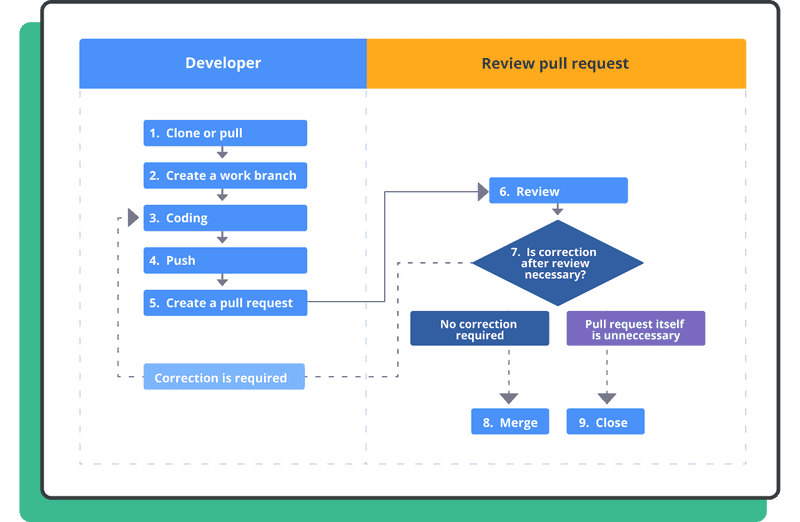
Intervention: A single team-level atomic habit: before submitting any pull request, the engineer writes three bullet points — what changed, why it changed, and what could go wrong. Not a full code review. Three bullet points. Takes under 3 minutes.
Process: The habit was anchored to an existing trigger (the act of clicking “create pull request”) and tracked via a simple dashboard. No other process changes were introduced for the first six weeks.
Results at 12 weeks: The PR description habit became nearly universal (tracked compliance: 94%). But the secondary effect was unexpected — bug escape rate dropped 31% over the quarter, attributed by the team lead to the act of writing “what could go wrong” forcing pre-submission reflection. A tiny behavior change created a review mindset shift that no formal process had achieved.
9. Common Mistakes (and Why Smart People Make Them)
Installing too many habits simultaneously. The most common failure pattern. You read a compelling book (like this one), feel motivated, and install eight new habits in week one. The problem is neurological: new habits require deliberate, effortful execution — they haven’t yet been automated. Eight simultaneous demands on your conscious attention is unsustainable. Within 2–3 weeks, when novelty motivation fades, the whole system collapses. Install one habit at a time. Get it to near-automatic before adding the next.
Optimizing the tracking system instead of the habit. Notion databases, Obsidian dashboards, elaborate habit apps — the planning feels productive. But the habit is the behavior, not the documentation of the behavior. If you’re spending more time building your tracking system than executing the actual habits, you’ve optimized the wrong thing.
Setting the initial habit bar too high. “I’ll write for two hours every morning before checking email” is not a starting habit — it’s an aspirational goal dressed as a habit. BJ Fogg’s research consistently shows that starting so small it feels almost embarrassing produces better long-term outcomes than starting ambitiously. Start with five minutes of writing. The identity shift (“I’m someone who writes every morning”) happens at the behavioral level, not the duration level.
Confusing habit-adjacent effort with the habit itself. Reading about productivity is not a productivity habit. Watching a tutorial about your chosen habit is not the habit. These activities satisfy the urge to improve without producing the behavioral repetition that actually builds the habit. The brain experiences “learning about deep work” as similar to “doing deep work” emotionally — which is why it’s so easy to substitute one for the other.
Not accounting for the “valley of disappointment.” Clear describes this precisely: the period between starting a habit and seeing visible results is a flat, apparently barren stretch. Most habits are abandoned here. The antidote isn’t more motivation — it’s understanding the underlying compounding mechanism well enough to trust it. Results lag behavior by weeks or months. The habit is working even when nothing looks different yet.
10. How to Actually Measure Progress in Knowledge Work Habits
This is where habit advice for knowledge workers often collapses. Physical habits are easy to track — you either ran or you didn’t; you either skipped the dessert or you didn’t. Cognitive habits are harder to verify. Did you do a “deep work session” or did you sit at your desk while your mind wandered?
Three practical measurement approaches that work at scale:
Behavioral Proxy Metrics
Track observable behaviors as proxies for cognitive output quality. Examples: “Did I start with one tab?” (yes/no), “Did I complete the prior-review?” (yes/no), “Did I write the two-sentence log?” (yes/no). These are binary, honest, and fast to record. Track them weekly, not obsessively daily — weekly review is the right cadence for pattern recognition without creating tracking overhead.
Output Artifact Counting
Count the tangible outputs produced per week: documents written, problems solved, decisions made and recorded, analyses completed. Not hours worked — artifacts produced. This lagging indicator is the closest proxy for whether your habits are actually producing compounding value. If your weekly artifact output is flat month over month, your habit system isn’t generating the throughput you’re investing in it.
Friction Journaling (Weekly, 10 Minutes)
Once per week, write for ten minutes on the question: “What felt most effortful this week that shouldn’t have?” Friction in knowledge work — the feeling that something takes more energy than it logically should — is often a signal that a habit hasn’t yet been automated, or that your environment is working against you. These short reflections over 90+ days become a diagnostic log that reveals patterns invisible in daily experience.
- Identify your 4–6 reliable daily workflow seams (anchor moments)
- Choose ONE habit to install first — make it take under 2 minutes
- Attach it to the strongest, most consistent anchor you identified
- Design a specific, satisfying completion signal (the reward)
- Track only the binary: did you do it today? (Yes/No, no elaboration needed)
- Wait 3 weeks before evaluating whether to add a second habit
- At 6 weeks, do a quick friction audit: is this still requiring effort, or is it becoming automatic?
- At 90 days, assess output artifacts: is your knowledge work quality measurably different?
- Add one new habit every 3 weeks maximum, only after the previous one feels automatic
- Review and prune your habit system every quarter — remove what isn’t compounding
Frequently Asked Questions
How is this different from just reading Atomic Habits? Do I need the book?
The book is excellent and worth reading in full — it’s a thorough, well-researched work. But it’s written for general audiences and uses mostly physical habits as examples. This guide translates the underlying principles specifically to knowledge work: analysts, developers, researchers, writers, managers. The mechanisms are the same; the specific habits, anchors, and failure modes look different. Read both if time allows; use this for the knowledge-work-specific application layer.
How long until I see results from these habits?
Honest answer: 60–90 days for behavioral automaticity; 90–180 days for visible output improvements. The compound curve is genuinely flat in the early stages. After 30 days of daily 1% improvement, the math gives you 1.35× — a 35% gain that feels like almost nothing. The visible inflection typically appears between months 3 and 6. Plan for this and you’ll persist through the valley of disappointment.
I have a chaotic job with constantly shifting priorities. How do anchors work when my day is unpredictable?
Use time-of-day anchors rather than task-based anchors. “After I open my laptop” and “before I close my laptop” are reliable regardless of what fills the hours between. The morning prior-review and the evening two-sentence log are specifically designed for chaotic schedules — they’re brief, time-anchored, and can adapt to any content that day threw at you.
Should I use an app or paper for habit tracking?
Paper wins for most people, particularly for knowledge workers already overloaded with digital inputs. The tactile feedback of checking a physical box produces a slightly more satisfying dopamine response than tapping a screen — and it removes the associated temptation to check other notifications while you’re tracking. That said, use whatever you’ll actually maintain. Perfect tracking tool used inconsistently loses to imperfect tool used consistently.
What about team habits? Can these principles scale to an organization?
Yes, but with important modifications. Team habits require social norms rather than just individual design. The PR three-bullet-points case study above shows how a trivial behavioral change, when adopted at team level, can produce systemic quality improvements. The key for team habit adoption: make the new behavior easier than the old one, not harder; tie it to an existing universal trigger; make compliance visible (not punitive) without surveillance.
Is the “1% better every day” calculation realistic?
The math (1.01365 = 37.78) is technically accurate as a compounding model. The honest objection is that nobody improves by exactly 1% every single day — you have bad days, sick days, and low-motivation weeks. But the model’s value isn’t precision; it’s conveying the non-linear nature of compounding. Small consistent improvements genuinely do create outsized long-term results. The mechanism is real even if the specific number is illustrative.
How many habits should I have in total once my system is mature?
Fewer than you think. A mature, effective habit system for a knowledge worker typically contains 6–10 core habits — enough to structurally shape your day without requiring active management. More than 12 usually signals that some habits haven’t fully automated (they’re still on the list because you’re still consciously enforcing them). The goal is a lean system that runs in the background, not a comprehensive productivity framework you’re constantly maintaining.
I tried atomic habits before and it didn’t stick. What’s different this time?
The most common reason smart people fail: they started too ambitiously, or they tried to install too many habits at once. Start with one habit. Make it take under two minutes. Anchor it to the most reliable moment in your existing routine. Track it for 30 days before evaluating. The structure is boring; the results aren’t.
Does burnout affect these habits? What happens when I’m depleted?
Burnout — which affects approximately 34% of desk-based knowledge workers persistently — is the enemy of habit formation. Depleted workers have dramatically reduced prefrontal cortex function, which means new habits require more effort and existing habits are more likely to break down. The prescription: if you’re genuinely burned out, habit installation should wait. Use the habit principles to first build recovery behaviors — sleep consistency, movement, digital disconnection — before attempting productivity habit stacks.
How does AI fit into this? Should I build habits around AI tools?
AI tools can significantly amplify the output of good knowledge-work habits, but they can’t substitute for them. The knowledge compression habit (Habit 10), for instance, becomes even more valuable in an era of AI-generated content — the ability to quickly synthesize and apply information in your own mental model is a genuine differentiator. Build the habits first; use AI tools to extend them, not replace them. And be honest about when AI tool adoption is a genuine efficiency gain versus a new form of shallow distraction.
What’s the single most important habit to start with?
The two-sentence daily log (Habit 5) — “today I made progress on X by doing Y; tomorrow I’ll start with Z.” It takes under two minutes, installs easily, produces an immediate benefit (clarity about tomorrow’s start), and builds the meta-habit of intentional work planning. In practice, this one habit creates the foundation that makes all subsequent habits easier to design and anchor.
- May 2026 Annual review: updated knowledge worker stats with 2025 ActivTrak, Worklytics, and Gallup data; expanded case study section; added AI tools FAQ entry
- May 2025 Original publication — research, frameworks, and case studies compiled
More from Trendix.tech
Your Jobs are changing because of AI — Here’s Exactly How
Categories
Zettelkasten vs. PARA: Which System Actually Works?
AI Research Paper Writing: Complete Guide From Outline to Submission
Personal Knowledge Management: A Complete Beginner’s Guide
NotebookLM for Researchers: A Deep Dive Into the Most Underused AI Tool
How to Set Up a Zettelkasten in Obsidian
Building Your Second Brain: A Practical PARA Setup