

Research Tools · Qualitative Analysis · Updated May 2026
NVivo Alternatives: What to Switch To and When
A field-level breakdown of what’s genuinely worth switching to — for academics, UX researchers, and insight teams dealing with rising Lumivero prices, poor collaboration, or workflows that no longer fit.
- NVivo is still capable software, but since the 2022 Lumivero acquisition (and the 2024 ATLAS.ti takeover), three of the most-cited QDA tools now share one private equity-backed owner — which changes the calculus on lock-in and pricing.
- For like-for-like replacement with independent ownership: MAXQDA is the honest answer. Better Mac support, similar feature set, €230–€430/year for academics.
- For teams that need speed over methodology depth — UX researchers, insight teams, consultants — AI-native tools (Dovetail, Insight7, Skimle) are a legitimate category now, not a compromise.
- Free tools like Taguette and QualCoder are genuinely usable for low-volume or budget-constrained work. Don’t pay for features you won’t use.
Why people are actually leaving NVivo right now
For most of the past two decades, NVivo wasn’t really chosen — it was just what you used. Your supervisor used it, the institutional licence covered it, the methods textbooks cited it. There wasn’t a meaningful conversation to have.
That’s changed, and fairly sharply. Three things happened around the same time. In 2022, TA Associates — a Boston-based private equity firm — backed the merger of QSR International (NVivo’s parent), Palisade, and Addinsoft into a new entity called Lumivero. In 2024, Lumivero acquired ATLAS.ti. That means the two most-cited qualitative data analysis tools in academic literature now share a single parent company. Citavi, the reference manager, is in there too.
The practical effects are real: UK universities lost subsidised NVivo access through the Chest consortium in July 2024, triggering a price increase for new renewals. Perpetual licensing has effectively been wound back. And on researcher forums — from Reddit’s r/qualitative to ResearchGate threads — the question has shifted from “NVivo or MAXQDA?” to something more fundamental: whether the lock-in is worth it at all.
The second pressure is cost. Individual NVivo licences now run approximately $1,200–$2,500 per year for commercial use, depending on configuration. Academic pricing is lower, but the gap to alternatives has narrowed enough that many institutions are doing honest comparisons for the first time. Add in transcription, collaboration cloud (sold separately), and training time, and most teams underestimate NVivo’s true total cost by 30–50%, according to user cost analyses.
The third factor is workflow. Manual coding was the standard because automation was viewed with suspicion. That’s no longer a universal assumption. UX teams, market researchers, and insight consultants increasingly need analysis in hours, not months. AI-native tools have reached a point where the transparency-vs-speed trade-off is actually manageable — and that’s opened a second category of alternatives that didn’t meaningfully exist five years ago.
“In one review on G2, a user stated: ‘While NVivo is powerful, it does have a steep learning curve — it takes time to get used to its interface and fully leverage its wide range of features.’ That’s been the consistent refrain for years. It’s not that the software is bad. It’s that the context around it has shifted.” — G2 user review, 2026
The full comparison: who does what, honestly
I’ve split these into three rough buckets: like-for-like replacements that match NVivo’s depth; budget and flexible tools for leaner workflows; and AI-native platforms that represent a genuinely different model. Each has a legitimate use case. None is universally superior.
MAXQDA is made by VERBI GmbH, a Berlin-based company that has built qualitative analysis software since the 1980s. Crucially, VERBI remains independently owned — no private equity involvement that I can verify. That distinction is increasingly meaningful to researchers thinking about long-term dependencies.
Feature-for-feature, it’s the closest equivalent to NVivo on the market. It handles text, PDFs, audio, video, images, and survey data. It supports hierarchical code systems, memos, literature reviews, and mixed-methods integration. MAXMaps — its visual concept-mapping tool — is genuinely good. The interface is cleaner than NVivo’s, and critically, the Mac version is functionally identical to Windows, which NVivo’s has never been.
The learning curve is real but somewhat gentler than NVivo. Researchers consistently report reaching productive coding faster. MAXQDA Analytics Pro adds statistical integration for researchers who need quantitative work alongside qualitative analysis.
Limitation: it’s desktop-first. The web component is limited, and real-time cloud collaboration isn’t as fluid as cloud-native tools. TeamCloud is a paid add-on. If your team needs live multi-user coding, budget for that separately.
- Independent ownership (VERBI GmbH)
- True Mac/Windows parity
- Strong mixed-methods support
- MAXMaps for visual analysis
- REFI-QDA export supported
- Free read-only access for collaborators
- Desktop-first — cloud is thin
- TeamCloud collaboration costs extra
- AI features are bolt-on, not native
- Interface can feel cluttered on complex projects
ATLAS.ti is the tool many researchers turn to first when leaving NVivo — and as of September 2024, it’s now owned by the same company. Lumivero acquired ATLAS.ti on September 12, 2024. That doesn’t make it a bad tool, but if your reason for leaving NVivo is ownership/dependency concerns, switching to ATLAS.ti doesn’t solve that problem — you’re still in the Lumivero portfolio.
The software itself remains strong for methodology-heavy work, particularly grounded theory and hermeneutic approaches. Its network view (showing relationships between codes and documents) is genuinely distinctive. Collaboration features have improved, and it now offers US and EU data residency options for GDPR compliance. The AI Lab feature provides automated coding suggestions, though — honestly — the implementation is described by researchers as producing a large list of disconnected first-order codes that still require heavy manual refinement.
- Strong network/relationship visualisation
- Cloud and desktop versions available
- GDPR-compliant EU data residency
- Multi-user collaboration built in
- Now Lumivero-owned — same parent as NVivo
- AI feature produces rough, not refined output
- Interface less intuitive than MAXQDA for new users
- Pricing has risen post-acquisition
Developed by researchers at UCLA, Dedoose is a solid option for distributed teams who need mixed-methods work without the desktop-software overhead. It’s fully browser-based, which eliminates the file-version chaos that plagues collaborative projects in desktop QDA tools. Intercoder reliability calculations are built in, which is useful for teams following rigorous protocols. And at roughly $15–18 per user per month, it’s significantly cheaper than NVivo for short-to-medium projects.
The honest caveat: Dedoose is effectively a lighter version of NVivo. It still relies on manual coding as the foundation of analysis. As of 2026, it lacks meaningful AI-assisted theme generation. If you’re leaving NVivo partly because of the manual-coding burden, Dedoose won’t fix that — it’ll just be cheaper. The interface also feels functional rather than polished; it’s a step behind in UX compared to more modern tools.
Johns Hopkins University notes that Dedoose’s security features have been approved for certain research contexts, which matters for health and social science teams handling sensitive data.
- Genuinely affordable — monthly billing
- Browser-based, no installation
- Real-time collaboration built in
- Mixed-methods with demographic cross-tabs
- Intercoder reliability calculations
- No meaningful AI coding assistance (as of 2026)
- Interface feels dated
- Visualisation tools limited vs. MAXQDA/ATLAS.ti
- Manual coding still required throughout
If your budget is genuinely zero, these are the honest choices. Taguette is browser-based, requires no installation, and handles the core job: import documents, highlight passages, apply codes, export. It’s not feature-rich, but it works. A local install is available for sensitive data. QualCoder is a desktop application (Windows/Mac/Linux) with more depth — it handles text, PDFs, images, audio, and video, and includes some text analytics and coding reports. Both export to the REFI-QDA standard, which matters if you later move to a paid tool.
Neither includes AI coding assistance as of April 2026. The trade-off for zero cost is more manual work, less polished UX, and support that’s essentially community forums and GitHub issues. Quirkos’s honest assessment of open-source QDA tools is worth reading: most are maintained by a single developer, which creates real sustainability questions for long-running projects. For a one-off study or a methods course, they’re fine. For multi-year research programs, think carefully.
- Zero cost, no licence headaches
- Taguette runs in a browser
- REFI-QDA export for later migration
- QualCoder handles audio and video
- No AI assistance whatsoever
- Single-developer maintenance risk
- Limited visualisation
- Community support only — no SLA
Dovetail is built for UX and product research teams, not academic researchers — and that’s not a criticism, it’s a clarification. If you’re doing user interviews, usability studies, or customer feedback synthesis, it’s genuinely excellent. The interface is modern, onboarding is fast, and tagging is intuitive. It integrates with Zoom, Figma, Notion, and the usual product-team stack.
Where it diverges from NVivo: Dovetail doesn’t have the rigorous coding hierarchy, case classification, or mixed-methods architecture that academic researchers need. It’s not designed to produce publishable research with methodological auditability. The analysis depth is intentionally shallower — in exchange for significantly faster synthesis. For a UX team that needs to turn 20 interviews into an insight deck by Thursday, it’s a better tool than NVivo. For a PhD dissertation, it isn’t.
- Excellent UX and modern interface
- Fast onboarding — productive same day
- Video playback with inline tagging
- Strong product-team integrations
- Not designed for academic rigor
- Limited code hierarchy depth
- No mixed-methods / quantitative bridge
- Scales in cost quickly for larger teams
This is the category worth watching most closely, and also the one that requires the most caution about marketing claims. Several tools now describe themselves as “AI-native” qualitative analysis platforms — the honest distinction is whether they treat AI as the primary analytical engine (with researcher oversight) or bolt AI features onto a traditional manual workflow.
Skimle processes large transcript sets — claimed 50+ interviews — while maintaining traceability from every finding back to source quotes. It exports to REFI-QDA, which means you can continue work in NVivo or MAXQDA if needed. The free tier covers up to 400 pages of analysis. It’s positioned primarily at consultants and analysts who need defensible findings fast.
Insight7 uses NLP to detect themes, behavioral patterns, and sentiment across transcript batches, including bulk audio/video transcription. It’s particularly useful for customer interview analysis and market research workflows where synthesis speed matters more than methodological rigor.
Sopact Sense targets impact-focused organisations and social sector research teams — nonprofits, evaluation teams — where the coding volume is high and the budget is constrained.
The honest caveat for all of these: AI-generated themes require researcher validation. They’re not a substitute for methodological thinking, just a compressor for the mechanical parts of the workflow. For academic research, transparency about AI involvement is an active methodological question — check your institution’s and target journal’s current guidelines before committing.
- Dramatically faster synthesis at scale
- Free or low-cost entry tiers available
- Full traceability to source quotes (Skimle)
- Handles bulk transcription natively
- Methodological auditability still evolving
- AI output requires human validation
- Academic journal acceptance varies
- Less suitable for IPA, grounded theory, narrative inquiry
Side-by-side: the honest numbers
Pricing is a moving target — verify current figures on each vendor’s website before deciding. These are the best publicly available figures as of May 2026.
| Tool | Best For | Price (Academic) | Price (Commercial) | AI Analysis? | Cloud Collab? | REFI-QDA? |
|---|---|---|---|---|---|---|
| NVivo 15 | Deep mixed-methods, institutional research | ~$295–$595/yr | ~$1,200–$2,500+/yr | Partial (AI Assistant, 1k pages free) | Paid add-on ($499+) | Yes |
| MAXQDA | Like-for-like NVivo replacement, independent | ~€230–€430/yr | ~€780–€1,600/yr | AI Assist (bolt-on) | TeamCloud add-on | Yes |
| ATLAS.ti | Network/grounded theory analysis | ~$100/yr (cloud) | ~$30/user/month | AI Lab (early-stage) | Yes (cloud version) | Yes |
| Dedoose | Mixed-methods, distributed teams | ~$14.99/user/mo | ~$17.95/user/mo | No | Yes (native) | Partial |
| Dovetail | UX, product, customer research | Free tier | ~$30+/user/mo | Yes (summaries, tags) | Yes (native) | No |
| Skimle | Fast transcript analysis, consultants | Free (up to 400 pages) | Paid tiers above free | Yes (AI-native) | Yes | Yes (export) |
| Taguette | Zero-budget basic coding | Free | Free | No | Basic server collab | Yes |
| QualCoder | Zero-budget, audio/video coding | Free | Free | Optional chatbot (off by default) | No | Yes |
Sources: vendor websites, Skimle blog (April 2026), Sopact (April 2026), Beings (Feb 2026), Usercall pricing analysis (May 2026). Academic pricing varies by region. Verify before purchasing.
When to switch — and when to stay
The right answer genuinely depends on your workflow. I’ve seen researchers switch from NVivo, spend three weeks migrating data, and realise they were 80% happy with NVivo’s approach and just needed a price reduction. I’ve also seen UX teams paying for NVivo licences when Dovetail would have done the job in a quarter of the time. Context matters more than feature lists here.
- Migration isn’t clean. REFI-QDA transfers codes and documents, but complex structures (matrix queries, NVivo’s cases-and-attributes model, linked memos) often don’t survive. Budget time for manual cleanup.
- AI-native tools don’t replace methodological thinking. Automated theme generation is only as defensible as the researcher’s validation of it. Tools that promise 80% faster analysis are often measuring time spent in the software, not total project time including validation and write-up.
- ATLAS.ti as a “safe alternative” is now complicated. Lumivero owning both NVivo and ATLAS.ti means you’re still inside the same commercial ecosystem. If the concern is vendor dependency, MAXQDA is the genuinely independent option.
- Free tools have real maintenance risk. Most open-source QDA tools are maintained by one or two developers. RQDA, for instance, was effectively abandoned before being revived, and isn’t reliably compatible with current R versions. Check commit history on GitHub before committing to a long project.
- Academic journal policies on AI are still evolving. Several journals now require declaration of AI-assisted analysis. Some actively discourage it. If you’re writing for publication, check the target journal’s methodology requirements before building your workflow around AI theme generation.
- Perpetual licences are largely gone. If you were banking on buy-once, the landscape has shifted across most vendors. Budget for annual renewal in your project cost estimates.
How the migration actually works
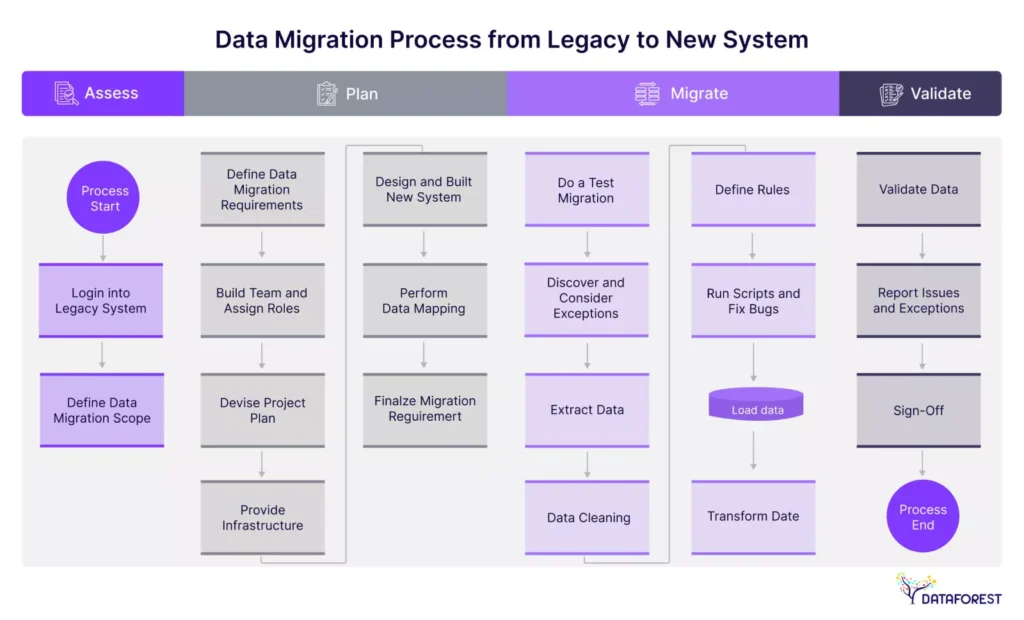
The best practical advice here is: export before you decide. Most major tools now support the REFI-QDA standard (.qpdx), which means you can export your existing NVivo project and open it in MAXQDA, ATLAS.ti, or Skimle to test whether the translation works for your specific project before paying for anything.
The project exchange transfers all documents and straightforward coding reliably. What typically doesn’t transfer: complex query results, NVivo’s matrix intersections, linked annotations within specific node contexts, and some audio/video timestamps. George Mason University’s QDA guide makes the reasonable point that “do NOT expect that complex projects or those using special features of a software will be transferred as desired.”
A practical migration sequence: export your project in REFI-QDA format from NVivo, import into your target tool’s trial version, run a document count and code count check, then manually spot-check 5–10% of coded segments across key themes. That process takes half a day for a typical thesis project and surfaces 90% of migration problems before you commit to a new platform.
Questions researchers actually ask
Is ATLAS.ti still a genuine NVivo alternative now that Lumivero owns both?
It depends what you’re trying to solve. If the issue is pricing or features, ATLAS.ti is still a distinct product with different strengths (network views, hermeneutic analysis workflows). If the concern is commercial dependency or PE-driven pricing pressure, switching from NVivo to ATLAS.ti doesn’t change your situation — you’re still in the same parent company’s ecosystem. MAXQDA is the genuinely independent option in the traditional-CAQDAS category.
Can I use ChatGPT or Claude for qualitative analysis instead?
For quick summaries without methodological demands, yes, broadly. But generic LLM tools lack the structured traceability needed to defend findings — you can’t link a generated theme back to specific source passages the way dedicated CAQDAS tools can. For publishable research or anything requiring audit trails, the honest answer is: not yet as a primary tool. As a supplement for initial familiarisation with a corpus, useful. As the methodology, risky.
What’s the cheapest paid option that gives real mixed-methods capability?
Dedoose, at approximately $14.99–$17.95 per user per month. It was developed by UCLA researchers and is designed for exactly this — linking qualitative codes to quantitative descriptors, running cross-tabulations, and handling the full mixed-methods workflow in a browser. Not as deep as NVivo or MAXQDA, but a genuine tool, not a workaround.
How long does it realistically take to get productive in a new tool?
MAXQDA: most researchers report reaching productive coding within 1–2 weeks if they already know NVivo. The conceptual model is similar. Dedoose: faster, 3–5 days for basic workflows. AI-native tools like Skimle or Dovetail: often same day for core functionality. Traditional CAQDAS tools (NVivo, MAXQDA, ATLAS.ti) share enough conceptual overlap that the mental model transfers — it’s the specific UI you need to relearn, not the whole methodology.
Is MAXQDA’s AI Assist feature actually useful?
It’s useful for specific tasks: generating initial code suggestions to react to, summarising long documents, and identifying potential themes in smaller datasets. It’s not a replacement for coding — it’s more like a research assistant who has read the material and can offer a starting point. The honest comparison from researchers who’ve used it is that it “accelerates specific tasks within a researcher-led workflow” rather than changing the overall time investment significantly. Worth having; not the reason to choose MAXQDA over NVivo.
My supervisor uses NVivo. Can I use something else and still share work?
Yes, in most cases. REFI-QDA export lets you move a project between supported tools. The practical limitation is feature-specific — if your supervisor uses NVivo matrix queries or specific node structures, the transferred project may not reflect those exactly. Worth having an explicit conversation about interchange before starting. Most supervisors in 2026 are at least aware of the alternatives; fewer are dogmatic about the specific tool.
The honest bottom line
NVivo isn’t going anywhere, and it’s not a bad tool. But the argument for it being the default — the safe choice, the one that doesn’t require justification — is weaker than it’s been in 20 years. The consolidation under Lumivero, the pricing trajectory, and the maturation of both cloud alternatives and AI-native tools have genuinely changed the competitive landscape.
If you’re an academic researcher who needs like-for-like capability with independent ownership: MAXQDA is the honest recommendation. If you’re doing UX or product research where turnaround time matters more than methodological depth: Dovetail or an AI-native tool. If you’re on a genuinely constrained budget: Dedoose for collaborative paid work, Taguette if free is the requirement.
The specific tool matters less than matching it to how you actually work — and being honest about what your workflow demands before you pay for features you won’t use. The researchers I’ve seen navigate this well are the ones who exported their NVivo project, imported it into the trial version of three alternatives, and made a decision based on a real test rather than a feature comparison table.
The best qualitative analysis tool is the one that gets out of the way and lets you think. That wasn’t always MAXQDA or Dedoose. Whether it still has to be NVivo is, finally, a real question.
- Best AI Tools for Research and Knowledge Work in 2026
- PARA Method: The Note-Taking System That Actually Survives Contact With Real Work
- RAG Security: What the Hype Misses About Retrieval-Augmented Generation Risks
- Underrated AI Tools Most Researchers Haven’t Found Yet
- AI Customer Service Tools: What Works, What Doesn’t, and What to Watch
- Prompt Injection Explained: How Attackers Target AI Systems
ATLAS.ti 25 Review: Testing the AI Lab Features in Practice
9 AI Tools for Qualitative Researchers: Transcription, Coding, and Analysis Strategies That Actually Work
Qualitative Research Methods: A Practical Guide for Modern Studies
Best AI Tools for Marketing Teams in 2026
NotebookLM for Researchers: A Deep Dive Into the Most Underused AI Tool