


Micro-SaaS in 2026:
Where the Growth Is
and Where It Isn’t
The opportunity is real. But the map that most founders are using is two years out of date. Here’s an honest breakdown of which niches are still compounding, which are collapsing, and what the actual numbers look like for the median builder.
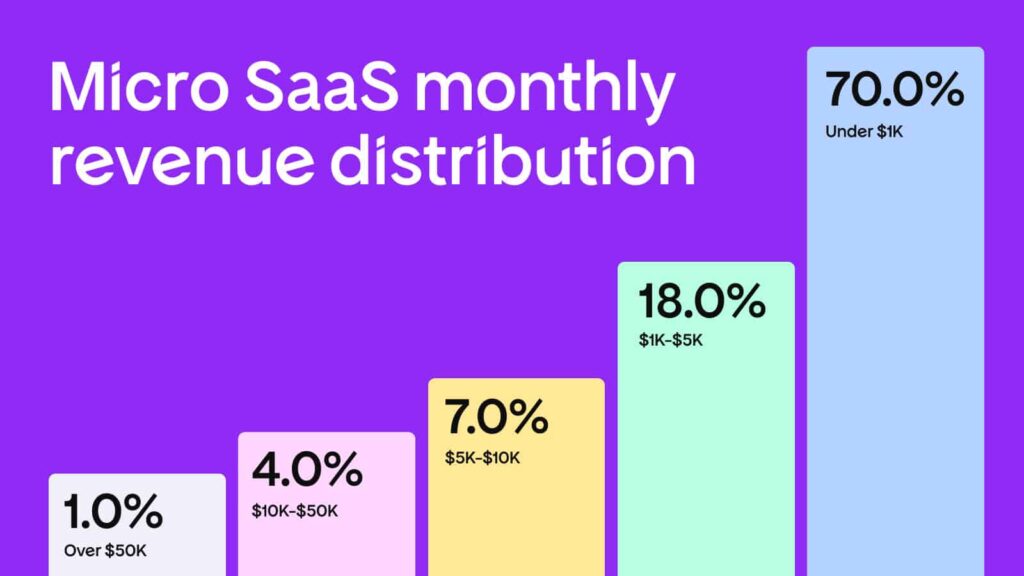
- 70% of micro-SaaS products never break $1K/month. The median across 1,000+ tracked products is ~$500 MRR — not $10K.
- Generic AI wrappers are largely dead. Investors have stopped funding them, and the model providers are absorbing their features.
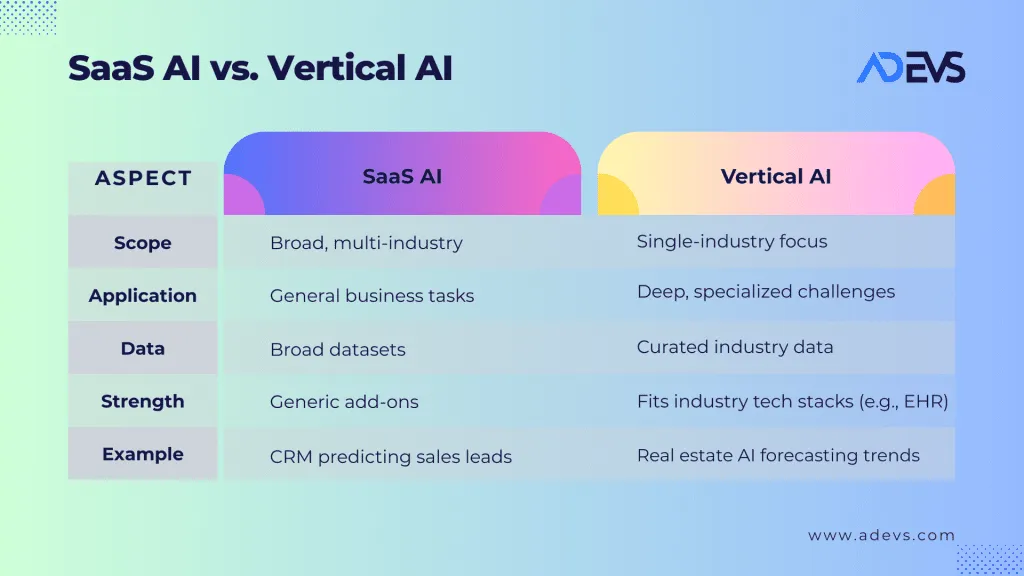
- Growth is concentrated in vertical, workflow-embedded, and data-moat products — not broad-market tools.
- The real ceiling for solo founders without distribution is around $5K–$20K MRR. Breaking past that usually requires either a niche-specific community or a contrarian pricing model.
- 5% monthly churn kills a micro-SaaS. That translates to losing nearly half your users every year while you’re paying to replace them.
Should You Even Do This?
Most content about micro-SaaS skips this question entirely. It shouldn’t.
What Micro-SaaS Actually Is in 2026
The definition hasn’t changed much — small, focused SaaS products typically run by solo founders or teams of two or three, targeting narrow problems with recurring revenue. What has changed is the environment it operates in.
The SaaS market overall is large and still growing. Vertical SaaS alone — meaning industry-specific software — is on a trajectory that outpaces the horizontal market by a significant margin, and micro-SaaS sits at the sharp end of that trend. But the infrastructure has shifted. AI coding tools have cut solo development time dramatically. No-code layers have lowered the build cost. At the same time, AI has also eaten the simplest product categories from below.
This creates a two-track market: founders who understand niche workflows deeply can build things AI can’t easily replicate. Founders chasing broad markets with thin differentiation are walking into a collapsing niche.
Where the Growth Is
Growth in micro-SaaS in 2026 is not evenly distributed. It’s concentrated in a handful of structural positions. Here’s what actually holds up.
1. Vertical-specific workflow automation
The broader vertical SaaS market is projected to grow at a substantial annual rate through the end of the decade, and micro-SaaS participates in this by going narrower still. Instead of “project management software,” the durable opportunity is “compliance documentation for outpatient physical therapy clinics” — one profession, one workflow, deep integration.
What makes this defensible: the founder who builds for dental practices or small freight brokers accumulates domain knowledge that a generalist AI tool or a product manager at a large SaaS company won’t bother acquiring. That knowledge compounds. It becomes the moat.
2. Involuntary churn recovery tools
Roughly a third of SaaS customer losses aren’t voluntary — they’re failed payments. Expired cards alone account for around 42% of those failures, and collectively they represent recoverable revenue across the industry. SMB SaaS companies that can’t justify enterprise dunning tools but need more than Stripe’s built-in retry logic are an underserved, paying market. The ROI case is straightforward: recovering even 20–30% of failed payments for a customer losing $1K/month makes a $50–$100/month tool an obvious line item.
3. Embedded integrations (not standalone tools)
The products with the lowest churn and strongest retention mechanics in 2026 are the ones that sit inside existing workflows rather than requiring users to adopt a new one. A Notion template with a script layer. A Stripe addon. A Shopify micro-app for one specific automation that the platform itself doesn’t natively offer. These tools are harder to replace because the switching cost is the disruption to the workflow, not just the monthly fee.
4. Niche data moats
Every user interaction that makes the product smarter is a moat. If your product learns from user inputs in a way that a general AI tool can’t replicate without that dataset, you have durable defensibility. Real examples include industry-specific compliance checkers, document processors trained on domain-specific formats, and analytics tools where the benchmark data itself is the product.
5. AI meeting intelligence for specific verticals
The meeting intelligence market overall is growing fast. The generic layer is already crowded — horizontal players have captured most of the surface. But healthcare compliance documentation, legal deposition summaries, and sales coaching tools that integrate with vertical-specific CRMs are underserved. The general-purpose tools don’t solve these well because they require domain-specific output formats, terminology, and regulatory context.
Where It Isn’t
This is the section most articles avoid. The graveyard is large and instructive.
| Category | Why It’s Dead or Dying | Status |
|---|---|---|
| Generic AI writing tools | Competed directly with ChatGPT, Jasper, Copy.ai and 50+ others — zero differentiation. Jasper itself revised its ARR forecast down 30% in 2024. | Graveyard |
| General project management | Category leaders are deeply entrenched. “Better UI” is not a moat. TaskFlow-type products die at $2K MRR peak. | Saturated |
| Social media schedulers | Buffer, Later, and platform-native tools own this space. Even niche entrants struggle past $3K MRR without significant distribution. | Saturated |
| AI wrapper (no data/workflow moat) | When the underlying model provider ships the same feature natively, the wrapper’s value proposition evaporates overnight. Happened to dozens of funded startups in 2024–2025. | Category collapse |
| Generic chatbot builders | Native AI integrations in every CRM and helpdesk have absorbed most of this demand. | Declining |
| Email marketing (horizontal) | High performer in earlier cohorts, but now dominated by Mailchimp, Beehiiv, ConvertKit — vertical email tools still viable. | Competitive ceiling |
| Resume/cover letter generators | ChatGPT does this for free. Any price point is competing with zero. | Commoditized |
| Developer tools (horizontal APIs) | Still viable if sticky, but integration requirements are high and churn is low only once embedded. Highly competitive to reach initial traction. | Proceed with caution |
The Revenue Reality Map
The data here is from analysis of over 1,000 tracked micro-SaaS products, cross-referenced with the Freemius platform and MicroConf’s annual survey. It’s not the Indie Hackers feed.
This matters because nearly all the micro-SaaS content online is written by or about the 5% who broke past $50K MRR. The survivorship bias is extreme: Product Hunt celebrates launch spikes. Twitter rewards founders sharing their best month. Using MicroConf attendee numbers (28% of 230 self-selected founders reporting $100K+ MRR) as a benchmark is like using Olympic sprint times to plan your morning run.
What the numbers actually say: reaching $1K MRR takes a median of 12–18 months for founders who validate before building. 50% plateau in the $1K–$10K range and stay there. 30% never reach $1K and abandon. The path from $10K to $100K MRR typically takes another 12–24 months, requires either strong SEO or a community distribution channel, and rarely happens without deliberate expansion revenue mechanics.
The Churn Problem Nobody Talks About
The standard SaaS conversation about churn focuses on annual rates. For a bootstrapped micro-SaaS, thinking in annual terms is a mistake. The relevant unit is monthly.
5% monthly churn means losing approximately 46% of users in a year. That means your marketing spend is largely replacing losses rather than building compounding growth. Most founders look at a 3–6% monthly rate and shrug, treating it as normal. For a product with 200 subscribers, that’s 10 people leaving every 30 days — requiring constant acquisition just to stay flat.
| Monthly Churn Rate | Annual User Loss | What It Means in Practice |
|---|---|---|
| < 1% | ~11% | Strong — compounding growth is real |
| 2% | ~21% | Manageable — typical for embedded tools |
| 5% | ~46% | Dangerous — acquisition treadmill begins |
| 8%+ | ~62% | Terminal — product-market fit does not exist |
The fix is structural, not tactical. Churn below 2% in micro-SaaS almost always correlates with three things: the tool is embedded in a daily workflow, switching creates friction beyond just price, and onboarding is fast enough that users hit value before the trial ends. Around 70% of users who churn do so within the first three months — failed onboarding or a mismatch between what was promised and what the product delivers.
How a Winning Micro-SaaS Actually Works Together
This is the integration layer — the step-by-step of how the pieces connect in products that actually hold their MRR.
The 80% Solution Stack
This covers what a solo founder actually needs to ship, charge, and retain users in 2026. No bloat.
Stack costs at early stage typically run under $150/month until $5K MRR. After that, evaluate based on actual usage patterns.
FAQ
Final Thoughts
Here’s the uncomfortable truth that most micro-SaaS content buries in the footnotes: 70% of launched products earn less than a barista’s hourly wage. Not because the founders were incompetent, but because the market doesn’t distribute revenue evenly across all ideas. It concentrates it in products with structural defensibility — data moats, workflow lock-in, community distribution — and punishes products that rely on “better UX” or “lower price” as their primary value proposition.
The opportunity is real. The tools to build have never been cheaper. A solo founder with deep niche expertise and strong distribution access can build a $5K–$20K MRR product in 12–18 months that generates meaningful income with high margins and low overhead.
But the trade-off is this: the more you compress the idea toward a broad market, the more you’re competing with well-funded teams and AI that improves weekly. The only durable position is the one that requires knowing something deeply that generalists don’t care enough to learn. Build the surgical instrument, not the Swiss Army knife. And charge accordingly from day one.
Sources
Last updated: May 2026 · trendix.tech · Pricing and market data subject to change. Verify current figures with cited primary sources.
Content Marketing for Solo Founders: Systems That Run on Autopilot
Best AI Tools for Freelancers—Build a $40/Month Stack That Works
Your Jobs are changing because of AI — Here’s Exactly How
Cursor vs Claude Code: 6 Months in Production — Which Is Actually Better?
Obsidian vs. Notion: Which PKM Tool Actually Fits Your Workflow?
Radiology AI in Production: Distribution Shift, Bias, and Why Benchmarks Don’t Tell the Full Story
AI Coding Assistants: The Complete 2026 Guide
Freelance Pricing Strategy: How to Raise Your Rates Without Losing Clients