

The State of AI in Marketing: Q1 2026 Data
Two years ago, the conversation was “should we experiment with AI?” Today, that question is genuinely obsolete. The gap has closed, the numbers are in, and they’re harder to ignore than ever.
Let’s start with what the research actually says, not what the vendors want you to believe. According to the Salesforce State of Marketing 2026 report, 87% of marketers now use generative AI in at least one recurring workflow — up from 51% in early 2024. That’s a 36-percentage-point swing in 24 months. Enterprise teams (250+ marketers) are sitting at 94% adoption. And even micro-teams — solo creators, small agencies — have closed the gap significantly.
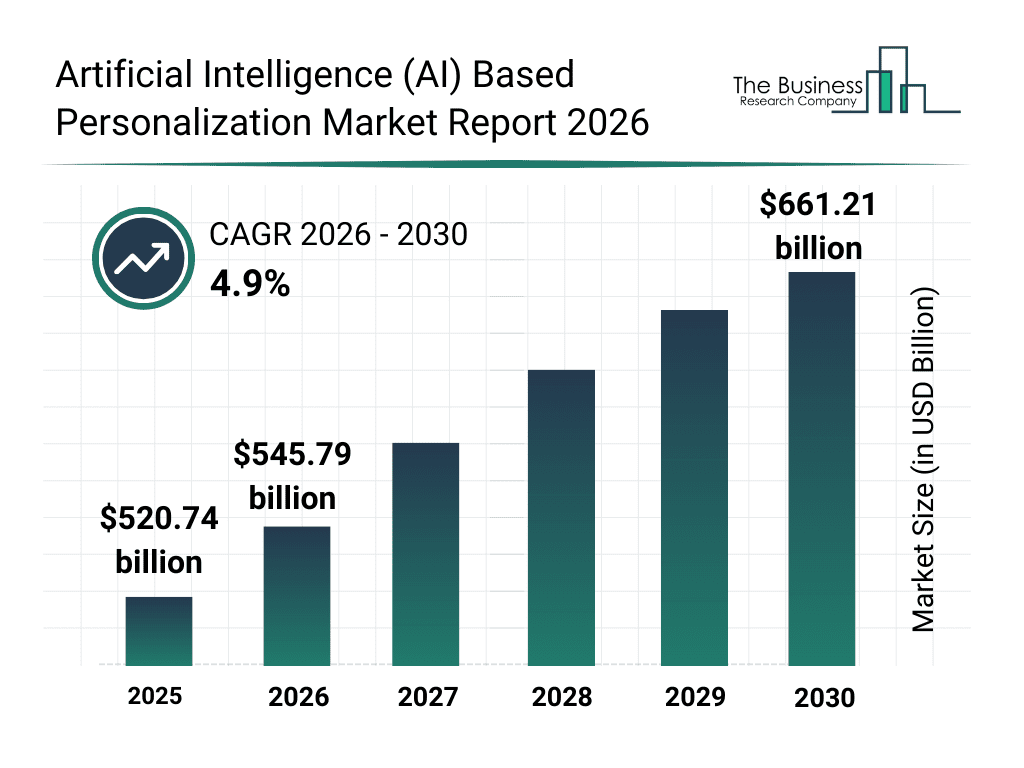
The market size tells its own story. Statista puts global AI marketing revenue at roughly $47 billion in 2025, on track for $107 billion by 2028 — a compound annual growth rate above 30%. Gartner reports that worldwide AI spending is forecast to hit $2.5 trillion in 2026, a 44% year-over-year jump.
But here’s what I find more telling than any of those headline numbers: the CMO Survey conducted by Duke University’s Fuqua School of Business — one of the more rigorous academic surveys on marketing leadership — found that GenAI adoption grew 116% year-over-year, now deployed across 15.1% of all marketing activities (up from 7% the prior year). And importantly, they’re not just tracking adoption. They tracked impact: 8.6% improvement in sales productivity, 8.5% increase in customer satisfaction, and a 10.8% reduction in marketing overhead costs. These are real numbers from real organizations, not vendor-commissioned surveys.
The productivity gains are deceptively unevenly distributed. HubSpot’s data shows senior practitioners save 8–10 hours weekly, while junior staff save 3–4 hours. The implication: AI amplifies strategic thinkers more than it elevates entry-level operators. It raises the floor but extends the ceiling for the experienced.
What’s shifted is the nature of the conversation. Adweek put it bluntly in their March 2026 issue: AI-native competitors are quietly widening the gap — not because they use AI more, but because they’ve reorganized around it. They treat autonomy, data flows, and decision latency as competitive advantages. Everyone else is still bolting AI onto the same workflows they had in 2022.
Content Creation: What AI Actually Does Well (and Where It Still Falls Short)
AI is a spectacular first-draft machine. It’s a mediocre final-draft machine. And it’s a terrible replacement for genuine human point-of-view. The marketers getting the most out of it understand these distinctions deeply.
Content creation is the most common AI use case — 55% of marketers use it for drafting text, images, or video, according to HubSpot’s 2026 State of AI report. But only 7% publish without editing. A full 56% significantly revise AI drafts. That’s not a failure mode; that’s the correct workflow.
What AI does well in content: research aggregation, structural scaffolding, variation generation (write this 10 ways), repurposing (turn this webinar into a LinkedIn series), SEO optimization passes, and headline testing. What it does poorly: original insight grounded in lived experience, narrative arc that feels genuinely human, nuanced takes on contested topics, and brand voice that’s truly distinct rather than “sounds professional.”
“In 2026, it’s not about whether you use AI in your content. It’s about whether your content, despite using AI, still has something to say that only you could say.”
— Emerging consensus among top content strategists, spring 2026Gartner projects that 90% of all online content will be generated or edited with AI by 2027. And here’s the counterintuitive consequence: that makes authentic, human-crafted insight more valuable, not less. When everyone’s running the same tools with the same default prompts, differentiation comes from what the AI can’t fabricate — direct experience, proprietary data, genuine contrarianism.
The Numbers on Content ROI
McKinsey’s data shows companies using AI in content drafting see an average 3.2x ROI on that specific application. Personalization engines deliver 2.7x. Audience research tools: 2.4x. Ad copy generation: 2.3x. These aren’t transformative on their own, but stack them across a team and you get something real.
Higher ROI from AI-driven campaigns vs. traditional methods, along with 32% more conversions and 29% lower acquisition costs. (McKinsey / Zebracat AI)
Semrush found that 68% of businesses have seen increased content marketing ROI from AI, and 65% reported an uplift in SEO performance from AI tools specifically. The catch — and it’s a real one — is that most businesses aren’t measuring their AI ROI with any rigor. The Marketing AI Institute reports that fewer than 30% of marketers actually track AI-specific KPIs. The gains are real; the attribution is often sloppy.
The Human-in-the-Loop Imperative
Non-English AI content is 12% less accurate on average than English-language output, per Stanford HAI. For any brand running multilingual campaigns, that’s a genuine quality risk. And across all languages, brand voice drift is a mounting problem — particularly when multiple team members are prompting independently, each with slightly different instructions.
The practical fix most mature teams have landed on: a centralized prompt library, a brand voice document specifically written for AI consumption, and a human editor (ideally senior) reviewing anything that touches the brand’s core positioning. Not because AI is untrustworthy, but because consistency at scale requires governance, not just capability.
The Video Revolution: From Concept to 4K in Hours
Video was the bottleneck that killed more content strategies than any other format. Too expensive, too slow, too dependent on talent schedules and location logistics. AI has made a serious dent in all three of those problems simultaneously.
The numbers from Wyzowl’s 2025 Video Marketing Report are striking: 91% of businesses now use video as a marketing tool. 96% say it has helped increase user understanding of their product or service. And 90% report video directly generates leads. The demand is clear — the production challenge was always the constraint.
AI video tools in 2026 have split into two fairly distinct categories. First, text-to-cinematic-video generators — tools like Google’s Veo 3, ByteDance’s Seedance 2, OpenAI’s Sora 2, and Kling 3.0 (launched February 2026 with multi-shot storyboarding). These are for brands that need stunning visual assets without a film crew. Second, avatar-based personalization engines — HeyGen, Synthesia, AKOOL — where the goal is scale and personalization, not cinematic quality.
| Tool | Best For | Notable Capability | Starting Price |
|---|---|---|---|
| Google Veo 3 | Cinematic brand video | Native audio + lip-sync in one pipeline | Free (limited) / Enterprise |
| Kling 3.0 | Marketing campaigns | Multi-shot storyboarding; 4K @ 60fps | ~$10/mo entry |
| HeyGen | B2B personalized outreach | 700+ avatars; dynamic name/company insertion | $24/mo (Creator) |
| Synthesia | Corporate training + comms | 140+ languages; trusted by 90% of Fortune 100 | $18/mo |
| Runway Gen-4 | Creative directors, filmmakers | Camera motion control; artistic outputs | $12/mo |
| Creatify AI | Product ad creatives | Aurora model; instant cinematic product shots | $33/mo |
| Luma Dream Machine | Social media volume | API for large-scale localized variants | Free tier / Pro |
The standout development of early 2026 is native audio generation. Tools like Veo 3 and Kling 3.0 now produce synchronized dialogue, sound effects, and background music in a single pass — eliminating the separate audio workflow that used to add days to production. For short-form social content, this is genuinely transformative.
HeyGen: 300% CTR Increase for B2B Video Outreach
One of the more credible case studies circulating in 2026 involves HeyGen’s personalization engine in B2B email campaigns. The system allows a marketing team to record a single spokesperson video, then use AI to dynamically change the spoken name and company details for thousands of different prospects.
The result, reported across multiple early-adopter enterprise teams, is roughly a 300% increase in click-through rates compared to standard video or text-only outreach. The mechanism is straightforward: people respond to their own name, and they respond to content that feels made for them specifically. The technology makes that feel achievable at scale.
A note of honest caution: the avatar quality, while impressive, still has tells. Zapier’s testers noted that full-screen viewing can reveal unnatural micro-movements. And Hootsuite’s 2025 Social Media Trends Report found that short-form video generates 2.5x more engagement than any other content type — but audiences are increasingly sophisticated about AI-generated content. Brands posting three or more short-form videos weekly see 67% more reach than those posting less frequently. The production advantage AI provides is real; the authenticity premium for content that feels genuinely human is equally real.
Agentic AI: The Shift from Tool to Autonomous Operator
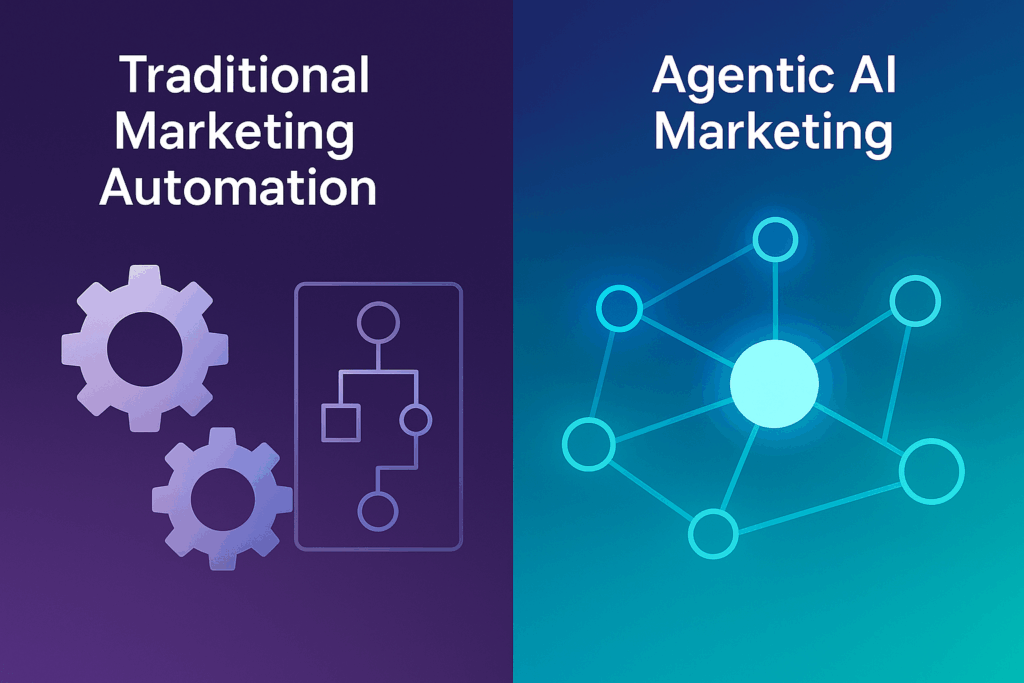
This is the biggest structural shift in AI marketing for 2026, and it’s genuinely underreported relative to its importance. AI agents aren’t just writing content or generating images. They’re running workflows.
In Q1 2026, Gartner found that 34% of enterprise marketing teams now run at least one autonomous agent in production — more than double the 14% reported in Q4 2024. An “agent” in this context means an AI system that can independently research, make decisions, execute multi-step tasks, and report back, without a human approving each action.
The practical applications that have shown up most reliably: sentiment analysis on social media at scale (aggregating customer reviews and flagging emerging issues before they become crises), automated competitor intelligence (monitoring rival brands’ content, pricing, and positioning changes), and campaign performance monitoring with automated anomaly detection.
BlueConic’s “Growth Plays” use automated logic to identify customer segments likely to repurchase and trigger personalized messages based on prior website behavior — with no human orchestration per campaign.
Amperity’s AI assistants unify customer identity and behavioral history in real time, grounding marketing decisions in active session data rather than stale CRM records.
Braze has added features that automate how marketers build and send messages, with AI choosing send time, channel, and content variant based on individual user behavior patterns.
The tool landscape here is maturing fast. Gumloop is being used by sophisticated marketing teams for cross-channel sentiment aggregation. The new generation of tools like Manus can orchestrate complex workflows across multiple AI models — choosing Veo 3 for one asset, DALL-E for another, and a text model for the copy, all within a single task execution.
The Honest Risk Profile
Agentic AI is powerful enough that the failure modes matter a lot. Three specific concerns keep surfacing in honest conversations with enterprise CMOs: data leakage through uncontrolled prompt sharing (cited by 61% of CMOs as a top concern, per McKinsey), brand voice drift when agents operate without tight style guardrails, and attribution confusion when autonomous campaigns run without human checkpoints.
The teams getting this right treat agent deployment like they’d treat hiring a new employee for a critical role: detailed briefing, constrained permissions, frequent check-ins early, and graduated autonomy as trust builds. The teams getting it wrong hand agents the keys and wonder why the brand sounds like it’s having an identity crisis.
Search Is Changing Under Your Feet
Zero-click search is no longer a Google-specific phenomenon. In 2026, it stretches across ChatGPT, Perplexity, Gemini, Bing, and Meta AI. Your content is becoming a source, not a destination — and that requires a fundamentally different approach to visibility.
The headline numbers are confronting. Gartner predicted a 25% drop in traditional search engine volume by 2026 as AI chatbots absorb query volume. The CTR impact is documented: when AI Overviews appear in Google results, the click-through rate for the top-ranking page drops from roughly 7.3% to 2.6% — a 34.5% decrease. Nearly 800 million people a week now use ChatGPT alone to research questions and compare options, per WordStream analysis.
But the reflex response — despair about SEO — misses a real opportunity. Ahrefs data shows that 91% of pages cited in AI Overviews contain some level of AI-generated (or AI-assisted) content. And a site ranking first in traditional search is 25% more likely to be featured in AI-generated answers, per Ziptie research. Traditional authority still matters; it just needs to be structured for machine interpretation, not just human readers.
What used to matter: Keywords, backlinks, page speed, meta data.
What still matters: All of that, plus structured data, clear topic authority signals, original data/research, and content that machines can cleanly extract and attribute.
What’s new: Optimizing for LLM citation — ensuring your content appears when AI tools answer queries relevant to your space.
The concept of Answer Engine Optimization (AEO) has moved from fringe to mainstream marketing strategy in 2026. Tools like Bluefish’s AI Accuracy now track how AI channels represent brands, establishing a “Brand Vault” of verified facts that serve as training references and monitoring for factual mismatches across AI-generated responses.
The practical implication: if you’re not monitoring what AI systems say about your brand or product when users ask relevant questions, you’re flying blind on a significant and growing share of your audience’s decision journey. This isn’t theoretical anymore. For B2B buyers especially, AI-mediated research is now a normal part of the purchasing process.
Personalization at Scale — Finally Real, Finally Complex
Marketers have been promised personalization at scale for 15 years. Most of what delivered on that promise was segmentation with a fancy name. In 2026, the gap between the promise and the reality has actually narrowed — though it’s still far from solved.
Companies using AI-powered personalization are seeing a 40% increase in average order value compared to generic content delivery, per Forrester. That’s a compelling number. 67% of consumers now expect personalized experiences — AI-powered recommendation systems that feel relevant rather than intrusive, per Adobe.
What’s changed technically: AI systems can now process behavioral signals in real time during an active session. Amperity‘s recent launch does exactly this — recognizing customers instantly based on behavioral patterns and triggering personalized recovery journeys (for cart abandonment, for example) during the session, not hours later when the moment has passed.
The Tension with Privacy
The personalization paradox is real and worth stating plainly: 74% of consumers express concern about online privacy with AI, yet 67% expect personalized experiences. These aren’t contradictory in practice — people want relevance without surveillance, which requires first-party data strategies rather than third-party tracking.
The brands navigating this well have invested in explicit value exchanges: give us your preferences and we’ll genuinely improve your experience. The brands getting it wrong are still trying to infer what consumers want from opaque behavioral tracking, then being surprised when trust erodes. AI can personalize beautifully from first-party data. It requires trust to get that data. The technology is ahead of the trust-building work for most organizations.
Despite the impressive personalization technology available, industry analysis finds that 63% of retailers still struggle with effective personalization in practice. The technology is available; the organizational capability — clean data, governance, cross-functional ownership — remains the actual bottleneck for most teams.
The 2026 AI Marketing Stack: An Honest Assessment
The tool landscape has consolidated somewhat relative to the 2024 proliferation peak, but there are still meaningful choices to make depending on your use case. Here’s an honest breakdown of what categories matter and what to look for in each.
Built on Semrush’s keyword and competitor data. Gives you an optimization score as you write, handles brand voice via uploaded writing samples, and supports multilingual output. Best for teams that need SEO-aware drafts, not just generic AI text.
Semrush subscription requiredIn 2026, marketing research starts here. AI search engines for aggregating competitor intelligence, market trend signals, and audience sentiment — dramatically faster than manual sourcing. Gumloop adds the automation layer for recurring reports.
Free – $20/moHeyGen for B2B personalized outreach and flexibility. Synthesia for structured, high-volume training and corporate comms in 140+ languages. Don’t treat them as interchangeable — they serve genuinely different production workflows.
$18–$99/moWhere AI agents live. These orchestration tools connect your data sources, AI models, and output channels. Building even one autonomous workflow here — say, weekly competitor monitoring → summary → Slack report — changes how a team operates.
Free – $100+/moMarketers are now building software. v0 turns natural language into production-ready frontend code, and for landing page prototyping specifically, it’s become a genuine favorite among growth marketers who need to test fast without engineering queues.
Free – usage-basedMonitors how AI systems (ChatGPT, Gemini, Perplexity, etc.) represent your brand. Establishes a verified Brand Vault and scores factual accuracy across millions of daily AI evaluations. Quietly becoming essential infrastructure for mid-market and enterprise brands.
Enterprise pricingOne honest note on tool selection: the market for point solutions is beginning to consolidate. Gartner and McKinsey both project that by 2027, platform suites will absorb many standalone tools — and the average marketing budget’s AI vendor count will shrink even as AI’s share of total budget grows. If you’re evaluating tools right now, ask whether the vendor has a realistic path to platform integration, or whether you’re investing in something likely to be commoditized by the platforms you already use.
Who’s Winning and How: Real Cases Worth Studying
L’Oréal: Content at Scale With Human Creative Oversight
L’Oréal has officially incorporated generative AI tools into its daily marketing workflows specifically to manage the increasing demand for high-volume digital content. The beauty giant is using AI to adapt visual assets and video footage for various social platforms and regional markets — the kind of localization work that previously required significant time and budget per market variant.
Critically, human creative teams retain final approval on all output. The production cost reduction is real; the creative quality standard hasn’t been compromised because the AI is operating in a well-defined supporting role rather than a decision-making one.
Serviceplan & Publicis: Agency AI Integration at Scale
In February 2026, two major global agency groups — Serviceplan Group and Publicis Groupe — announced formal partnerships with Luma AI to integrate Dream Machine’s video generation technology into their production operations. This isn’t experimental; it’s a structural change to how large agency groups approach video production for brand clients.
The driver is straightforward: brands need more video content for more platforms in more formats, and the traditional production model can’t scale to meet that demand at acceptable cost. Dream Machine’s API enables automated creation of localized variants — a single campaign brief becoming dozens of market-specific executions with minimal additional production overhead.
B2B SaaS: The Agentic Competitor Intelligence Loop
Multiple mid-market B2B SaaS companies have now deployed what they’re calling “competitor intelligence agents” — automated systems that monitor competitor pricing pages, product update blogs, job postings (a leading indicator of product roadmap priorities), and social sentiment, then generate weekly briefings delivered to relevant stakeholders without manual curation.
One reported workflow: Gumloop connecting web scrapers, a summarization model, and Slack, running on a weekly cadence. Setup time roughly four hours. Ongoing maintenance: minimal. The equivalent manual research effort: 3–4 analyst hours per week.
The Honest Pitfalls Nobody Talks About Enough
Every piece of AI marketing content emphasizes opportunity. Fewer people talk honestly about the failure modes that are quietly accumulating in organizations that moved fast without thinking carefully.
1. The Brand Voice Erosion Problem
When content is generated at scale by AI without consistent style guardrails, brand voice drifts toward a kind of competent blandness. Content becomes readable, SEO-adequate, and completely forgettable. Adweek identified this plainly: “content volume, speed, and variation are becoming close to free — meaning ‘good enough’ creative collapses in value.” If your AI content strategy is optimizing for volume without investing equally in distinctiveness, you’re building a brand that looks like everyone else’s AI output.
2. The Utilization Gap
A 2023 Gartner survey highlighted something that’s gotten worse, not better: while CMOs commit budgets to AI tools, actual utilization of existing martech has dropped to 33% (from 42% in 2022). Organizations keep buying tools they’re not using well. Before acquiring another AI platform, audit what you’re already not fully utilizing.
3. The Measurement Vacuum
Fewer than 30% of marketers actually measure their AI ROI systematically. Organizations run parallel A/B tests occasionally, but rarely have a coherent framework for attributing business outcomes to specific AI interventions. This matters because without measurement, you can’t optimize — and you can’t defend the budget in a downturn. Build measurement infrastructure alongside capability. It’s not optional.
4. The Junior Talent Risk
Gartner’s CMO Spend Survey found that 23% of agencies reduced junior copywriting headcount in 2025, and 31% plan further cuts in 2026. The short-term logic is understandable. The medium-term risk is worth considering: junior roles exist partly to develop senior talent. If you eliminate the pipeline, you may find yourself short on the strategic judgment that makes AI outputs worth publishing in five years.
5. The Regulatory Exposure Growing
A landmark Northern District of California ruling in early 2026 found that when a platform’s AI exercises “ultimate authority” over assembled ad content, the platform may be considered a maker of fraudulent statements under securities law. This creates new legal exposure for any organization deploying autonomous AI in advertising. Run this by legal before deploying fully autonomous ad creation agents. The space is moving fast enough that new exposure is appearing quarterly.
OpenAI’s February 2026 rollout of ads in ChatGPT creates a new complication for content marketers: users now need to distinguish between organic AI recommendations and sponsored ones. As Adweek put it, marketing teams will be held accountable when customers ask what’s organic, what’s paid, and whether AI is serving their interests or just the brand’s.
Your 90-Day AI Integration Roadmap
Theory is abundant. Concrete sequencing is rarer. Here’s a realistic 90-day arc for teams moving from “experimenting” to “operating” — drawn from patterns in teams that have genuinely made the transition.
- Days 1–14: Audit and Baseline
Map every repetitive content and research task in your current workflow. Document time spent. Identify the three highest-volume, lowest-strategic-value tasks — these are your first automation targets. Run a tool audit: what do you already have that you’re underusing?
- Days 15–30: Brand Voice Documentation
Before deploying AI at scale for content, write a brand voice document specifically formatted for AI consumption. Include examples of what you do and don’t say, prohibited phrases, tone descriptors with concrete examples, and your core positioning claims. This single artifact is the most leveraged investment you can make.
- Days 31–45: First Agentic Workflow
Pick one repeating research or reporting task and automate it end-to-end. Competitor monitoring, weekly SEO report, social listening summary — something that currently takes 2–4 hours of human time. Build it in Gumloop or Make, run it for two weeks alongside the manual process, then cut the manual process.
- Days 46–60: Content Pipeline Integration
Introduce AI into your content production workflow — not to replace writers, but to accelerate the research and structural scaffolding phases. Establish a prompt library accessible to the whole team. Set up a review process: who approves AI-assisted content and at what threshold?
- Days 61–75: Search and AEO Audit
Run a systematic check of what AI search tools (ChatGPT, Perplexity, Google AI Mode) say about your brand, products, and core value propositions when queried. Identify factual errors or gaps. Set up monitoring — either via a tool like Bluefish or a manual weekly spot-check protocol. Begin optimizing your highest-authority content pages for structured data and clear topical signals.
- Days 76–90: Measurement Framework and Retrospective
Define 3–5 AI-specific KPIs for your team. Time saved per task. Content output volume. Error rate in AI-assisted work. Conversion rate on AI-optimized landing pages. Run a retrospective on the 90 days: what’s working, what was oversold, what needs governance. Publish the results internally. Build a case for what comes next based on data, not enthusiasm.
The brands winning in 2026 share a specific quality: they’ve stopped treating AI as a tool and started treating it as infrastructure. Infrastructure requires governance, maintenance, and deliberate design. It also, when done right, becomes a durable competitive advantage that’s genuinely hard to replicate quickly.
The window for this to be a differentiator is probably 18–24 months. After that, the capability will be table stakes and the advantage will have shifted again — likely toward whoever has the best first-party data, the clearest brand positioning, and the most trusted human voices at the center of their content strategy. Build all three.
More from Trendix
Curated intelligence for marketers, creators, and growth teams
Sources & External Links
Every claim, statistic, and tool reference in this guide traces back to a published source. Links verified as of May 2026.
- Salesforce State of Marketing 2026 — 87% GenAI adoption in recurring workflows
- Statista Global AI marketing revenue: $47B (2025) → $107B projected (2028)
- Gartner Worldwide AI spending forecast: $2.5T in 2026, 44% YoY growth
- CMO Survey Duke Fuqua — 116% YoY GenAI adoption growth, 15.1% of marketing activities
- HubSpot AI Trends 2026 — 6.1 hrs saved per marketer per week on average
- Adweek March 2026 issue — AI-native competitors reorganizing around autonomy
- HubSpot 2026 State of AI — 55% use AI for content drafting; 56% significantly revise
- Gartner Projection: 90% of online content AI-generated or edited by 2027
- McKinsey 3.2x average ROI on AI content drafting; 2.7x on personalization engines
- Semrush 68% of businesses report increased content marketing ROI from AI
- Mktg AI Inst. Fewer than 30% of marketers track AI-specific KPIs systematically
- Stanford HAI Non-English AI content 12% less accurate than English output on average
- Wyzowl 2025 Video Marketing Report — 91% of businesses use video as marketing tool
- Google Veo 3 Native audio + lip-sync in single pipeline; cinematic brand video
- Kling 3.0 Multi-shot storyboarding; 4K @ 60fps (launched Feb 2026)
- HeyGen 700+ avatars; dynamic name/company insertion for B2B outreach
- Synthesia 140+ languages; trusted by 90% of Fortune 100 for corporate training
- Runway Gen-4 Camera motion control; artistic outputs for creative directors
- Creatify AI Aurora model; instant cinematic product shots for ad creatives
- Luma Dream Machine API for large-scale localized video variants; social media volume
- Hootsuite 2025 Social Media Trends — short-form video 2.5x more engagement
- Zapier Avatar quality testing — micro-movement tells at full-screen viewing
- Gartner 34% of enterprise marketing teams run autonomous agents in production (Q1 2026)
- BlueConic “Growth Plays” — automated segment identification and trigger messaging
- Amperity AI assistants unifying customer identity in real-time active sessions
- Braze Automated send-time, channel, and content variant selection per user
- Gumloop Cross-channel sentiment aggregation and workflow orchestration
- Manus Multi-model workflow orchestration — Veo 3, DALL-E, text models in single execution
- McKinsey 61% of CMOs cite data leakage through uncontrolled prompt sharing as top concern
- Gartner 25% projected drop in traditional search volume by 2026 as AI chatbots absorb queries
- Ahrefs 91% of pages cited in AI Overviews contain AI-generated or assisted content
- Ziptie First-rank search pages 25% more likely featured in AI-generated answers
- WordStream ~800 million weekly ChatGPT users researching questions and comparing options
- Bluefish AI Accuracy platform — Brand Vault monitoring across LLM citation channels
- Forrester 40% increase in average order value with AI-powered personalization
- Adobe 67% of consumers expect personalized AI-powered recommendations
- Amperity Real-time session personalization — behavioral signal processing during active sessions
- Salesforce 74% consumer privacy concern vs. 67% personalization expectation tension
- McKinsey 63% of retailers still struggle with effective personalization in practice
- ContentShake AI Semrush-built SEO writing with brand voice upload and multilingual support
- Perplexity AI search engine for competitor intelligence and market trend aggregation
- Google AI Mode Search Labs AI-powered search experience for research workflows
- v0 by Vercel Natural language to production-ready frontend code for landing page prototyping
- Gumloop No-code AI workflow automation and agent orchestration
- n8n Open-source workflow automation with native AI integrations
- Make Visual automation platform for connecting apps and AI services
- L’Oréal GenAI in daily marketing workflows — visual asset adaptation with human creative oversight
- Publicis Groupe Feb 2026 partnership with Luma AI for Dream Machine video generation integration
- Luma AI Dream Machine API for automated localized video variant creation at agency scale
- Gumloop B2B SaaS competitor intelligence agent workflow — web scrapers + summarization + Slack
- Adweek “Good enough creative collapses in value” — content volume vs. distinctiveness warning
- Gartner Martech utilization dropped to 33% (from 42% in 2022) — CMO survey data
- Gartner CMO Spend Survey — 23% agency junior copywriting headcount reduction in 2025
- N.D. Cal. Early 2026 ruling — AI with “ultimate authority” over ad content as fraudulent statement maker
- OpenAI Feb 2026 ChatGPT ads rollout — organic vs. sponsored recommendation distinction
General Research Hubs
Google Still Cares About Mobile-First Indexing — Here’s Why You Should Too
Best AI Tools for Marketing Teams in 2026
No-Code Automation: Build, Connect, Scale —Without Touching a Line of Code
Small Business Marketing Automation Is Broken — Here’s What Works
Obsidian vs. Notion: Which PKM Tool Actually Fits Your Workflow?