

The Blogging Strategy That Survives Google’s AI Era — and the One That Won’t
Content Marketing for Solo Founders: Systems That Run on Autopilot
You’re building the product, handling support, doing sales, and managing everything else. The last thing you have is 20 spare hours a week to write content. Here’s how to build a machine that produces it while you sleep — without sacrificing quality or faking authority.
// The Numbers That Matter
TL;DR – What You Need to Know in 2 Minutes
This guide is for solo founders who understand they need content marketing but don’t have a team to run it. It’s not about posting more — it’s about building a system where each hour of work produces weeks of distribution.
- The core problem: Content created ad-hoc dies the day you publish it. Systems multiply value across time and channels.
- The architecture: One pillar piece → five distribution channels → automated email sequence → compounding SEO. This is the full loop.
- Tool cost reality: A functional automated stack runs $150–$500/month in 2026. The expensive part is your time to configure it, not the subscriptions.
- The honest timeline: Expect 60–90 days to see your first meaningful signals (email signups, organic traffic). Expect 8–9 months before the flywheel spins reliably. Anyone selling faster outcomes is selling you something else.
- What actually fails: Most solo founders build the system, produce three pieces of content, and abandon it when the first-month metrics disappoint. Consistency is the actual bottleneck — not tooling.
- Best starting point: Don’t start with the newsletter. Start with one long-form piece that solves a real, specific problem. Everything else distributes from that.
- What you should skip: TikTok, Reels, and short-form video — unless your product is inherently visual or you already live there. For most B2B solo founders, this is a time sink with weak conversion fundamentals.
Why Systems Beat Hustle — and Why Most Founders Still Choose Hustle
A content system isn’t a content calendar. It’s a machine that takes one good hour of your thinking and turns it into six weeks of distribution, a permanent SEO asset, and an email sequence that runs while you’re debugging a production issue at midnight.
There’s a reason most solo founders treat content as an afterthought: because the feedback loop is horrible. You spend three hours writing something, post it, and by Monday it’s scrolled out of existence. The rational response is to stop doing it. And so most founders publish sporadically, feel guilty about not publishing, and eventually give up on content entirely.
The problem isn’t the content — it’s the architecture. Or rather, the absence of one.
Here’s what actually changed in 2025–2026: the tools to build a real content infrastructure dropped from “enterprise-level complexity” to “one afternoon’s worth of setup.” According to a 2025 Indie Hacker Trends Survey, solo founders who adopted structured content workflows now spend 5–10% of their week on marketing, down from 20–30% before automation became accessible. That’s not a marginal improvement. It’s a structural one.
Autopilot doesn’t mean zero effort. It means your effort is concentrated at the creative/strategic level — writing a strong pillar piece, recording a good 12-minute explanation, doing real research — and the distribution, reformatting, scheduling, and email delivery happen automatically. You’re a human doing human work; the machine handles logistics.
The founder who produces one genuinely deep piece of content per month, with proper repurposing and distribution automation, will almost always outperform the founder who posts daily but has no system. The compounding effect of good SEO plus email nurturing plus consistent social distribution, all from a single input, is how content actually builds a business.
The other piece most people underestimate: solo founders have a natural credibility advantage over content farms and ghostwritten brand blogs. You actually know things. You have opinions. You’ve made real decisions under uncertainty. When that perspective is captured properly, it generates the kind of trust that no paid content team can replicate. A system lets you capture it efficiently.
The Autopilot Architecture: One Input, Five Outputs
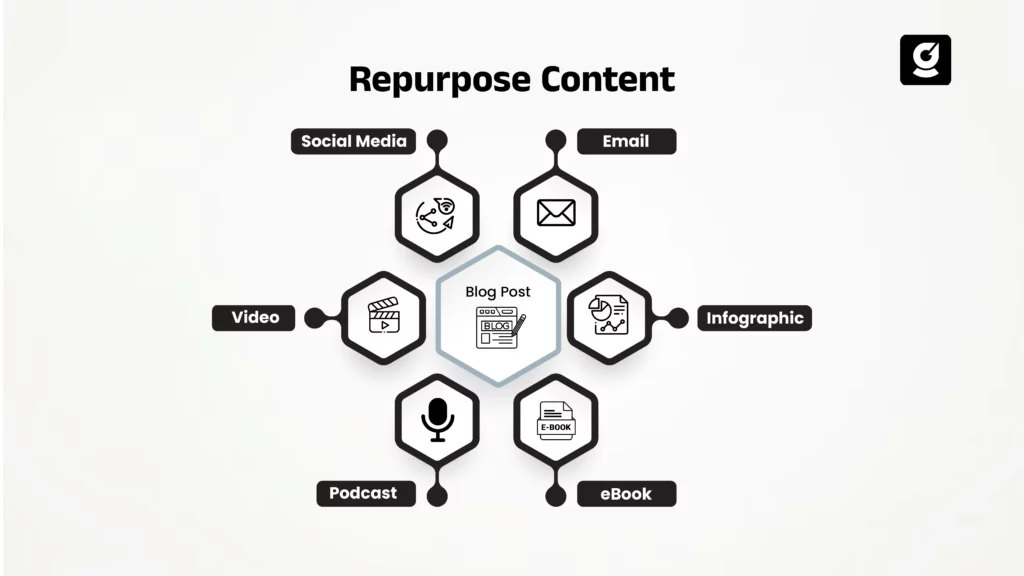
The full system I’m going to walk you through is built on a simple premise: every piece of content you create should produce multiple assets automatically, and each asset should serve a specific function in your acquisition loop.
Here’s the high-level structure before we get into components:
// The Core Content Loop
The whole system, once configured, requires roughly 2–4 hours of genuine creative input per month. Every other step is automated, templated, or pre-scheduled. That’s not an estimate — it’s what founders who’ve implemented this structure consistently report after the initial 4–6 week setup period.
The setup takes longer than anyone tells you. Budget 15–20 hours across 2–3 weekends to build the full stack, configure the automations, and create your first genuine pillar piece. After that, the maintenance time drops sharply. If someone is selling you an “autopilot content system” that takes two hours to set up, be skeptical.
Building the Pillar Piece: The Only Thing You Shouldn’t Automate
Your pillar content is the one thing that must come from you — your actual knowledge, your genuine experience, your honest perspective on a problem your customers have. AI can help structure it, edit it, and extend it. But the core substance has to be original. Google’s 2025–2026 Helpful Content System has gotten sharply better at distinguishing AI-generated content that summarizes what’s already ranking from content that contains genuine, experience-backed insight.
This is, counterintuitively, a huge advantage for solo founders. You have domain expertise you’ve earned through doing the actual work. Use it.
What Makes a Pillar Piece vs. a Blog Post
| Dimension | Standard Blog Post | Pillar Piece |
|---|---|---|
| Length | 800–1,500 words | 2,500–6,000+ words |
| Keyword strategy | Targets 1 long-tail keyword | Covers a topic cluster (10–30 semantically related terms) |
| Shelf life | 3–6 months before losing relevance | 12–36+ months with periodic updates |
| Backlink potential | Low (rarely cited externally) | High (reference piece, link magnet) |
| Repurposing yield | 1–2 derivative assets | 8–15 derivative assets across channels |
| Primary function | Single-page traffic | Hub for a topic, internal link anchor, email sequence trigger |
The Pillar Brief Template That Actually Works
Before writing, complete this brief. This is not a creative exercise — it’s quality control that prevents you from spending four hours on something that won’t compound.
Who reads this: [Specific persona — not “founders” but “B2B SaaS founders pre-PMF with 0–500 users”]
Specific problem solved: [One problem, stated precisely. Not “content marketing” but “how to consistently produce content while building a product alone”]
What they believe now that’s wrong: [The misconception your piece will correct]
Primary keyword: [The one term you’d most want to rank for]
Supporting keywords: [4–8 semantically related terms, sourced from Ahrefs/SE Ranking]
What only I can say: [The section no one else can write because it comes from your specific experience]
One decision the reader will make differently after reading this: [If you can’t answer this, the piece isn’t ready to write]
The last question is the most important one. If your pillar piece doesn’t change how someone thinks or acts, it’s a summary — and there’s already a summary ranking for the query you’re targeting.
On AI-Assisted Writing: Where It Helps and Where It Destroys Value
Using Claude or ChatGPT for structure, transitions, and first-draft outlines is legitimate and smart. Using it to write sections you haven’t thought through yourself is how you end up with content that reads like the industry average — which is exactly where you don’t want to be.
The practical workflow that works: write your raw notes and core arguments in your own words first, even messily. Then use AI to help structure those notes, improve transitions, and expand thin sections. Never use it to generate the substance of sections you haven’t formed opinions on yet.
The AI doesn’t know what you know. It knows what everyone knows. The difference between those two things is your entire competitive advantage in content.
— Practical rule for solo founders
The Repurposing Stack: 1 Piece → 12 Assets in Under 2 Hours
Content repurposing is the highest-leverage activity in a solo founder’s content system. Research from Cloud Present’s 2025 guide found repurposing saves 60–80% of content creation time versus starting fresh. For most active solo founders, that translates to 10–15 hours per week recovered.
But the word “repurposing” gets thrown around carelessly. Copying your blog post into a LinkedIn post is not repurposing — it’s spam. Real repurposing means translating the core idea into the native format of each channel. A thread has a different structure than a newsletter. A newsletter has a different tone than a pillar guide. The AI handles the translation; you review and adjust.
The Repurposing Matrix (2026)
| Source Asset | Derivative | Channel | Time to Produce | Conversion Role |
|---|---|---|---|---|
| Long-form guide | 5-tweet thread (key insight + hook) | X / Twitter | 15 min (AI + edit) | Awareness |
| Long-form guide | LinkedIn post (problem framing + CTA) | 20 min | Awareness + Signups | |
| Long-form guide | Newsletter issue (narrative version) | 30 min | Nurture + Trust | |
| Long-form guide | Podcast talking points / script | Your podcast / guest spot | 25 min | Reach + Authority |
| Long-form guide | Short Loom explainer (8–12 min) | YouTube / Twitter video | 45 min record + publish | Deep Engagement |
| Long-form guide | Downloadable PDF checklist / template | Lead magnet | 45 min (Canva) | Email Capture |
| Long-form guide | Reddit / Hacker News post (genuine discussion) | Communities | 20 min adapt + post | Traffic + Backlinks |
| Long-form guide | Q&A post (targeting People Also Ask) | SEO cluster post | 30 min | SEO |
| Long-form guide | Short-form quote graphics (3–4 cards) | LinkedIn / X | 15 min (Canva template) | Awareness |
| Newsletter issue | 3-part drip email sequence | Email automation | 45 min | Conversion |
A well-structured repurposing workflow yields 8–12 derivative assets from one pillar piece. Research from Automateed’s 2026 solo creator study suggests this ratio starts degrading above 14–15 assets — diminishing returns from over-atomizing. Three to four days of scheduled distribution from a single piece is a healthy ceiling.
The Automated Repurposing Prompt Stack
The following prompt structure is the one I’ve seen work most consistently with Claude or GPT-4o for producing draft derivatives that actually require minimal editing:
System: You are a content strategist who works with a [solo SaaS founder / consultant / creator]. You understand their voice: direct, experienced, skeptical of hype, technically informed. You never use marketing language. When repurposing, you preserve the specific insight and authority of the original — never genericize it.
User: Here is my full article: [PASTE]. Please produce: (1) A 5-post LinkedIn thread leading with the most counterintuitive claim in the piece, (2) A newsletter version in the first-person, under 450 words, with a clear reader action at the end, (3) Three standalone tweet/X posts, each containing one specific insight and no hashtags. Do not summarize. Extract and reframe.
The SEO Machine: Building Traffic That Compounds While You Sleep
SEO is the only content channel where yesterday’s work increases in value over time. Social media posts have a half-life measured in hours. Email campaigns are one-time events. A well-optimized piece of content on a topic you own can generate qualified traffic for years without additional effort. For a solo founder, that asymmetry matters enormously.
The 2026 SEO environment is harder than 2023 in some ways (AI overviews and zero-click results reduce clicks on informational queries) and significantly easier in others (thin, AI-generated content has been systematically downranked, so genuine depth stands out). The net effect for solo founders who produce real expertise: the bar is now clearly defined and achievable with fewer, better pieces.
Topic Cluster Architecture for Solo Founders
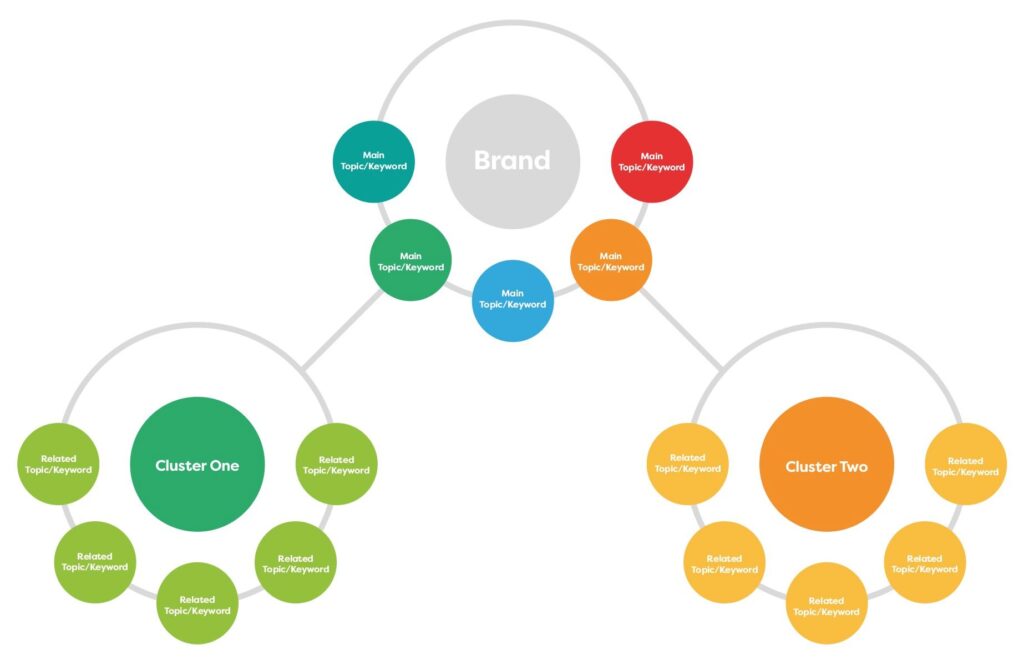
The pillar-and-cluster model is not new, but most solo founders implement it wrong — they write a pillar post and then write five unrelated blog posts instead of deliberately building a cluster around the pillar’s keyword territory.
Here’s what a proper cluster structure looks like for a content-focused B2B tool:
| Pillar Post | Cluster Post 1 | Cluster Post 2 | Cluster Post 3 | Cluster Post 4 |
|---|---|---|---|---|
| Content Marketing for Solo Founders | How to repurpose blog posts for LinkedIn | Best email marketing tools for bootstrapped founders | Content calendar templates for one-person teams | How to write pillar content that ranks |
Each cluster post targets a more specific long-tail query, links back to the pillar, and links to adjacent cluster posts. The pillar links to all clusters. This interconnected structure signals topical authority to Google’s crawlers far more effectively than five isolated, unconnected posts.
Keyword Research in 2026: What Changed
Three things changed that affect how solo founders should approach keyword research:
- AI Overview displacement: High-volume informational queries (how-to, what-is, definition queries) are increasingly answered by Google’s AI Overviews without a click. The queries worth ranking for are comparison, alternative, and experience-based queries — things like “X vs Y for [specific use case]” or “honest review of [product] after 6 months.”
- Long-tail SERP opportunities: Very specific, low-volume queries (under 500 searches/month) still produce clicks because they don’t trigger AI Overviews. A single page ranking for 40 related long-tail terms will often outperform a page targeting one high-volume term.
- Brand + topic authority: Google’s “sites” signal matters more. A site with 12 deeply interconnected posts on content marketing for solo founders will outrank a generalist site with one excellent post on the same topic. Build the cluster, not just the pillar.
Technical SEO Automation for Non-Developers
Most solo founders avoid technical SEO because it sounds like work that requires a developer. The 2025–2026 tooling reality: almost none of it does anymore.
| Technical SEO Task | Tool | Setup Time | Ongoing Effort |
|---|---|---|---|
| Schema markup (Article, FAQ, HowTo) | Yoast / RankMath (WordPress) | 30 min once | Auto on publish |
| XML sitemap + auto-ping to Google | Built into modern CMS (Webflow, Framer, WP) | 15 min | Zero |
| Core Web Vitals monitoring | Google Search Console (free) | 10 min setup | 10 min/month review |
| Internal link suggestions | LinkWhisper ($77/yr) or Ahrefs | 1 hr setup | Alerts when needed |
| Broken link detection | Ahrefs Site Audit or Screaming Frog | 30 min | Monthly crawl, auto-alert |
| Page speed optimization | Cloudflare (free tier) + image compression | 1 hr | Zero after setup |
Email: The One Channel You Actually Own
If you’re a solo founder and you have to choose one content channel to invest in, make it email. Not because email has the highest reach — it doesn’t. But because it’s the only channel where the audience relationship is actually yours. Your LinkedIn followers belong to LinkedIn. Your Twitter audience belongs to Twitter. Your email list belongs to you.
That said, most solo founders run email badly. They send newsletters when they have something to say, which turns into irregular, guilt-ridden broadcasts that subscribers stop opening. The answer is not to send more — it’s to build a system where new subscribers receive a structured onboarding sequence that delivers value before you ever ask them for anything.
The Two-Layer Email Architecture
Layer 1: The onboarding sequence. Every new subscriber receives a 5–7 email automated sequence, regardless of when they subscribed. This sequence does three things: introduces who you are and why you’re worth reading, delivers your three best existing pieces of content, and makes a soft product introduction on email #5 or #6. This sequence runs forever, without you touching it.
Layer 2: The broadcast newsletter. Published on a consistent schedule — weekly or biweekly, never monthly. Each issue is the email-native version of your most recent pillar content. If you’ve written a pillar piece, the newsletter issue is already 70% written. You’re just changing the format and adding a personal opener.
According to newsletter automation data from 2026, automated email sequences achieve average open rates of 42.1% compared to 25.2% for manual broadcast campaigns. The structural reason: automated sequences go to subscribers at their engagement peak (shortly after signup) and deliver specifically relevant content. For solo founders, building the onboarding sequence first — before worrying about broadcast frequency — is the higher-leverage investment.
The Minimum Viable Newsletter Stack in 2026
Don’t overcomplicate this. The tools that work for solo founders at sub-$200/month:
- Kit (formerly ConvertKit) — best for founders building toward a product funnel. Sequence builder, automation rules, and commerce features in one platform. Free up to 10,000 subscribers.
- Beehiiv — better for pure newsletter publishing with growth features (recommendations, boosts). Paid plans from $49/month. Strong if newsletter is your primary channel.
- Mailerlite — cleanest UI, best value at small scale, genuinely good automation. Free up to 1,000 subscribers, then $9/month. Underrated.
- Substack — only if you’re building a publication identity and want discoverability from the Substack network. Limited automation compared to the above.
The honest recommendation: start with Kit or Mailerlite. Don’t start with Substack unless you’re committed to the writer/newsletter model specifically — its automation capabilities are weak for product-focused founders.
The 2026 Solo Founder Content Stack: What to Use, What to Skip
There are roughly 200 content tools available to solo founders right now. Most of them are solving problems you don’t have, or solving real problems worse than a simpler tool. Here’s a stripped-down, honest assessment of the actual stack that works in 2026.
| Function | Recommended Tool | Monthly Cost | Skip This Instead | Why |
|---|---|---|---|---|
| AI Writing Assistant | Claude Pro or ChatGPT Plus | $20 | Jasper, Copy.ai | Frontier models have surpassed vertical tools; lower cost, better quality |
| SEO Research | Ahrefs ($29/mo Starter) or SE Ranking | $29–$65 | Semrush (overkill) | Ahrefs Starter sufficient for 95% of solo use cases |
| CMS / Blog | WordPress (self-hosted) or Framer | $10–$25 | Squarespace | SEO flexibility and plugin ecosystem matter at scale |
| Email Marketing | Kit or Mailerlite | Free–$25 | Mailchimp | Mailchimp’s automation is dated; Kit/Mailerlite are both superior |
| Social Scheduling | Buffer ($6/mo) or Hypefury ($49/mo) | $6–$49 | Hootsuite | Massive price/value gap; Buffer handles 90% of use cases |
| Automation / Glue | Make.com or n8n (self-hosted) | $0–$9 | Zapier (expensive at scale) | Make.com is cheaper for complex flows; n8n is free if you self-host |
| Design / Visuals | Canva Pro | $15 | Adobe Creative Cloud | 2,000% cost difference for near-equivalent output quality |
| Analytics | Google Analytics 4 + Search Console | Free | Paid analytics suites | Free tools are genuinely sufficient for solo-scale content |
| Content Ops / Calendar | Notion or Airtable | Free–$10 | Dedicated content calendar tools | Flexibility beats specialized tools until you’re managing >10 pieces/month |
Total monthly stack cost: $95–$220. Anything above $300/month as a solo founder should require justification. The ceiling rises sharply from there as you grow and the incremental cost of better tooling is easily covered by the business.
Automation Flows That Actually Run: Five Workflows Worth Building
These are concrete, buildable automation flows — not conceptual descriptions. Each runs on Make.com or n8n and requires no coding. Complexity ranges from beginner to intermediate.
Flow 1: Publish-to-Distribute (Make.com)
Trigger: New post published in WordPress. Action: Extract post title, excerpt, and URL → Send to Claude API for thread generation → Create draft posts in Buffer for LinkedIn and Twitter → Add to Notion content calendar with status “Draft: Review”. Review time: 10 minutes.
Flow 2: New Subscriber Onboarding (Kit)
Trigger: New subscriber joins list via any form. Action: Tag subscriber by entry source → Enroll in source-specific 5-email sequence → After sequence completes (day 12), add to main broadcast list. No manual involvement after setup.
Flow 3: SEO Performance Alert (Google Search Console API + Slack/Email)
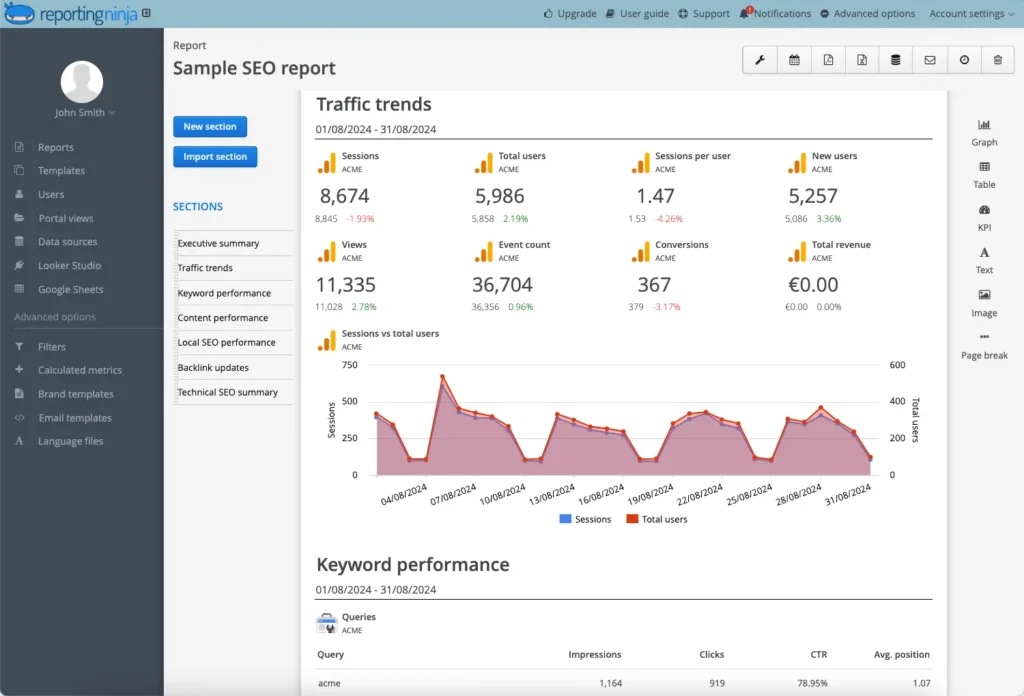
Trigger: Weekly schedule (Monday 8am). Action: Pull GSC data for all pages → Identify pages that dropped >15% in impressions or clicks vs. prior week → Generate summary report → Send to your email. Forces a weekly 10-minute review of what’s happening without you having to check dashboards.
Flow 4: Reddit/Community Monitor + Repurpose (Make.com)
Trigger: New post in 3–5 monitored subreddits containing your target keywords. Action: Summarize post and top comments → Send digest to your email → Flag threads where your published content is genuinely relevant. This turns community engagement from a daily distraction into a weekly 20-minute action.
Flow 5: Newsletter → Social Cross-Post (Make.com + Beehiiv/Kit API)
Trigger: Newsletter broadcast sent. Action: Extract newsletter content → Generate 3 LinkedIn posts from it via Claude → Schedule in Buffer over next 14 days. Your email audience and your social audience often don’t overlap; this flow ensures each newsletter issue generates 3 additional social touchpoints without extra work.
Build Flow 2 (subscriber onboarding) first — it starts working immediately and has the highest impact on conversion. Then Flow 1 (publish-to-distribute). The others are optimization-layer flows you add after the core is working.
Case Study 1: Solo SaaS Founder → $10K MRR Entirely From Content
A solo SaaS founder — documented in a detailed case study by SoloFounderMarketing — built from zero to $10,000 MRR over 12 months using a content-only acquisition strategy. No paid ads. No influencer outreach. No sales calls. The mechanics are worth understanding in detail because they’re reproducible.
Phase 1 (months 1–2): Research and foundation. The founder spent the first month primarily on deep Voice-of-Customer research — interviewing prospective users, cataloguing their exact language, identifying the specific problems they searched for. Content production was minimal. This phase is the one most founders skip, and skipping it is why content doesn’t convert. Initial weekly time investment: 15–20 hours.
Phase 2 (months 3–5): Pillar + cluster build. Three pillar posts were published — each targeting a different customer problem stage (awareness, consideration, decision). Cluster posts supported each pillar. Email lead magnets (templates and checklists) were attached to each pillar. Newsletter launched in month 3. Total posts published: 11.
Phase 3 (months 6–8): Flywheel loading. First paying customer from content appeared in month 3. By month 6, organic traffic to pillar pages was climbing steadily. Email list was adding several hundred qualified leads per month. Automation flows were fully configured and running. Weekly time investment had dropped to 6–8 hours.
Phase 4 (month 9+): Compounding returns. Older posts began ranking consistently. The onboarding email sequence was converting at a predictable rate. Content-sourced MRR crossed $10,000. Over 80% of paying customers cited a content touchpoint as their acquisition path.
The key lesson: The first results — consistent email signups from content upgrades — appeared in 60–90 days. The first paying customer from content arrived in month three. The flywheel took 8–9 months to reach full spin. If you expect this to work in 30 days, you will quit too early.
Case Study 2: Solo Consultant — 6-Month Content Build from Scratch
A solo DevOps consultant built from zero online presence to first-page Google rankings on three target keywords in three months, generating 8,000 monthly views — all organic. This aligns with documented outcomes from AmpiFire’s 2026 content distribution case studies, where clients achieved comparable results using systematic content + SEO approaches.
What worked: The consultant chose a tight niche (Kubernetes cost optimization for early-stage startups) where they had genuine expertise and where the competition was medium-high on broad terms but thin on specific, experience-backed long-tail content. Every piece contained original audit data from real client engagements — redacted appropriately. This generated backlinks naturally within six weeks.
What didn’t work: The Twitter/X growth strategy produced negligible results. Despite posting consistently for three months, social contributed less than 3% of traffic. The decision to abandon social and concentrate entirely on SEO + email + LinkedIn was made at the three-month mark and was the right one. Not every channel works for every founder — and knowing which ones to abandon early is as important as knowing which ones to invest in.
The automation that made the difference: A Make.com flow that automatically transformed new blog posts into LinkedIn native articles — formatted for the platform, not just cross-posted — drove qualified inbound leads from a professional audience who would never have found the blog directly.
What Actually Fails — and Why Most Solo Founder Content Systems Die at Week 8
The architecture described above works. The tools are good. The workflows are buildable. So why do most solo founders who attempt this abandon it within two months?
Three reasons, in order of prevalence:
1. The Content Quality Problem
The system only works if the content it distributes is genuinely good. A repurposing system applied to mediocre content makes mediocre content more visible. Many founders use the automation setup as a proxy for doing the harder work of writing something worth reading. You cannot automate your way out of a weak pillar piece.
Founder sets up automation, publishes 2–3 posts, gets low initial metrics, concludes “content doesn’t work for my niche,” and pivots to paid ads or cold outreach. The real issue was almost always content quality — not channel viability. The channel is viable. The brief wasn’t filled out honestly.
2. The Consistency Problem
One piece per month sounds easy. It’s not. Product emergencies, customer issues, life — they all eat the four hours you’d earmarked for writing. The founders who maintain consistency treat content creation as non-negotiable infrastructure, not as a nice-to-have. Block the time. Protect it the same way you’d protect a major customer call.
3. The Metric Illusion Problem
Founders measure the wrong things early and interpret accurate data incorrectly. 400 pageviews on a well-crafted pillar post in month one is not failure — it’s exactly what early-stage organic SEO looks like. If you expected 4,000 views, you had unrealistic expectations, not bad content. The metrics that matter in months 1–3 are email signup rate and email open rate, not pageviews. If people who find your content are signing up at 3–5%+ and opening at 40%+, the content is working — the distribution is just building.
The Honest Expectation Timeline
| Timeframe | What to Expect | Key Metric to Watch | Common Mistake |
|---|---|---|---|
| Month 1–2 | Almost no organic traffic. A handful of newsletter signups. Automation setup complete. | Newsletter signup rate from content | Quitting because traffic is zero |
| Month 3–4 | First organic rankings appear. Email list growing slowly but steadily. First content-attributed signups. | Organic impressions in GSC + email open rate | Changing strategy before it has time to work |
| Month 5–7 | Cluster posts indexed and ranking. Organic traffic clearly growing. Email onboarding converting. | Organic sessions + content-sourced signups | Adding too many new channels instead of deepening existing ones |
| Month 8–12 | Flywheel effect: multiple sources compounding. Predictable MRR contribution from content. | Content-sourced MRR | Not updating high-performing posts to maintain rankings |
The Metrics That Tell the Truth (And the Ones That Don’t)
Vanity metrics are genuinely dangerous for solo founders because they consume attention that should be spent on signals that actually predict revenue. Here’s a clean framework for what to track and when.
| Metric | Type | When It Matters | Benchmark (B2B SaaS) |
|---|---|---|---|
| Email signup rate (content → subscriber) | Signal | Month 1+ | 2–5% of content visitors |
| Onboarding email open rate | Signal | Month 1+ | 40–55% (automated sequences) |
| Organic impressions (GSC) | Signal | Month 2+ | Growing week-over-week |
| Content-sourced MRR | Signal | Month 4+ | 10–20% early, grows to 50%+ |
| Social media followers | Vanity | Rarely | Poor correlation with revenue |
| Pageviews / Sessions | Context | Month 3+ (as context only) | Matters if bouncing without action |
| Social engagement (likes, shares) | Vanity | Occasionally (virality validation) | High engagement ≠ high conversion |
| Keyword ranking positions | Signal | Month 3+ | Top 20 growing → top 10 is the target |
The weekly 10-minute review should focus on: email list growth, organic impression trend in Search Console, and — from month 4 onward — content-attributed signups in your CRM or analytics. Everything else is context, not signal.
Frequently Asked Questions
How long does it take to set up the full content automation system?
Realistically, 15–20 hours spread over 2–3 weekends. The core stack (CMS, email platform, one automation flow, and a social scheduler) can be operational in a single 6-hour session. The additional automation flows — SEO alerts, advanced repurposing pipelines — add time. Budget two weekends to build it properly, not two hours.
How much does a functional solo founder content stack cost per month?
Between $95 and $220 per month for the tools described in this guide (AI writing tool, SEO tool, email platform, social scheduler, automation platform, design tool). The total drops further if you use n8n self-hosted (free) instead of Make.com and stay on free tiers for email and SEO while early. Anything above $300/month needs justification at solo founder scale.
Can I use AI to write the entire pillar piece?
Technically yes; you’ll produce something faster. Practically, it will be a summary of what’s already ranking — which means you’ll be competing against established content with content that offers nothing new. Google’s Helpful Content System has become significantly better at identifying this pattern. Use AI for structure, transitions, and first-draft assistance, but the substance — the specific experience, the honest opinions, the real data — needs to come from you.
Which social channels should a solo B2B SaaS founder focus on?
LinkedIn is the clearest starting point for B2B. Twitter/X is valuable if your audience is technical (developers, startup founders) — less so for enterprise buyers. Skip TikTok and Instagram unless your product is inherently visual or you’re targeting a consumer audience. The key principle: pick two channels maximum and show up consistently. Spreading thin across five channels produces worse results than depth on two.
How many pieces of content do I need to publish per month?
One strong pillar piece per month is a defensible and realistic standard for a solo founder. Two is excellent. Three is fine if the quality holds. Publishing more by sacrificing depth is counterproductive — one genuinely useful 3,000-word piece consistently outperforms four thin 800-word posts. The compounding effect of well-researched pillar content far exceeds the frequency benefit of mediocre output.
What’s the difference between a content calendar and a content system?
A content calendar tells you what to publish and when. A content system tells you how to produce it, repurpose it, distribute it, optimize it, and track whether it’s working — with as much as possible automated. A calendar without a system is just a schedule for manual work. Most solo founders who say “I have a content strategy” actually have a content calendar — which is a planning tool, not an execution infrastructure.
How important is email list size early on?
Less important than list quality. A 500-person email list of people who found you through targeted content and signed up voluntarily will out-convert a 5,000-person list acquired through giveaways or paid incentives. Focus on the conversion rate from content visitor to subscriber, not on absolute subscriber count. A 3–5% conversion rate means your content is genuinely valuable to the people finding it.
Is Make.com really better than Zapier for solo founders?
For cost efficiency: yes, clearly. Make.com’s free tier includes 1,000 operations/month; Zapier’s free tier is far more restrictive. At the $9–$16/month paid tier, Make.com handles significantly more complex multi-step workflows. Zapier’s advantage is its larger integration library and slightly simpler UI. For most content automation flows a solo founder needs, Make.com is the better value unless you need a specific Zapier-only integration.
When should I start the newsletter — before or after the blog is live?
After you have at least two or three pieces of genuinely good content published and your onboarding sequence drafted. Starting a newsletter before you have content to send, or before you have a structured sequence for new subscribers, means you’re building an audience you’re not ready to serve yet. Get the foundation right first; then open the newsletter.
How do I know if my content system is working?
Three signals matter most: email signup rate (are people finding your content valuable enough to want more?), organic impression growth in Google Search Console (are you building topical authority?), and eventually content-sourced signups in your product. If all three are trending in the right direction — even slowly — the system is working. It’s the timeline expectations that are usually miscalibrated, not the system itself.
Can this system work for a pre-launch founder with no product yet?
Yes — and arguably it’s more valuable pre-launch than post-launch. Building an email list of qualified, interested readers before you ship means you have a warm audience on day one. The content strategy should focus on the problem space, not the product — which is both more honest and more effective at this stage. Several successful product launches in 2025–2026 were built on audiences developed through 6–12 months of pre-launch content.
What’s the most common mistake solo founders make with content repurposing?
Cross-posting identical content across channels. This isn’t repurposing — it’s spam, and platforms actively suppress it. Real repurposing means reformatting for the native grammar of each channel: a LinkedIn post has a very different structure than a newsletter, which is different from a Twitter thread. The AI handles this translation well if prompted correctly; the mistake is asking it to just “post this article on LinkedIn” without specifying the platform’s format expectations.
// More From Trendix
https://www.trendix.tech/blog/
// External Resources & Further Reading
Privacy Policy
Building Your First Production LangGraph Agent – Step-by-Step Tutorial
Micro-SaaS: Where the Growth Is and Where It Isn’t
Terms & Conditions
AI for Solopreneurs: The Definitive Playbook
AI Video Generators Ranked: Sora 2, Runway, Veo 3 Compared
The AI Trends Reshaping Digital Marketing in 2026
Speed & Performance Tests: The Definitive 2025–2026 Guide
AI is changing solo businesses forever — but not the way you think