

The month everything changed again: GPT-5.5, DeepSeek V4, Claude Opus 4.7
Three frontier models in eight days. An open-source bomb dropped at $0.14 per million tokens. The case for picking one model and sticking with it is officially dead.
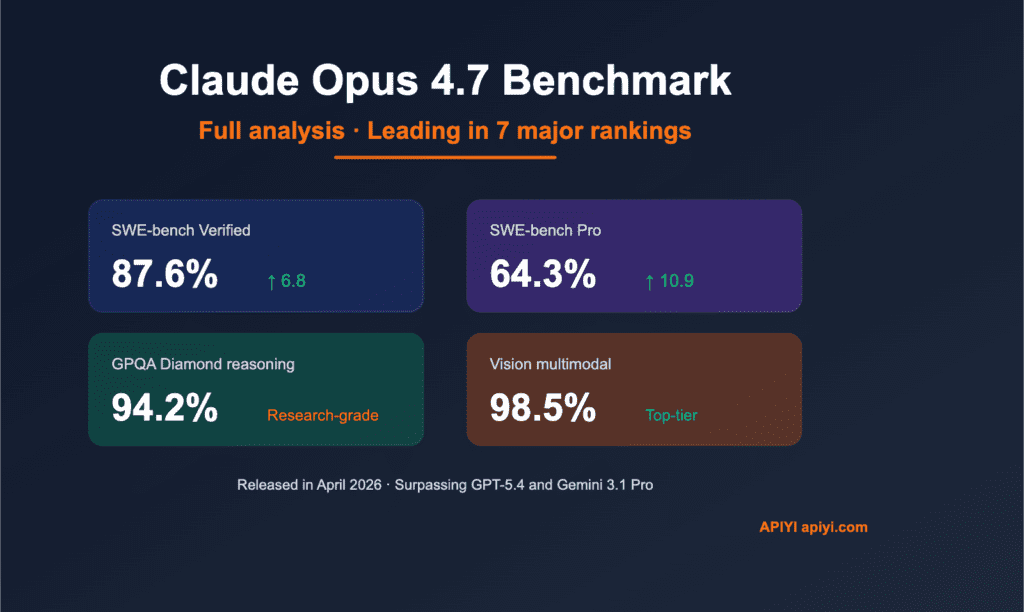
- Claude Opus 4.7 (April 16) reclaimed the coding crown with 87.6% on SWE-bench Verified — highest of any model. Task budgets now prevent runaway agentic costs.
- GPT-5.5 “Spud” (April 23) leads Terminal-Bench 2.0 at 82.7%. It became ChatGPT’s default for all users on May 5 via the lighter GPT-5.5 Instant variant.
- DeepSeek V4 (April 24) is MIT-licensed, runs on Huawei Ascend chips with zero Nvidia hardware, and costs $0.14/M tokens for Flash. It changes the economics of production AI.
- Multi-model routing is no longer optional for serious teams — the cost gap between frontier and budget-tier is now 90× depending on task.
- Perplexity Comet, Cursor’s parallel agents, Copilot Wave 3, and Figma AI are shipping real workflow automation, not demos.
April 2026 was — and I don’t say this lightly — the densest eight days in the history of AI model releases. Claude Opus 4.7 on April 16. GPT-5.5 on April 23. DeepSeek V4 less than 24 hours later. Then Gemini 3.1 Pro, Llama 4, Qwen 3, and Gemma 4, all in the same six-week window.
I’ve been tracking AI tool releases professionally for two years. This is the one where I had to stop, recalibrate my model routing config, and write a post I’d been putting off: the era of loyalty to a single model is over. The economics don’t allow it anymore.
This post covers every major release from mid-April through mid-May 2026 — not just the models, but the tools built on top of them: coding agents, research platforms, design AI, enterprise copilots. I’ll give you benchmarks where they’re reliable, flag where they’re marketing, and tell you which tools I’d actually bet on for different use cases.
My sample skews toward B2B and developer workflows — US and EU markets primarily. If you’re running consumer apps or operate in regulated industries, your mileage will differ and I’ll say so explicitly.
The three releases that rewrote the leaderboard
Every few months someone writes “the AI landscape is moving fast” and it’s mostly filler. This time it’s actually true in a measurable sense. The SWE-bench Pro ranking flipped four times in eight days.
Claude Opus 4.7 Established
Anthropic’s April 16 release came with a 12-point gain on CursorBench over 4.6 and pushed SWE-bench Verified to 87.6% — the highest any model has posted on that benchmark. For context, GPT-5.5 sits at 58.6% on SWE-bench Pro (a harder variant). Claude Code, Anthropic’s CLI agent powered by Opus 4.7, runs at 91% customer satisfaction and an NPS of 54 per JetBrains’ January developer survey.
The upgrade that actually matters for production teams is task budgets: a configurable ceiling on how many steps an agentic run can take before pausing for human review. Before this, a misconfigured agent could silently burn through quota. I’ve seen this happen at scale — once with roughly $4,000 in unexpected API charges from a loop that ran overnight. Task budgets prevent that class of failure.
One thing to audit before you migrate: Opus 4.7 uses a new tokenizer that produces up to 35% more tokens for identical input text. The rate card is unchanged from 4.6 ($5 input / $25 output per million tokens), but real costs per request can rise. If you’re running automated pipelines, measure actual token consumption before assuming costs stay flat.
GPT-5.5 “Spud” Established
OpenAI launched GPT-5.5 on April 23, 2026 — the first fully retrained base model since GPT-4.5. The codename “Spud” made the rounds after a developer found it in a Codex system prompt. Less amusingly, the same prompt contained an instruction not to mention goblins — a quirk that emerged from the “Nerdy” personality training signal leaking into unrelated outputs. OpenAI has since retired that personality and addressed the issue.
What the model actually delivers: 82.7% on Terminal-Bench 2.0, 78.7% on OSWorld-Verified (simulated desktop tasks, human baseline 72.4%), and 84.4% on BrowseComp. It’s notably stronger than GPT-5.4 on long-horizon agentic tasks — Cursor’s CEO described it as “noticeably more persistent.” On May 5, the lighter GPT-5.5 Instant variant replaced GPT-5.3 as the default for free-tier ChatGPT users. The Pro tier ($200/month) offers the full 5.5 version, with GPT-5.5 Thinking available for complex reasoning workloads.
DeepSeek V4 Established
This is the one MIT Technology Review called “the most significant release since R1.” Released April 24 — less than 24 hours after GPT-5.5 — and that timing felt deliberate.
V4 ships in two variants: V4-Pro (1.6 trillion total parameters, 49B active per token, $1.74/M input) and V4-Flash (284B total, 13B active, $0.14/M input). Both are MIT-licensed, both support 1 million token context windows, and both were trained entirely on Huawei Ascend 910B chips — zero Nvidia GPUs. Whatever you think about US export controls on AI chips, their practical effect on DeepSeek’s trajectory has been approximately zero.
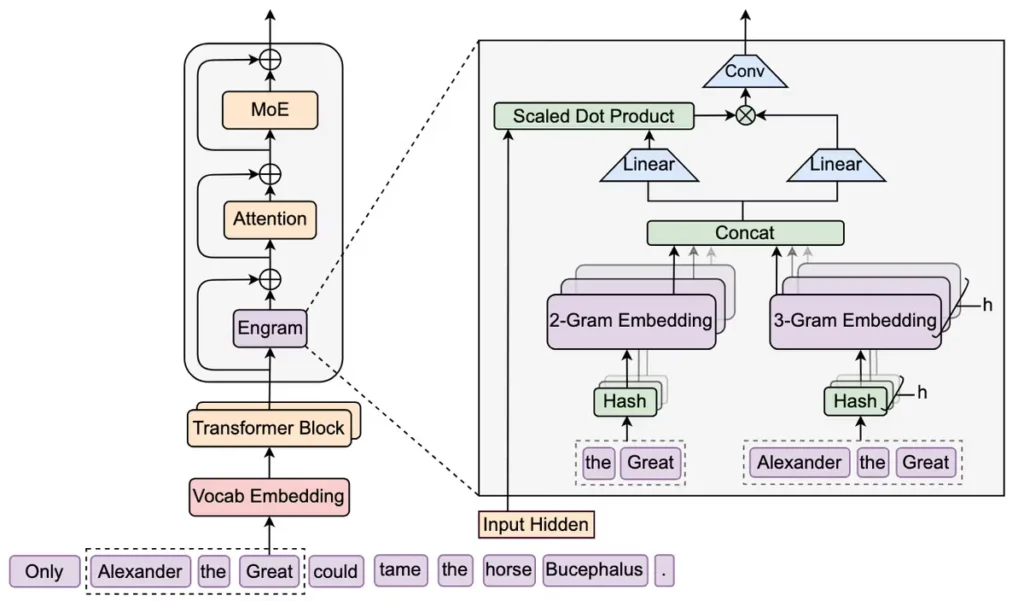
The architectural innovation is Hybrid Attention — combining Compressed Sparse Attention and Heavily Compressed Attention to handle 1M-token contexts at 27% of the FLOPs V3.2 required, and 10% of the KV cache. For a production application running 100 million tokens per month, the difference between Claude Opus 4.7 ($2,500/month) and DeepSeek V4-Flash ($14/month) is real enough that any team not at least testing V4 is leaving money on the table.
The honest caveat: V4’s tool-call support still lags. At high-volume agentic workloads where reliability matters more than cost, it requires more defensive error handling than Claude or GPT-5.5. For budget routing layers and draft generation, it’s a strong choice. For mission-critical agents where a failed tool call causes user-facing errors, I’d stay on Claude Sonnet 4.6 or GPT-5.5.
Sources: Anthropic, OpenAI, DeepSeek official benchmark pages. Kimi K2.6 from independent AkitaOnRails coding benchmark (May 2026). Treat all figures as provider claims, not independent verification. SWE-bench variants differ — compare within variants only.
The 90× cost gap that’s reshaping production AI
The pricing spread between frontier and budget-tier models is now the widest it’s ever been. This isn’t a reason to use the cheapest option — it’s a reason to build routing logic instead of treating your model choice as a fixed infrastructure decision.
| Model | Input $/1M | SWE-bench (Verified) | Best for |
|---|---|---|---|
| Claude Opus 4.7 | $5.00 | 87.6% | Hard coding, long-running agents, mission-critical tasks |
| GPT-5.5 | ~$15.00 | 74.9% | Terminal-heavy agentic work, computer use, multi-step browser tasks |
| DeepSeek V4-Pro | $1.74 | 80.6% | Mid-tier coding with open weights; MIT license teams |
| Gemini 3.1 Pro | $2.00 | 72.0% | Scientific reasoning (94.3% GPQA Diamond), multimodal inputs, Google Workspace |
| DeepSeek V4-Flash | $0.14 | 78.0% | Budget routing layers, draft generation, high-volume classification |
Opus 4.7’s new tokenizer produces up to 35% more tokens for the same input. The rate card didn’t change — your bills might. Audit your pipeline’s actual token consumption before assuming costs stay flat when migrating from 4.6.
Similarly, DeepSeek’s 75% discount on V4-Pro expires May 31, 2026. The discounted price is $0.435/M input; post-discount it reverts to $1.74/M. If you’re planning a migration, do the math at full price.
Where models become products: Cursor, Codex, Claude Code
The model benchmarks matter, but for most developers the interface is where you spend time. Cursor, Claude Code, and OpenAI Codex have all shipped meaningful updates this cycle, and they’re increasingly diverging in philosophy as much as capability.
Codex + Chrome Extension
The Codex Chrome extension lets the agent use your signed-in browser session — accessing internal tools, Gmail, enterprise apps — without you having to manually pass cookies or session tokens. The Codex CLI hit v0.130.0 with Vim-mode editing in the terminal UI, a redesigned session picker, and expanded hook management. The enterprise analytics API now exposes more granular token usage charts, which matters if you’re managing spend across teams.
Claude Code + Cowork
Claude Code is now generally available on macOS and Windows via Claude Cowork — their desktop automation product for non-developers. Anthropic writes 70–90% of its own code with Claude Code internally. The Claude Design tool launched in research preview alongside Opus 4.7, aimed at visual creation workflows. Developer satisfaction scores remain the highest in the category: 91% CSAT, NPS of 54 per JetBrains’ January 2026 survey.
Cursor — Parallel Agents
Cursor’s May update is their most architectural to date. Parallel plan execution lets async subagents run simultaneously across different files or branches, instead of sequentially. The PR Review experience was rebuilt — it now reads your full diff, understands the intent of each change, and surfaces conflicting logic rather than just style issues. A Security Review beta flags potential vulnerabilities inline. Admin controls for model selection and spend limits are new in this release.
What happened when a team switched to DeepSeek V4 for their coding agent overnight
A B2B SaaS company I spoke with migrated their draft-generation pipeline to V4-Flash in late April to capture the cost savings. Their first week: 18% of multi-step agent runs failed due to malformed tool calls — an error type they hadn’t seen with Claude Sonnet 4.6 at all. Mechanism: V4’s tool-call parser handles edge cases differently and is stricter about schema conformance. Cost of the failure: two engineering days to add retry logic and schema validation. Their conclusion: V4-Flash works well for single-turn or two-turn tasks; for five-plus step agentic loops, they stayed on Sonnet 4.6 as the fallback.
Beyond the chatbot: Perplexity Comet, Copilot Wave 3, and Figma AI
Perplexity Comet — Personal Computer Probable impact
Perplexity’s “Personal Computer” feature launched inside Comet for desktop and is expanding to Mac (and soon Windows). It extends their Computer-use capability to local file editing, local browsing, and voice orchestration — meaning you can dictate a research task, have Perplexity open tabs, read PDFs, and synthesize findings, all while you do something else. Claude Opus 4.7 is now the default orchestrator model for these multi-step workflows, with GPT-5.4 and Claude Sonnet 4.6 available as alternatives. Voice mode runs on OpenAI’s GPT-Realtime 1.5, with “over 25% more reliable interactions” compared to the previous version.
What I haven’t tested: how it handles documents with sensitive data when the local file system is involved. For anyone using this with confidential materials, that’s worth reading their data handling documentation carefully before deploying in a professional context.
Microsoft Copilot Wave 3 + Agent 365 Established
Microsoft launched Copilot Wave 3 on May 1, along with Agent 365 — a governance and security control plane for enterprise agents. The new E7 “Frontier Suite” license at $99/user/month bundles E5, Copilot, Agent 365, and Entra Suite. That’s Microsoft’s answer to the “agent sprawl” problem at large organizations: one license, one control plane, one audit trail.
The technical detail worth noting: Copilot Wave 3 explicitly orchestrates across Claude, GPT, and Microsoft’s own models depending on the task. SharePoint agent creation is in public preview, powered by Claude. This is the first Microsoft enterprise product to ship with Anthropic’s model as a named component — a meaningful signal about where the partnership is heading.
Figma AI — May Updates Established
Figma shipped meaningful AI updates across their entire product line in May. Voice-to-text in Figma Make lets you dictate prompts directly in the design agent chat. “Question cards” present structured choices before Make moves forward — reducing the back-and-forth that’s plagued AI design tools since they launched. FigJam got cell merging in tables, improved arrow routing, and a recenter button. Draw got a dedicated “text on a path” tool and brush/texture controls with directional noise. None of these are headline features, but collectively they suggest Figma is treating AI as infrastructure rather than a demo — which is the right instinct.
Both Perplexity and Microsoft are routing different tasks to different underlying models rather than committing to one provider. This multi-model orchestration pattern is becoming the dominant architecture at the product layer. If you’re building anything agentic, designing for provider-agnostic prompting now will save you significant refactoring later.
The “two years behind” argument is empirically wrong now
Six months ago, the standard take was that open-source models lagged the frontier by roughly 18–24 months. That argument has collapsed. GLM-5.1 briefly topped SWE-bench Pro in April — the first open-weight model ever to do so. Kimi K2.6 from Moonshot AI hit Tier A (87/100) on independent coding benchmarks. DeepSeek V4-Pro is within 7–8 percentage points of Claude Opus 4.7 on SWE-bench Verified.
Three models worth watching:
- DeepSeek V4-Flash — $0.14/M, MIT license, 1M context. The cheapest capable model ever released publicly. Use it for routing layers and first-pass drafts.
- Kimi K2.6 (Moonshot AI) — Full API access landed in early May. Competitive coding performance at lower price points than Western frontier models. Worth testing if you’re cost-sensitive on coding tasks.
- Qwen 3.5 — Alibaba’s latest, Tier C (55/100) on independent benchmarks with the right setup. For local inference on an RTX 5090 or M4 Ultra, it’s the closest open alternative to a production coding agent. Not a substitute for Claude. Hobbyist expectations, not production ones.
The practical caveat on running open-source locally: the toolchain failure rate is still real. Ollama lifecycle issues, missing tool-call parsers, cloud timeout problems — half the challenge of running open-source in 2026 is the stack that runs the model, not the model itself.
What could be wrong here
Benchmarks are still marketing until proven otherwise
Every benchmark cited in this post — SWE-bench, Terminal-Bench, GPQA Diamond — was reported by the model’s own developer. OpenAI’s GPT-5.5 launch page listed lower scores for Claude Opus 4.7 on those benchmarks than Anthropic’s own page shows for the same tests. This isn’t fraud; it’s that benchmark results depend heavily on evaluation harnesses, prompt engineering, and which variant of a test was used. Treat all figures in this post as directional, not definitive.
The multi-model routing complexity tax
I’ve argued above that multi-model routing is the rational response to this landscape. That’s true, but I should be honest about the engineering cost. Maintaining native integrations with OpenAI, Anthropic, Google, DeepSeek, Meta, and Alibaba simultaneously — while keeping up with weekly API changes — requires meaningful infrastructure investment. For a team of two engineers, that’s a real trade-off. The alternative (managed routing via middleware providers) introduces its own latency, vendor dependency, and observability tradeoffs. I haven’t tested all of them at scale.
DeepSeek’s geopolitical exposure
DeepSeek V4 is MIT-licensed and technically open. But it’s a Chinese lab’s model, trained on Chinese hardware, with servers presumably subject to Chinese data law. For US and EU regulated industries — healthcare, finance, legal — the compliance picture is not settled. Using V4 for routing layers that don’t touch sensitive data is probably fine. Using it as the primary model for anything touching PII, financial records, or protected health information requires legal review I’m not qualified to provide here.
My scope is B2B/developer — consumer apps are different
I’ve built my view from developer tooling, B2B SaaS, and enterprise workflows. Consumer product teams operate with different latency tolerances, moderation requirements, and user expectation profiles. Claude Opus 4.7 at $25/M output tokens is not the right default for a consumer chatbot serving millions of sessions. That doesn’t make my recommendations wrong — it makes them scoped.
What I’d actually do this month
Claude Opus 4.7 as primary
For anything where code quality and successful tool calls matter, Opus 4.7 is still the safest default. Enable task budgets from day one. Audit token consumption before full rollout — that 35% tokenizer increase is real.
DeepSeek V4-Flash routing layer
Build a router: single-turn tasks and first-pass drafts go to V4-Flash at $0.14/M. Complex multi-step jobs escalate to Claude or GPT-5.5. Add tool-call schema validation as a middleware layer before deploying to production.
Gemini 3.1 Pro + Perplexity Comet
Gemini leads on scientific reasoning (94.3% GPQA Diamond). Perplexity’s Personal Computer feature works well for synthesis tasks across multiple documents. Pair them if your work involves academic or technical literature. Perplexity’s local file access is worth reading the data handling docs for before using with confidential materials.
Migrating to GPT-5.5 as a primary coding agent if you’re currently happy on Claude Code. The benchmark gap on SWE-bench Verified is 12–13 points in Anthropic’s favor. That’s not small. GPT-5.5 earns its place in agentic computer-use and terminal-heavy tasks where it leads. For general coding agent work, the case for switching isn’t there yet.
Also: rushing to open-source local inference for production coding agents. The toolchain reliability issues are still a real productivity tax unless you have dedicated infrastructure engineering time to address them.
April and May 2026 demonstrated something that’s been building for two years: the frontier isn’t a place you arrive at and hold. It’s a moving target that now shifts week-to-week. DeepSeek V4 appeared in 24 hours. Kimi K2.6 went from preview to full API in days. Sonnet 4.8 is reportedly landing in May. Whatever model you’re using as your default today will be outdated by the time this post is a month old.
That’s not a counsel of despair — it’s a design prompt. Build your pipelines to swap models without rewriting your core logic. Keep a routing layer. Eval before you commit. And if you’re not running even a basic cost comparison between models for your actual workloads, that’s probably where to start this week.
AI Comparisons & Benchmarks: What the Numbers Actually Mean
DeepSeek V4 Deep Dive: Architecture, Pricing & What It Means
Claude vs ChatGPT: Full 2026 Head-to-Head
The Comprehensive Ranking: Best AI Tools 2026