


Sora 2 vs Runway vs Veo 3:
The AI Video Race Is Heating Up
One major player just exited the race entirely. Here’s what actually happened — and who wins the fight that’s left.
This guide cuts through the hype in an AI video space that just had one of its biggest shakeups yet: OpenAI quietly killed Sora, its flagship video product, in April 2026 — less than seven months after a splashy public launch.
- Sora 2 is dead. The app closed April 26, 2026. The API follows September 24, 2026. No official replacement has been announced. If you have content there, export it now.
- Google Veo 3.1 leads on raw output quality — native 4K, synchronized audio, best-in-class physics simulation, and the strongest benchmark scores on MovieGenBench and VBench.
- Runway Gen-4.5 wins for production workflows — character consistency, reference image control, motion brush, and a polished editor that nothing else matches. It currently holds #1 on the Artificial Analysis Text-to-Video leaderboard.
- The “right” choice genuinely depends on what you’re building. Raw clip quality → Veo 3.1. Multi-shot narratives with consistent characters → Runway. Quick social clips on a budget → Kling 3.0.
- Pricing has become material. Veo 3.1 costs $0.40/sec with audio at standard quality. Runway starts at $12/month but burns credits fast. Know your volume before committing.
- The copyright question is real and unresolved — Sora trained on opt-out copyrighted material. Runway has studio partnerships. Veo has “SynthID” watermarking. None of this is fully solved.
The Sora Collapse: What Actually Happened
Let’s start with the elephant in the room. On March 24, 2026, OpenAI posted a short message on X: “We’re saying goodbye to the Sora app.” No warning. No explanation beyond vague references to “sharing more soon.” The app officially went dark on April 26, 2026. The API runs until September 24, 2026, at which point the entire Sora product line — including Sora 2, Sora 2 Pro, and all associated model endpoints — is dead.
This caught the industry genuinely off guard. Sora 2, the second-generation model with integrated social features and native audio, had launched just six months earlier in September 2025. It hit number one on the Apple App Store within days of release. According to mobile intelligence firm Appfigures, it peaked at roughly 3.3 million downloads in November 2025. By March 2026, OpenAI decided to pull the plug anyway.
Several factors converged to produce that decision. First, the competition didn’t wait around. Google shipped Veo 2 while Sora was still in research preview, and Runway’s Gen-3 became the standard tool in professional video pipelines before Sora even reached paying users. By the time Sora 2 launched, it was entering a market that had moved on without it.
Second, the content moderation situation was a genuine mess. Users immediately found they could generate deepfakes, content using copyrighted Disney and Marvel characters, and material that triggered repeated controversy. The opt-out copyright model — where OpenAI used licensed material by default unless rights-holders explicitly objected — created legal exposure that never fully went away.
Third, and perhaps most telling: the product was fundamentally positioned wrong. Sora 2 was built as a TikTok competitor — a social video feed powered by AI generation. That’s a fascinating concept, but it’s not what serious creators needed. The people who would pay for premium video generation tools wanted narrative control, character consistency, and export-to-production-pipeline features. What they got was a scrolling feed.
The lesson here is harder than it looks: a technically impressive model is not enough. Sora produced genuinely beautiful video. But it was held back by a ten-month research-to-release gap, a confused product strategy, a copyright time bomb, and competitors who moved faster. The technology was real. The product was not.
The Three Contenders: A Fast Snapshot
With Sora’s exit, the serious competition narrows to two dominant platforms — Google’s Veo 3.1 and Runway Gen-4.5 — with Sora 2 relevant only for the brief API window that remains. Here’s where each stands as of May 2026.
Google Veo 3.1: The Technical Leader
Veo 3 was announced at Google I/O 2025 and marked Google DeepMind’s most serious push into AI video. The version most relevant today is Veo 3.1, released October 2025 with a 4K resolution upgrade rolling out in January 2026. If you’re evaluating pure output quality, this is currently the benchmark setter.
What makes Veo 3.1 technically distinct
The core innovation is joint audio-visual generation. Rather than generating video and then adding audio in post, Veo 3.1’s transformer processes both visual spacetime patches and temporal audio information simultaneously during the diffusion process. This is why footsteps genuinely match visual movement, dialogue syncs with lip movement, and ambient sounds respond to environmental elements in the scene. The audio engine runs at 48kHz stereo — a level of fidelity that separates it from competitors that bolt on background sound as an afterthought.
On the visual side: native 4K at 24fps, both 16:9 and 9:16 aspect ratios, and a physics simulation layer that keeps Google’s deep academic research in 3D scene understanding relevant. Objects maintain their properties across frames in ways that other models still struggle with. A glass that falls in frame one shatters with correct physics in frame thirty. Fluid dynamics are notably better than Runway’s equivalent outputs in controlled tests.
According to Google DeepMind’s own benchmark data on MovieGenBench (1,003 prompts evaluated by human raters), Veo 3.1 leads on overall preference, prompt adherence, and visual quality over competing models. This was corroborated by independent evaluation using the VBench I2V benchmark across 355 image-to-video pairs.
Veo 3.1 Fast vs Standard
There are two modes. Fast reduces generation time by roughly 40% at the cost of some visual fidelity — useful for iteration and social content at $0.10/second for 720p. Standard is what you use for anything client-facing: $0.20/second without audio at 720p, scaling to $0.40/second with audio at 1080p. The 4K tier costs more and is accessed via Vertex AI or the AI Ultra subscription.
Access paths: Google AI Pro at $19.99/month includes Veo 3.1 Fast (~1,000 credits), while AI Ultra at $249.99/month unlocks the full quality model. The Gemini API provides direct developer access. Veo also powers YouTube Shorts, Google Flow, and Google Vids.
Where Veo 3.1 falls short
Eight seconds is a hard constraint for most narrative production needs. You can string clips together, but there’s no internal character consistency tool — the same person may look different across separate generations. The editing capabilities are minimal compared to Runway. You generate, you get a clip, and then you’re on your own to integrate it into a production pipeline. This is a generation tool, not a production platform.
Lip-sync is excellent in English, but multilingual dialogue sync still lags behind Kling 3.0’s five-language capability. And for all the benchmark supremacy, the content safety filters are genuinely strict — you’ll hit refusals on creative work that feels totally reasonable to request.
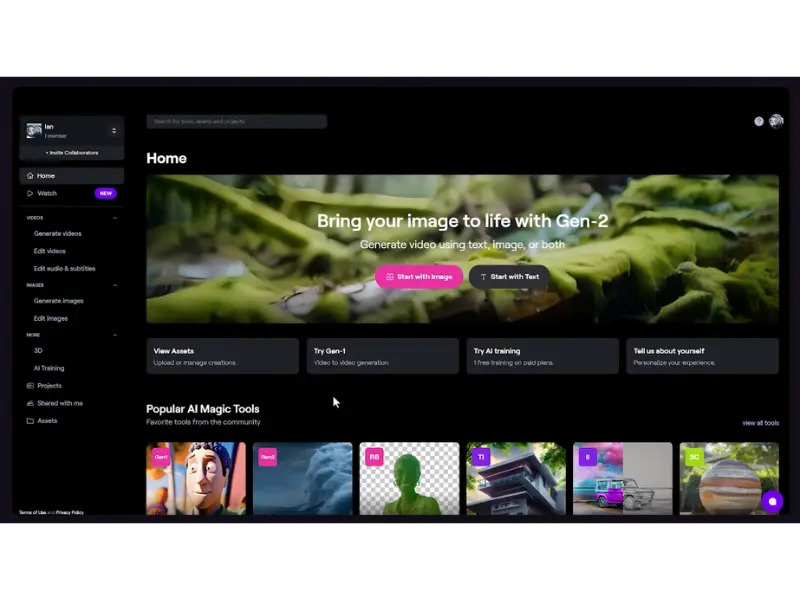
Runway Gen-4.5: The Workflow Champion
Runway has been at this longer than anyone. Founded in 2018 by AI researchers, it’s had years to figure out what creative professionals actually need — not just impressive one-shot generations, but tools that fit into real production workflows. Gen-4.5, released December 1, 2025, is where that compounding investment pays off most clearly.
The production advantages are real
Character consistency across scenes was the problem that made multi-shot AI video effectively impossible before Gen-4. You’d generate a character, then generate them again, and get a different person. Gen-4 introduced reference image capabilities that maintain consistent character appearance, clothing, and features across multiple scenes with different camera angles and lighting. Gen-4.5 refined this substantially. For narrative-driven content — anything where the same character appears more than once — this is the capability that unlocks professional use.
The Motion Brush lets you draw regions of an image and control how they move. Director Mode gives you explicit camera control. The integrated editor means you can do masked region replacement, extend clips, and combine generations without leaving the platform. No other tool in this space offers this combination of generative quality and production tooling.
It also supports up to 60 seconds of continuous video — and up to two minutes with extensions. For anything requiring extended scenes, Runway is currently the only serious option.
On the benchmark leaderboard
Runway Gen-4.5 currently holds the top position on the Artificial Analysis Text-to-Video benchmark with 1,247 Elo points, surpassing both Google and OpenAI. It also ranked first in blind aesthetic tests conducted in late 2025 by GIGAZINE, where evaluators found Runway’s lighting engine handles global illumination more naturally than competitors, particularly in outdoor environments.
“Runway Gen-4.5 currently holds the edge in raw benchmark performance and versatility for production pipelines. Gen-4.5 has officially surpassed Sora 2 Pro in benchmarks according to recent reports.” — AI Tool Analysis, Runway Review, April 2026
What Runway doesn’t do
Native audio generation is absent. Runway generates video, and you add audio separately — which means extra workflow steps and likely a separate tool or VO recording session. For social content where audio-visual sync matters immediately, this is a genuine gap. Veo 3.1 and even Sora 2 had this built in; Runway’s decision to leave it out is a real trade-off, not just a minor missing feature.
The pricing structure is also genuinely confusing. Credits burn differently at different resolutions, quality settings, and model versions. A 5-second Gen-4.5 clip at 4K costs dramatically more credits than the same clip at 1080p. The Standard plan at $12–$15/month delivers roughly 7.5 minutes of Gen-4 video — which sounds like a lot until you realize that iteration (generating, evaluating, regenerating) consumes credits even for clips you discard.
Sora 2: What It Was, Why It Failed
It’s worth spending a moment on Sora 2’s actual capabilities, because the model itself was technically impressive. The product’s failure doesn’t mean the technology was bad.
Sora 2 ran on a diffusion transformer architecture, treating video data as sequences of visual patches over time — similar to how language models process text tokens. It generated 10–25 second clips at 1080p with synchronized dialogue, sound effects, and ambient noise in a single pass. Lip-sync quality was arguably the best in the market at the time of release. Physical simulation — the ability to model how objects interact with correct gravity, momentum, and collision — was Sora’s headline strength from day one and remained among the best.
What killed it was the product, not the model. OpenAI chose to launch a TikTok-style social video feed as the primary use case for technology that creative professionals desperately wanted as a production tool. The result: a product that neither group found fully satisfying. Casual users hit content limits and moderation walls. Professional users couldn’t extract the reliability and control they needed. Developers found the API ecosystem immature compared to Runway’s years of integration work.
The copyright approach also deserves direct mention. Sora trained on opt-out copyrighted material — meaning rights-holders had to actively object to having their work used, rather than being asked for permission. This created a legal backdrop that made enterprise adoption genuinely risky, and that controversy contributed to the overall sense that the product’s foundations were shaky.
There’s a deeper lesson here about the risk of long research-to-release cycles in a fast-moving market. The ten-month gap between Sora’s February 2024 announcement and its December 2024 public launch was time that Runway, Kling, and eventually Google used to earn real users, iterate on real feedback, and build real switching costs. By the time Sora 2 launched in September 2025, its primary competition wasn’t the research demos it had been compared to — it was a maturing market that had moved significantly.
Benchmarks and Scoring: Real Numbers
Several independent benchmarks give us a reasonably clear picture, though every evaluation has caveats worth knowing about.
Comparative Performance by Category (Score out of 100)
Sources: MovieGenBench (Google DeepMind, Oct 2025), VBench I2V benchmark, Artificial Analysis Text-to-Video leaderboard, EvalVid 2026 framework. Sora 2 scores based on pre-shutdown testing; treat them as historical reference.
The full comparison table
| Feature | Sora 2 ⚰ | Veo 3.1 | Runway Gen-4.5 |
|---|---|---|---|
| Status | DEAD Apr 26 | Active | Active |
| Developer | OpenAI | Google DeepMind | Runway |
| Max Duration | 20s (60s ext.) | 8s native | 60s (2min ext.) |
| Max Resolution | 1080p | 4K (native) | 4K |
| Native Audio | Yes | Yes (48kHz) | No |
| Frame Rate | 24fps | 24fps | Up to 120fps |
| Character Consistency | Moderate | Limited | Strong (ref. images) |
| Physics Simulation | Excellent | Excellent | Good |
| Editing Tools | Minimal | Minimal | Full suite |
| API Access | Until Sep 24 | Gemini API | Full API |
| Entry Price | Was $0.10/s API | $0.10/s (Fast) | $12/month |
| Leaderboard Rank | N/A (dead) | Strong (Google) | #1 AI Analysis |
| Copyright Risk | High (opt-out) | Medium (SynthID) | Medium (studios) |
Who Should Use What
The honest answer is that the “best” model changes depending entirely on what you’re trying to make. Here’s where each platform has a real advantage — and where it doesn’t.
* Sora 2 API remains active until September 24, 2026, but starting any new integration or workflow on it is categorically inadvisable.
Pricing Breakdown
Pricing in this space is genuinely complicated, and the way platforms advertise it obscures the real per-second cost. Here’s what you actually pay.
| Platform / Plan | Monthly Cost | What You Get | Effective $/Second | Best For |
|---|---|---|---|---|
| Veo 3.1 Fast (720p) | $0.10/s API | Pay-per-use via Gemini API | $0.10 | Iteration, social |
| Veo 3.1 Standard (1080p, no audio) | $0.20/s API | Pay-per-use | $0.20 | Production clips |
| Veo 3.1 Standard (1080p + audio) | $0.40/s API | Full audio-video generation | $0.40 | Hero content |
| Google AI Pro | $19.99/month | ~1,000 credits, Veo 3.1 Fast | Varies | Light consumer use |
| Google AI Ultra | $249.99/month | Full quality Veo 3.1 + Gemini | Varies | Power users |
| Runway Standard | $12–$15/month | ~7.5 min Gen-4 at 1080p | ~$0.033–0.044 | Entry-level creators |
| Runway Pro | $76/month | ~22.5 min Gen-4 at 1080p | ~$0.056 | Active creators |
| Runway Unlimited | $188/month | Gen-4 Explore + priority queue | Effectively flat | Studios, agencies |
| Sora 2 API (legacy) | $0.10/s (720p) | Sora 2 / 2 Pro until Sep 24, 2026 | $0.10+ | Do not use for new projects |
A few honest observations. Runway’s per-second cost looks cheap on subscription tiers, but credits burn on failed generations too. If you’re iterating heavily — which any serious creative workflow requires — your effective cost per kept second is significantly higher than the nominal rate. Veo’s API pricing is transparent but adds up quickly at volume: 100 seconds of full-quality audio-video content at standard Veo 3.1 rates costs $40. For a team producing several minutes of content per week, that’s meaningful budget.
The Copyright Problem Nobody Has Solved
Every major AI video platform has a copyright problem, and none of them has actually solved it. This matters for commercial use in particular.
Sora’s opt-out approach was the most aggressive: unless a rights-holder actively opted out of having their work used for training, it was included. This approach drew persistent criticism and contributed to enterprise hesitation. The model’s shutdown doesn’t resolve any of those questions — they’ll resurface with whatever OpenAI builds next.
Runway has taken a different approach, pursuing explicit studio partnerships. Lionsgate is among them. This gives Runway more defensible ground for commercial use, but it doesn’t resolve questions about the broader training dataset. Independent creators using Runway for commercial work should verify the current terms carefully before client deliverables.
Google’s response is SynthID — a watermarking system that embeds invisible signals into Veo-generated content so it can be identified later. This is useful for provenance tracking but doesn’t address the training data question directly. It also means every piece of content Veo generates carries an invisible identifier, which has its own implications for how that content can be used.
The honest reality: if you’re doing commercial work, AI video carries legal risk that hasn’t been fully adjudicated yet. None of these platforms provides true indemnification for their outputs. Proceed with commercial clients only after reviewing the specific terms of service and, for high-stakes projects, consulting legal counsel familiar with generative AI.
What Comes Next: Six Months Out
The departure of Sora creates a meaningful gap in the market — specifically, OpenAI’s former share of developers and consumer creators who now need to migrate. Runway is positioned to absorb a portion of this, particularly users who valued narrative coherence and had API integrations. Veo will absorb the quality-first segment.
Several trends are worth watching through the rest of 2026. First, Kling 3.0 from Kuaishou and Seedance 2.0 from ByteDance represent Chinese competitors that have made substantial technical progress. Kling’s multilingual lip-sync and shared audio timeline across multi-shot sequences fill gaps that neither Veo nor Runway has addressed. These won’t be easy to dismiss.
Second, Runway has hinted at “GWM-1” — the General World Model family — which would expand use cases beyond video into robotics and simulation. If this materializes, Runway’s value proposition shifts from creative tool to infrastructure layer. That’s a much larger market opportunity, and it may explain why they’ve been less aggressive on consumer pricing.
Third, the regulatory environment is tightening. The EU’s AI Act provisions around synthetic media are sharpening, and several US states have passed deepfake-related legislation. Any serious commercial use of AI video will need to track this carefully over the next 12–18 months.
And OpenAI? Internally, the successor to Sora is reportedly codenamed “Spud.” No release timeline has been announced. Given what happened with the original Sora — a long announcement-to-release gap followed by a product that couldn’t find its market — there’s reason to wait for actual evidence before getting excited.
Frequently Asked Questions
Google Veo 3.1 wins on technical output quality: the strongest physics, the best single-clip realism, native 4K, and the only model that generates properly synchronized 48kHz audio as a first-class feature. If you care about what comes out of one generation pass, Veo is currently the benchmark.
Runway Gen-4.5 wins on production capability: character consistency that actually works, a full editing toolkit, 60-second continuous generation, and an API ecosystem that’s mature enough to build products on. For anything involving multiple shots, brand assets, or a workflow that needs an end-to-end environment — Runway is the choice.
Sora’s collapse is a lesson worth studying. Impressive technology delivered through a product that couldn’t find its market, on a foundation of copyright uncertainty, after a development cycle that let competitors build real switching costs. The model itself was real. The product wasn’t. That gap is where it failed.
The practical recommendation is simple: generate your heroes in Veo 3.1, build your narratives in Runway. Don’t start anything new on Sora’s API. And watch Kling 3.0 and Seedance 2.0 — they’re closing the gap faster than the Western press is covering.
May 25, 2026 — Initial publication. Full comparison: Sora 2, Veo 3.1, Runway Gen-4.5. Includes Sora shutdown analysis.
Last verified: May 25, 2026. Benchmark sources: Google DeepMind MovieGenBench (Oct 2025), Artificial Analysis Text-to-Video Leaderboard, EvalVid 2026 framework.
The Voice & Video AI Revolution:Everything That Matters in 2026
AI Image Generators Ranked: Midjourney to Ideogram
LangGraph vs CrewAI vs OpenAI Agents SDK vs AutoGen (2026): The Definitive Comparison
LLM Pricing Guide: Every Major Model Compared
Content Marketing for Solo Founders: Systems That Run on Autopilot
AI Transcription Software Compared: Accuracy, Privacy, Price (2026)