

Personal AI Agents:
Your Digital Self, Finally Unleashed
They book your flights, answer your emails, write your code, manage your calendar, and remember what you forgot. Personal AI agents are no longer science fiction — they’re the defining productivity shift of 2026. Here’s everything you need to know.
In early 2024, getting an AI to book a restaurant meant carefully orchestrating a dozen steps yourself. By May 2026, you can hand that off — along with your inbox, your research backlog, your meeting notes, and your tax prep. The shift from AI assistant to AI agent is one of the most consequential changes in the history of personal computing.
What Is a Personal AI Agent?
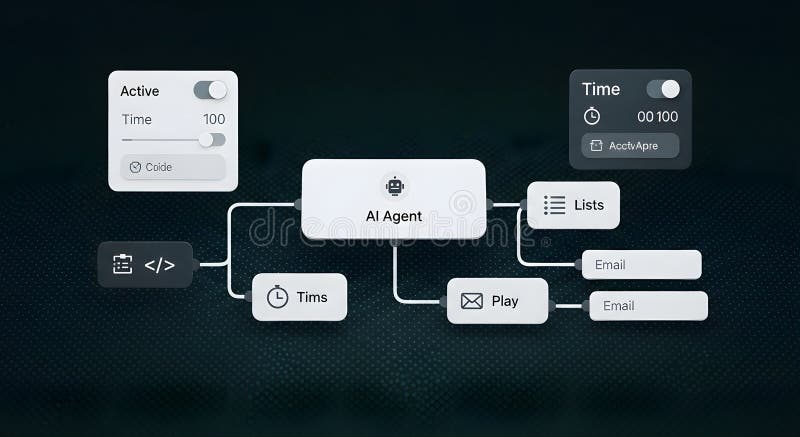
A personal AI agent is a software system that autonomously plans, reasons, and takes multi-step actions on your behalf — not just answering a question, but actually doing the work. Unlike a chatbot, which waits for your next message, an agent can browse the web, write and execute code, fill out forms, call external APIs, and chain together dozens of sub-tasks to reach a goal you’ve described in natural language.
The term “agent” comes from AI research, specifically from the idea of systems that perceive their environment, form a plan, and act on it — repeatedly, in a loop, until the goal is achieved or they determine it cannot be reached. Think of the difference between asking someone “what’s the cheapest flight to Tokyo?” versus saying “book me the cheapest direct flight to Tokyo for next Thursday, window seat, and email me the confirmation.” The first is a query. The second requires agency.
A chatbot gives you an answer. An AI agent gets you an outcome. The difference is autonomy, tool use, and multi-step planning — not just the quality of the underlying language model.
Personal AI agents sit at the intersection of three converging waves: frontier language models that can reason at near-human level across many domains, standardized tool-use protocols like MCP (Model Context Protocol) that let agents connect to real-world services, and a consumer market finally ready to trust autonomous software with consequential tasks.
How Personal AI Agents Actually Work
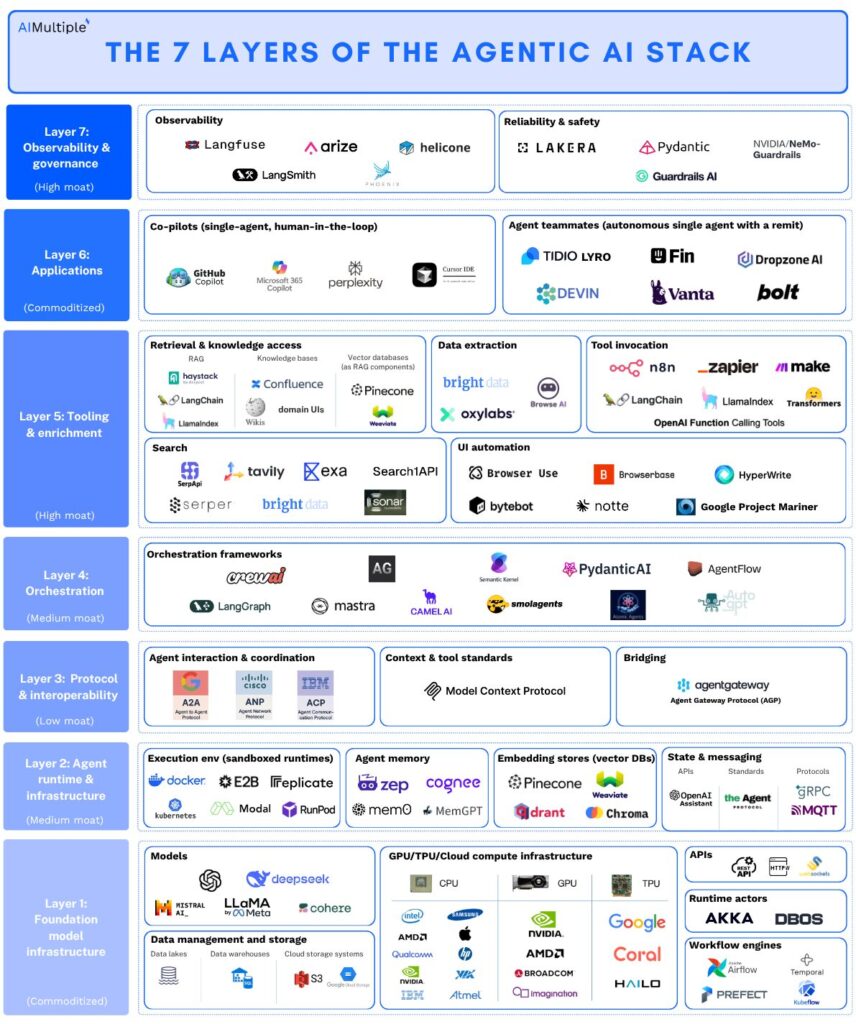
Under the surface, a personal AI agent is not magic — it’s a carefully engineered loop. Understanding the architecture helps you choose the right tool, set realistic expectations, and know when something is going wrong.
The 5-Layer Architecture
The “agent loop” works like this: the model receives your goal, reasons about what steps are needed, selects and calls a tool, observes the result, and iterates until the task is done or a human checkpoint is reached. Early agents in 2023–2024 were brittle because this loop would break on unexpected outputs. By 2026, production-grade agents handle ambiguity, recover from tool failures, and escalate gracefully when they’re uncertain.
“The length of tasks AI can do is doubling every 7 months. Models that couldn’t handle a 30-minute task a year ago are now completing work that takes humans multiple hours.”
— METR (Model Evaluation & Threat Research), December 2025 report on agentic task benchmarksA critical 2025 development was the broad adoption of MCP (Model Context Protocol), which standardized how agents connect to external tools, databases, and APIs. Before MCP, every integration required custom engineering. After it, an agent can plug into Gmail, Notion, Salesforce, GitHub, and hundreds of other services the same way — dramatically reducing the cost of building and deploying capable personal agents.
The Leading Platforms in 2026
The market has consolidated around a handful of major ecosystems, each with a different philosophy and set of strengths. Choosing the wrong platform for your workflow is a real cost — both in productivity and in monthly subscription fees that can stack up fast.
- Operator for computer-use tasks
- Custom GPTs marketplace (3M+ created)
- Best all-around for general users
- 200M+ active users
- $20/mo (Plus) · $200/mo (Pro)
- Cowork: desktop automation for non-devs
- Claude Code: terminal-native agent
- Native in Word, Excel, PowerPoint
- Strongest prose generation
- $20/mo (Pro) · $200/mo (Max)
- Deep Workspace / Android integration
- 1M+ token context window
- Best-in-class multimodal (video/audio)
- Highest accuracy on reasoning evals
- $19.99/mo (Advanced)
- Persistent agents across M365 apps
- Inbox monitoring & proactive surfacing
- Teams, Outlook, Azure integration
- New MAI-1 in-house model layer
- $30/mo (Copilot for M365)
- Live X/Twitter data integration
- Multi-agent coordination built-in
- Competitive coding benchmarks
- Lower cost than major rivals
- $22/mo (X Premium+)
The most effective professional setups in 2026 combine two or three models: Claude for coding and long-form writing, ChatGPT for daily knowledge tasks and automation, Gemini for research and multimodal work. Platforms like Fello AI let you route tasks to the right model from a single interface for ~$10/month — often cheaper than subscribing to all three separately at top tier.
Real-World Use Cases — What People Actually Do
The real test of any technology is what it looks like in practice. Here are the most impactful, real-world uses of personal AI agents that have emerged by mid-2026, grouped by life domain.
Email & Communications
Triage inboxes, draft context-aware replies, summarize long threads, flag time-sensitive messages, and unsubscribe from marketing noise — all autonomously.
Calendar & Scheduling
Find meeting slots across time zones, send invites, prep briefing docs before calls, and reschedule conflicts without you touching a single interface.
Research & Analysis
Run deep research across dozens of sources, synthesize findings, fact-check claims, build comparison tables, and produce structured reports in minutes.
Coding & Development
Write, test, debug, and deploy code. Claude Code and GPT-5.2-Codex handle multi-file refactors, vulnerability discovery, and full feature implementations.
Writing & Content
Ghostwrite posts, adapt tone to your style, repurpose long content into short clips, translate, proofread, and maintain brand voice at scale.
Finance & Admin
Categorize expenses, prep tax documents, track invoices, reconcile receipts, and surface anomalies — connecting to your bank and accounting software.
Shopping & Travel
Price-compare products, book flights and hotels based on your preferences, track packages, and apply coupon codes — OpenAI’s Operator pioneered this.
Learning & Coaching
Create personalized study plans, quiz you on weak areas, explain concepts at your level, track progress, and suggest resources — a tutor that knows you.
Case Study: A Freelance Consultant’s Week
To ground this in reality, here is what a typical week with a well-configured personal agent stack looks like for a freelance strategy consultant in May 2026:
The Numbers: Market Data & Adoption Statistics
The scale of what’s happening in the AI agents space is genuinely remarkable — and the adoption curve is accelerating, not plateauing. Here is the clearest picture the data gives us as of May 2026.
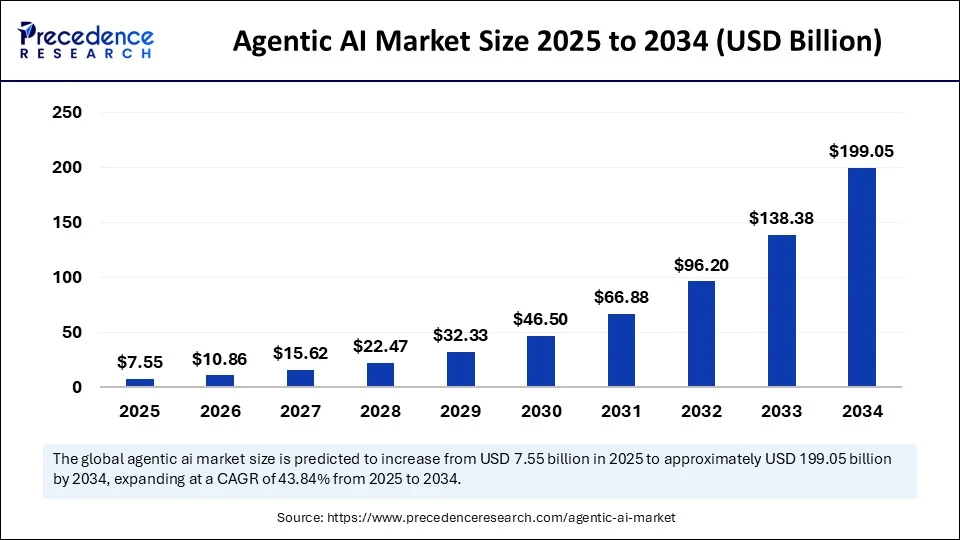
Market Size & Growth Trajectory
| Year | Market Size (Global) | US Market | YoY Growth | Key Driver |
|---|---|---|---|---|
| 2025 | $7.92 billion | $2.27 billion | — | MCP adoption |
| 2026 | $11.55 billion | ~$3.5 billion | +46% | Enterprise scale |
| 2028 | ~$32 billion | ~$12 billion | +67% | Multi-agent systems |
| 2030 | $52.62 billion | ~$22 billion | +43% | On-device agents |
| 2035 | $294.66 billion | $91.66 billion | CAGR 43.6% | Full autonomy |
Sources: Precedence Research (2026) · Salesmate / IDC
Adoption & Productivity Evidence
Sources: Master of Code (2026) · Gartner · McKinsey · Salesforce Research
In January 2026, Goldman Sachs analysts noted that hyperscale cloud providers alone are expected to invest over $500 billion in capital expenditure in 2026 — much of it directed at AI infrastructure that underpins personal and enterprise agents. The seven largest tech companies now account for more than 30% of S&P 500 market capitalization, with AI as the primary growth narrative.
Risks, Failure Modes & What to Watch Out For
Personal AI agents are not a frictionless upgrade. The same autonomy that makes them powerful also creates new categories of risk. Anyone deploying agents at scale — or even for personal use — needs to understand these clearly before giving an agent access to email, finances, or any account that matters.
🔴 Data exposure & privacy
When you give an agent access to your email, calendar, bank, or files, that data flows to external APIs. Model context windows can inadvertently surface sensitive information to third-party tools in multi-agent pipelines.
🔴 Prompt injection attacks
Malicious content in a webpage or email can hijack an agent mid-task, redirecting it to perform unauthorized actions. A browsing agent reading a compromised site might exfiltrate data or take destructive actions.
🟡 Hallucination at execution time
Unlike a chatbot where a hallucination just produces wrong text, an agentic hallucination can result in a wrong booking, a sent email with false information, or a code deployment with a bug. The stakes of errors are higher.
🟡 Scope creep & over-automation
Agents given broad permissions tend to try to help in ways you didn’t authorize. Without clear scope definitions, an agent managing your calendar might start responding to meeting invites you wanted to decline personally.
🟢 Dependency & skill atrophy
As agents handle routine cognitive tasks, some users report reduced engagement with those skills over time. Writing, research synthesis, and analysis are worth preserving as human capabilities even when agents can assist.
🟢 Cost unpredictability
Agents that run multi-step loops against expensive APIs (especially with vision or long-context calls) can rack up significant costs without clear per-action pricing. Always set monthly budget caps at the API level.
The leading researchers on AI safety — including teams at Anthropic, DeepMind, and academic labs — converge on one core recommendation: always maintain a human checkpoint for irreversible actions. Sending emails, making purchases, deleting files, and publishing content should require explicit confirmation until you’ve built sufficient trust with a specific agent in a specific context.
The Regulatory Landscape: What You Need to Know
Personal AI agents don’t operate in a legal vacuum. If you’re in the EU — or building products for EU users — the EU AI Act (Regulation 2024/1689) is the most consequential piece of AI legislation in history, and its most important deadline is fast approaching.
EU AI Act Timeline — Where We Are Now
| Date | Milestone | Status | Impact on Personal AI Agents |
|---|---|---|---|
| Aug 1, 2024 | AI Act enters into force | Done | Legal framework established |
| Feb 2, 2025 | Prohibited practices banned | Done | No social scoring, covert manipulation, emotion recognition at work |
| Aug 2, 2025 | GPAI model rules enforceable | Done | All major LLM providers must comply |
| Aug 2, 2026 | High-risk AI system obligations | ⚡ 81 days away | AI in employment, credit, education — full conformity required |
| Aug 2, 2027 | Safety-critical product AI rules | Upcoming | Medical, aviation, industrial AI agents |
The fines for non-compliance are not symbolic. Under the EU AI Act, prohibited practice violations carry penalties of up to €35 million or 7% of global annual turnover — whichever is higher. For high-risk AI system violations, the ceiling is €15 million or 3% of global turnover.
For personal users, the most relevant rules are transparency requirements: any AI-generated content must be labeled as such, and AI systems that interact with people must disclose their non-human nature. The regulatory complexity for AI agent providers is particularly intricate because agents span multiple EU legal regimes simultaneously — the AI Act, GDPR, the Cyber Resilience Act, the Digital Services Act, and the NIS2 Directive all apply to different aspects of agentic behavior.
Building Your Personal AI Agent Stack
The gap between people who have set up a well-tuned personal agent stack and those who haven’t is becoming the most significant productivity gap in knowledge work. Here is a practical, step-by-step guide to building yours.
🛠️ How to Build Your Personal AI Agent Stack in 2026
- Audit your time first. Spend one week noting where you spend the most time on repeatable cognitive tasks. Email triage, research synthesis, document formatting, and scheduling are the highest-ROI starting points for agents.
- Start with one connected agent, not five. Pick the platform that covers your most frequent use case. Claude for writing-heavy work, Gemini if you live in Google Workspace, ChatGPT/Operator for general agentic tasks. Add tools once the first one is optimized.
- Define explicit permissions — and limits. Give your agent read access first, then write access only after you’ve verified its judgment matches yours on 20+ tasks. Never give irreversible actions (send, delete, publish) without a confirmation step.
- Write a personal context document. A 500-word document describing your role, communication style, preferred formats, recurring contacts, and preferences dramatically improves output quality. Store it in your agent’s system context or memory.
- Connect your real data sources via MCP. An agent without access to your actual calendar, inbox, and files is limited. MCP connections (Google Drive, Gmail, Outlook, Notion, GitHub) are what separate a useful agent from a glorified chatbot.
- Set a monthly budget cap. At the API level or platform level, set a hard spend limit. Agent loops can be expensive — especially with vision, large context windows, or frequent tool calls. $50/month is a reasonable starting budget for a power user.
- Review agent logs weekly for the first month. This is how you catch errors, prompt injection attempts, and scope-creep behavior before they become problems. Most platforms now provide detailed action logs.
- Iterate your system prompt quarterly. The way you work changes. Your agent’s instructions should evolve with you. A quarterly review of your system prompt and permission scope keeps your stack current and effective.
Choosing the Right Agent for Your Role
| Role / Primary Need | Best Agent Platform | Key Integration | Expected Time Savings |
|---|---|---|---|
| Software developer | Claude Code / Cursor | GitHub, terminal | 20–50% on routine tasks |
| Knowledge worker / consultant | ChatGPT + Claude | Google Drive, email | 30–40% on research & writing |
| Microsoft 365 enterprise | Microsoft Copilot | Outlook, Teams, SharePoint | 2–3 hrs/day reported |
| Content creator | Claude + Gemini | Notion, Docs, CMS APIs | 40–60% on production |
| Sales / CRM-heavy | ChatGPT / Salesforce Agentforce | Salesforce, email | 15–25% on CRM updates |
| Researcher / academic | Gemini / Perplexity | Web, academic databases | 50–70% on literature review |
What Comes Next: The 2026–2030 Horizon
We are, in Goldman Sachs’ words, at a moment where “we haven’t seen anything yet.” The capabilities that feel impressive today are likely to look primitive by 2028. Here is the roadmap as it appears from the vantage point of May 2026.
The Verdict: Should You Use Personal AI Agents Now?
After reviewing the data, the platforms, the use cases, and the risks, the answer is clear — but nuanced.
Yes, you should be using personal AI agents now — specifically if you do any form of knowledge work that involves repetitive research, writing, communication, or code. The productivity evidence is no longer anecdotal. The 126% task speed improvement for developers, the 79% of workers reporting better performance, and the 20–50% time savings consistently reported across roles represent a meaningful competitive advantage that is increasingly hard to ignore.
The right approach is graduated deployment: start with low-stakes, reversible tasks (research briefs, draft emails, calendar scheduling). Build trust through verified performance. Expand permissions methodically as confidence grows. Never grant irreversible action capability without a manual review step until the agent has demonstrated reliable judgment across dozens of relevant scenarios in your specific context.
80% of the benefit comes from three things: email triage, research synthesis, and draft generation. Get these three workflows running with your preferred agent and connected to your real data sources (email, calendar, files), and you’ll recapture 5–10 hours per week before you’ve explored any advanced features.
The question is no longer whether personal AI agents are real — the $7.92 billion market, the 40% of knowledge workers already using them weekly, and the benchmarks showing frontier models completing multi-hour human tasks answer that definitively. The only real question is how thoughtfully you structure your adoption.
The people who figure this out early — who build personalized, well-constrained, well-integrated agent stacks — will not be replaced by AI. They’ll be the ones the AI works for.
More from Trendix.tech
Dive deeper into AI, technology trends, and the tools shaping 2026
No-Code Automation: Build, Connect, Scale —Without Touching a Line of Code
Zettelkasten vs. PARA: Which System Actually Works?
Google Still Cares About Mobile-First Indexing — Here’s Why You Should Too
AI Research Agents: The Definitive Guide for 2025–2026
How to Use ChatGPT for Academic Writing — Without Compromising Integrity
The AI Trends Reshaping Digital Marketing in 2026