

The Month
Everything
Shifted
GPT-5.5 landed. DeepSeek V4 answered within 24 hours. Claude Opus 4.7 is leading the coding benchmarks. And Google is about to show its hand at I/O. Here’s the only AI roundup you need this month — honest, deep, and written for people who actually build things.
In This Roundup
- 01The Big Picture: Why April–May 2026 Is a Turning Point
- 02Frontier Model Releases: GPT-5.5, Claude Opus 4.7 & DeepSeek V4
- 03Head-to-Head Benchmark Comparison Table
- 04The Agent Turn: Cursor 3, Microsoft Agent 365 & Claude Code
- 05What Google Is About to Announce at I/O 2026
- 06The Cost Story: Routing Math Every Team Should Run
- 07Open-Source Highlights: GLM-5.1, Llama 4 & Qwen 3
- 08Enterprise & Industry: Banks, Law Firms, Healthcare
- 09Release Timeline: April–May 2026 at a Glance
- 10What Comes Next: Sonnet 4.8, Gemini 4, GPT-5.6
Section 01The Big Picture: Why This Particular Moment Matters
I’ve been tracking AI model releases for a while now, and I have to say — April and early May 2026 hit differently. It’s not that any single launch was uniquely world-altering. It’s that everything happened at once, and the combination of events is reshaping what “using AI” actually means at a practical level.
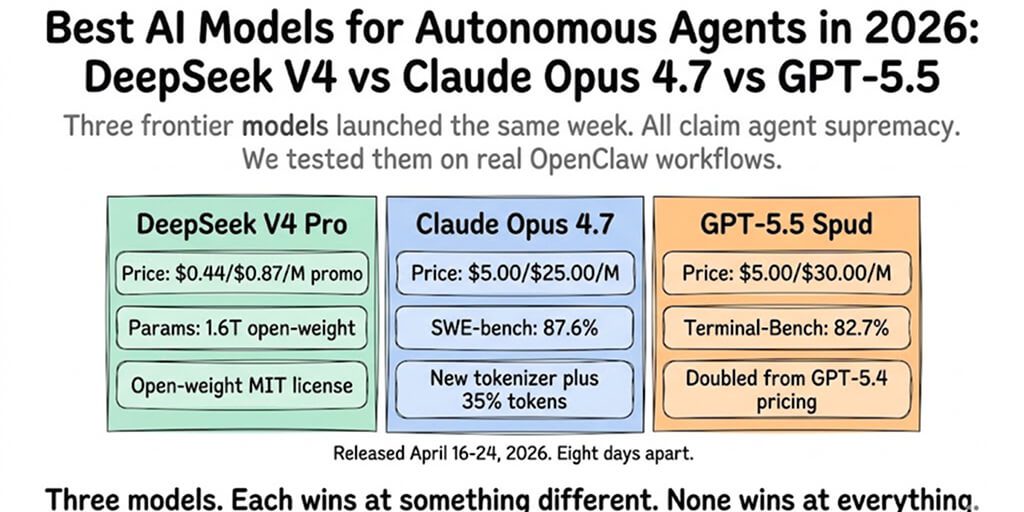
Consider what transpired in a single eight-day window. OpenAI shipped GPT-5.5 on April 23. Less than 24 hours later, DeepSeek dropped V4-Pro — a 1.6-trillion-parameter open-source model priced at $1.74 per million input tokens, roughly 98% cheaper than comparable closed alternatives. Claude Opus 4.7 had already reset the SWE-bench coding leaderboard on April 16. And Google’s I/O conference starts on May 19 with what looks like a very significant set of agent announcements waiting to be unveiled.
Three structural shifts are underway simultaneously, and none of them is going away:
Agents are now the product, not a feature. This time last year, “AI agents” was a phrase that mostly showed up in research papers and venture pitch decks. Today, Microsoft Agent 365 launched on May 1 as a dedicated enterprise control plane. Cursor rebuilt its entire product around parallel agent fleets. Anthropic made Claude Cowork generally available on both macOS and Windows. The chat interface is still there — but it’s increasingly the fallback, not the primary mode.
Open-source models are closing the performance gap faster than anyone expected. DeepSeek V4-Pro, built entirely on Huawei Ascend chips with zero Nvidia hardware, sits within 3.5 benchmark points of GPT-5.5 on GPQA Diamond. GLM-5.1 became the first open-weight model in history to top the SWE-bench Pro leaderboard, holding the #1 spot for nine days before Claude Opus 4.7 reclaimed it. The 50x pricing differential between open and closed frontier models is forcing a genuine rethink of infrastructure architecture.
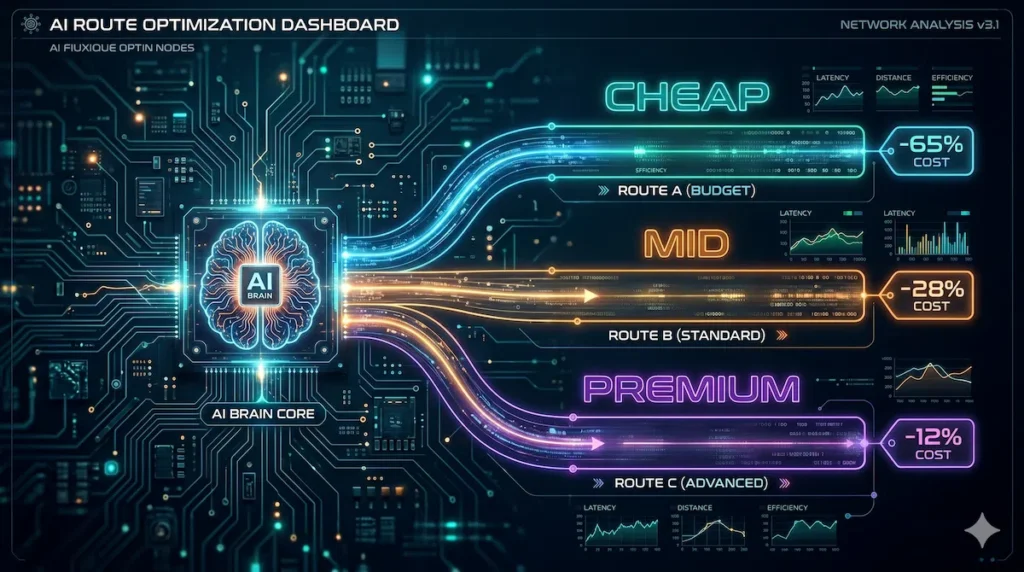
The “one model, all tasks” assumption is dead. The most sophisticated teams running AI pipelines have moved to multi-model routing — using cheap models for the bulk of traffic and reserving frontier-tier for genuinely hard tasks. According to analysis from BuildFastWithAI, routing 70% of traffic to DeepSeek V4-Flash, 25% to Claude Sonnet 4.6, and 5% to Claude Opus 4.7 achieves performance indistinguishable from all-frontier routing at roughly 15% of the cost. That’s not a hack. That’s just good engineering at this point.
The era of picking one model and committing is over. The era of multi-model routing has arrived.
— BuildFastWithAI analysis, April 2026With that context in place, let’s go through what actually shipped.
Section 02Frontier Model Releases: What GPT-5.5, Claude Opus 4.7 & DeepSeek V4 Actually Mean
The first fully retrained OpenAI base model since GPT-4.5. Excels at agentic coding, computer use, and long-horizon task execution. “Noticeably smarter and more persistent than GPT-5.4,” per Cursor’s CEO. GPT-5.5 Instant reached all free-tier ChatGPT users on May 5.
Launched April 16. Pushed SWE-bench Pro from 53.4% to 64.3%, reclaiming the coding crown. Introduces task budgets (agents can’t silently burn quota), high-resolution image input up to 2576px, and the new tokenizer that produces up to 35% more tokens for identical input — watch your pipeline costs.
The release that forced the industry to recalibrate. 1.6 trillion total parameters, 49B active per forward pass, MoE architecture. Built entirely on Huawei Ascend 910B chips — zero NVIDIA hardware. Trails GPT-5.5 by roughly 3–6 months on the frontier, but at a fraction of the cost. Self-hostable under MIT.
The more disruptive SKU for most developers. 284B total parameters, 13B active, priced at just $0.14 per million input tokens. LiveCodeBench score of 91.6% at fourteen cents per million tokens is, frankly, remarkable. The routing layer for any price-sensitive pipeline.
The most significant Gemini release to date. 2-million-token context window with native multimodal reasoning across text, image, audio, and video simultaneously — no transcription intermediaries. New sandboxed code execution mid-conversation. 94.3% on GPQA Diamond.
Holds the largest context window of any model — open or closed — at 10 million tokens. Meta’s broader Llama 4 family launch included a strategic reversal: their first closed proprietary model (“Avocado,” delayed from March) is also in development, a notable pivot from the pure open-source identity.
If you have automated pipelines running on Claude Opus 4.7, audit your token consumption before month-end. The new tokenizer produces up to 35% more tokens for identical input text, meaning real costs per request can rise significantly even though the published rate card looks the same as 4.6. This is catching enterprise buyers off guard.
Section 03Head-to-Head: Benchmarks, Pricing & Use Cases
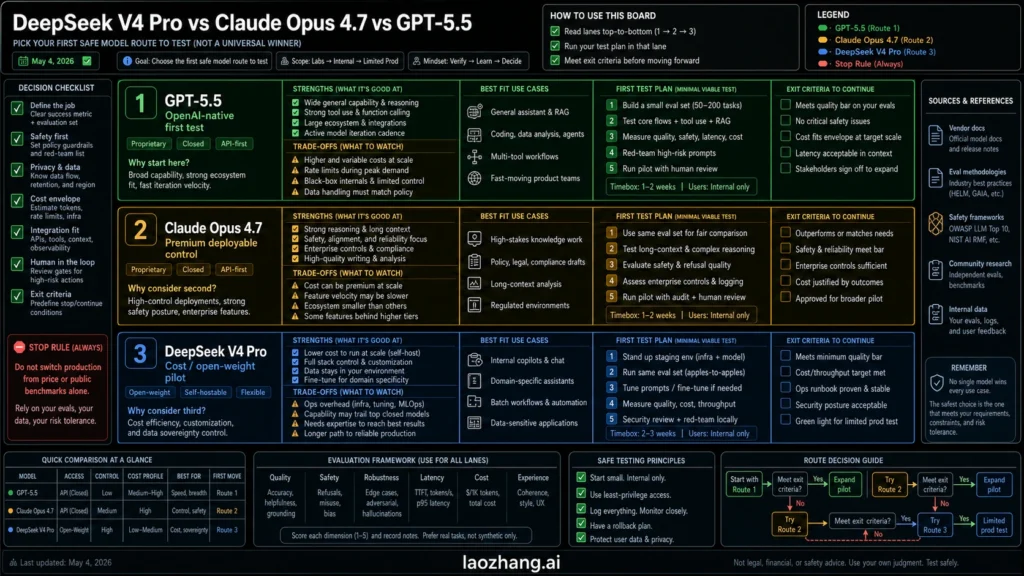
Benchmark tables are imperfect — any experienced developer knows that a model’s rank on GPQA Diamond tells you something, but it doesn’t tell you how it handles your specific codebase, your latency requirements, or your edge cases. That said, ignoring the numbers entirely isn’t rigorous either. Here’s the clearest comparison I can give you right now, with honest caveats where they matter.
| Model | SWE-bench Verified | GPQA Diamond | Terminal-Bench 2.0 | Context | Input $/1M | Open? | Best For |
|---|---|---|---|---|---|---|---|
| Claude Opus 4.7 | 87.6% | — | — | 200K / 1M β | $5.00 | No | Coding agents, instruction-following |
| GPT-5.5 | 58.6% | 93.6% | 82.7% | 256K | $5.00 | No | Agentic workflows, computer use |
| Gemini 3.1 Ultra | — | 94.3% | — | 2M | ~$7.00 | No | Multimodal, massive document analysis |
| DeepSeek V4-Pro | — | 90.1% | — | 1M | $1.74 | MIT | Cost-efficient frontier, self-hosting |
| DeepSeek V4-Flash | — | — | — | 1M | $0.14 | MIT | High-volume routing layer |
| GLM-5.1 | First open-weight to top SWE-bench Pro | — | — | — | Low | MIT | Long-horizon agent tasks, 8hr sessions |
| Llama 4 Scout | — | — | — | 10M | Free (weights) | Open | Massive-document RAG, legal/research |
Several of the scores above were reported by the labs themselves on their own launch announcements. Independent replication sometimes reveals different numbers. SWE-bench Verified and GPQA Diamond are among the more contamination-resistant benchmarks available right now, but treat all figures as directional guides rather than gospel — and always test on your own representative tasks before committing to a production deployment.
Section 04The Agent Turn: Cursor 3, Microsoft Agent 365 & Claude Code
If the model releases were the headline act, the agentic tooling story is arguably more consequential for day-to-day work. The shift from “AI as a chat interface” to “AI as an autonomous executor” is now essentially complete at the tooling level. The open question for the rest of 2026 is adoption and governance, not capability.
Microsoft Agent 365 & the E7 Frontier Suite
Microsoft launched Agent 365 on May 1, 2026 — a dedicated governance and security control plane for enterprise AI agents. It ships alongside the new E7 “Frontier Suite” license at $99 per user per month, which bundles E5, Copilot, Agent 365, and Entra Suite in a single SKU. Organizations on E5 plus Copilot should be doing the migration math now, because it’s genuinely complex: the answer depends on your Entra licensing, your agent governance readiness, and whether your SharePoint permissions are clean enough for autonomous workflows.
What’s interesting about Copilot Wave 3 is the multi-model architecture. It explicitly uses Claude, GPT, and Microsoft’s own models depending on the task — the first major commercial deployment where model-vendor agnosticism is a stated product feature rather than an implementation detail. SharePoint agents are now in public preview, powered by Claude.
Cursor 3: Agents as the Default
Cursor 3 was rebuilt from the ground up around the Agents Window — a parallel fleet runner that lets developers run multiple agents simultaneously rather than one at a time. Cursor’s CEO described GPT-5.5 as “noticeably smarter and more persistent” and called out the improvement in real multi-step agentic workflows as the meaningful gain over 5.4. Claude Code remains the benchmark leader for SWE-bench metrics at 87.6% verified, with a developer satisfaction score of 91% CSAT per JetBrains’ January 2026 survey.
Anthropic’s Code w/ Claude: What Shipped on May 12
Anthropic held its annual developer conference in San Francisco on May 12, 2026. The announcements were more substantive than the typical conference cadence. Doubled rate limits for Claude Code. Raised API limits for Claude Opus. Twenty-plus new MCP connectors and 12 practice-area plugins targeting the legal industry — linking Claude directly to DocuSign, iManage, Relativity, Thomson Reuters CoCounsel, Harvey, and Everlaw. Claude now carries context across Microsoft Word, Outlook, Excel, and PowerPoint simultaneously.
The legal industry integration is worth watching closely. Contract lifecycle, e-discovery, research, and deal room workflows are genuinely time-intensive, and the 12 role-specific plugins (Commercial Legal, Litigation, IP, Privacy, AI Governance) suggest Anthropic has done real domain work rather than generic API wrapping. Norway’s sovereign wealth fund ($2.2 trillion in assets under management) is reportedly using Claude for ESG screening — and discovered over 100 previously unknown Firefox bugs in the process, which is a somewhat unexpected outcome.
OpenCode: The Open-Source Alternative Worth Knowing About
For developers who want full provider control without being locked into Cursor or Claude Code’s ecosystem, OpenCode — a Go-based CLI supporting 75+ providers including local Ollama models — is the fastest-growing alternative right now. It’s not as polished, but the flexibility of pointing it at any local model while maintaining a consistent interface is genuinely useful for teams with data privacy constraints.
Section 05What Google Is About to Show at I/O 2026 (May 19–20)
Google’s been notably quiet while OpenAI and Anthropic have been shipping. Google I/O opens on May 19, and based on what’s already leaked through APK analysis and internal testing disclosures, it’s going to be a significant event.
Gemini Spark: The Always-On Agent
The most talked-about upcoming announcement is Gemini Spark — an always-on AI agent that runs in the background and handles tasks proactively rather than waiting for manual prompts. Unlike traditional chatbots, Spark draws context from connected apps, skills, chat history, scheduled tasks, websites the user is signed into, Personal Intelligence signals, and location data.
Google is already being transparent about the risks, which is worth noting: the onboarding screen explicitly warns that Spark may share sensitive information with third parties or make purchases without asking for confirmation in some situations. It also stores remote browser session data, including login details and remote code execution state, to keep workflows warm. Those are significant data handling implications, and anyone evaluating Spark for enterprise use should read the privacy documentation carefully before enabling it.
Google I/O (May 19–20) is expected to include Gemini Spark’s official launch, a new Gemini 4 model announcement, Gemini Omni (a unified text/image/video model), and a redesigned Gemini Live mobile experience. The combined package could represent Google’s most significant AI ecosystem shift since Gemini 1.0.
Gemini Omni: A True Unified Model?
A UI string spotted on May 2 inside Gemini’s video generation tab read “Powered by Omni” — suggesting a new system capable of generating text, images, and video in a single pipeline. If confirmed, this would make Gemini the first top-tier omni-model with native video output, combining what Veo 3.1 (video), Nano Banana 2 (images), and Gemini Ultra (text) do separately into a single call. That’s architecturally different from what any competitor has shipped to date.
Gemini 3.1 Flash-Lite is already live for developers as of May 8 — 2.5× faster response times and 45% faster output generation than earlier versions, priced at the efficiency end of the spectrum. That’s the Google I already recommend to anyone building on Google Workspace who doesn’t need frontier-tier reasoning on every call.
Section 06The Cost Story: Routing Math Every Team Should Run
Here’s something most AI roundups skip because it’s less exciting than benchmark numbers, but it’s probably the most practically important thing in this piece: the economics of running AI at scale have changed dramatically in the past 90 days, and most teams haven’t updated their mental models to match.
// 1M requests/month, mixed task difficulty
ALL FRONTIER (naive approach):
1,000,000 × Claude Opus 4.7 @ $5.00/1M = $5,000/month
SMART ROUTING (3-tier):
700,000 × DeepSeek V4-Flash @ $0.14/1M = $98
250,000 × Claude Sonnet 4.6 @ ~$1.50/1M = $375
50,000 × Claude Opus 4.7 @ $5.00/1M = $250
───────────────────────────────────────
Total: $723/month vs $5,000 — saving 85.5%
// Performance outcome: statistically indistinguishable from all-frontier
// Source: BuildFastWithAI routing analysis, April 2026
The routing math above isn’t hypothetical — it reflects what teams with real production pipelines are actually doing. The key insight is that 60–70% of typical AI requests don’t need frontier-tier reasoning. Summarization, classification, routine code generation, first-pass drafts — V4-Flash handles these fine. You reserve Opus or GPT-5.5 Pro for multi-step reasoning tasks, ambiguous edge cases, and anything where an error has a real downstream cost.
One important caveat: multi-model routing introduces integration complexity that has real engineering costs. Each provider has different API conventions, authentication patterns, error handling, and parameter schemas. If you’re building this in-house, budget accordingly. If you’re on a smaller team, platforms like LiteLLM, PortKey, or OpenRouter abstract much of this away.
Section 07Open-Source Highlights Worth Your Attention
GLM-5.1: The Chinese Lab That Topped SWE-bench First
Zhipu AI’s GLM-5.1 deserves more coverage than it’s getting in Western tech media. This 744-billion-parameter MoE model — trained entirely on 100,000 Huawei Ascend 910B chips with no NVIDIA hardware — became the first open-weight model in history to top the SWE-bench Pro leaderboard on April 7, holding the position for nine days. It can maintain autonomous task execution for up to 8 continuous hours without performance degradation, which no Western closed-source lab has publicly matched. In one public demonstration, it ran 655 iterations with over 6,000 tool calls to build a high-performance vector database from scratch.
Qwen 3 and the Alibaba Factor
Qwen 3.6 Plus from Alibaba Cloud is competing at a similar level to DeepSeek V4-Pro on coding-specific benchmarks, under an Apache 2.0 license. The broader pattern — multiple Chinese AI labs producing open-weight frontier-class models simultaneously, all without NVIDIA hardware — is a structural change in the competitive landscape that is unlikely to reverse.
Gemma 4: Google’s Open Contribution
Google shipped Gemma 4 in April 2026, extending its open-model line with improved reasoning capabilities. For developers who want Google’s architectural approach without the Gemini pricing, or who are building on-device applications, Gemma 4 remains the most practical option in the Google family.
Section 08Enterprise & Industry: Where AI Is Actually Being Deployed
The enterprise story is genuinely moving fast, and it’s no longer limited to tech companies doing internal experiments.
Financial Services
JPMorgan Chase formally reclassified its AI investments from experimental R&D to core infrastructure in 2026, with a technology budget of approximately $19.8 billion and 2,000 staff dedicated to AI development. The bank is projecting $2.5 billion in annual value through efficiency gains and revenue growth, with models already scanning over $10 trillion in daily transactions. BNY’s CIO, who had early access to GPT-5.5, specifically praised “hallucination resistance” as a step change for financial services use cases — which is a meaningful signal about production readiness.
Norway’s Government Pension Fund — the world’s largest sovereign wealth fund at $2.2 trillion — is using Claude for ESG screening across its portfolio holdings. The incidental discovery of 100+ Firefox vulnerabilities during that process underscores that AI at scale reveals things humans simply wouldn’t find at the same rate.
Healthcare
A study published in Science by Harvard Medical School and Beth Israel Deaconess Medical Center found that an OpenAI reasoning model outperformed experienced physicians at diagnosing patients and managing their care, using only electronic health records from a Boston emergency department. That’s a carefully controlled study with specific conditions — it doesn’t mean AI replaces doctors — but it’s a meaningful data point about what’s achievable now.
Legal
Anthropic’s launch of 12 practice-area plugins for Claude, integrating directly with DocuSign, Thomson Reuters CoCounsel, Harvey, and Everlaw, represents the most serious direct-to-legal-workflow AI product push of the year. The plugins cover roles from Commercial Legal to IP to AI Governance. How deeply law firms actually adopt these will be a story worth tracking through the second half of 2026.
OpenAI has surpassed $25 billion in annualized revenue. Anthropic is approaching $19 billion (revenue nearly doubled to this figure; lifetime sales exceed $5 billion). Google’s advantage in enterprise remains distribution — 750 million monthly Gemini users plus 8 million paid enterprise seats, benefiting from bundling with Workspace tools most organizations can’t quit. The AI market is now one of the fastest-growing sectors in technology history.
Section 09Release Timeline: April–May 2026 at a Glance
7
16
23
24
1
8
12
19
Section 10What’s Coming Next: The Q2 Horizon
The second half of Q2 2026 is going to be busy. Here’s what’s reliably in the pipeline as of today, May 15.
Claude Sonnet 4.8 is expected this month. Given the 12-point gain Opus 4.7 showed on CursorBench over 4.6, the Sonnet upgrade will be worth watching — Sonnet is the workhorse model for most mid-complexity tasks.
Meta’s “Avocado” — their next flagship closed model, delayed from March due to underperformance on coding and reasoning benchmarks — is now targeting a May 2026 window. If it ships, it would mark the first time Meta has a serious closed proprietary model competing directly against OpenAI and Anthropic. Their open-source identity took a hit with this decision; whether the model justifies it will become clear within weeks.
GPT-5.6 / “next OpenAI release” — OpenAI is reportedly in active development on the successor to 5.5, though no public timeline exists. Given the April release cadence, a late Q2 preview seems plausible.
Google Gemini 4 is expected at I/O. If Gemini Omni is real and works as leaked, it could be the most technically interesting model announcement of the year — a native unified architecture rather than post-hoc multimodal stitching.
Regulation is arriving. Governments, led by the United States, are now actively testing AI models before public release. Major labs including Microsoft and xAI have reportedly agreed to provide early access to regulators. This represents a structural shift in how frontier AI is governed — moving from self-certification to external verification. The practical implications for enterprise procurement and compliance teams will be meaningful, though the full impact won’t be clear for another 12–18 months.
More From Trendix
Explore related coverage on our site
AI Comparisons & Benchmarks: What the Numbers Actually Mean
DeepSeek V4 Deep Dive: Architecture, Pricing & What It Means
Best AI Tools for Freelancers—Build a $40/Month Stack That Works
AI for Small Business: The Complete Honest Guide