

AI Workflows & Automation:
The Complete 2025–2026 Guide
From agentic systems and multi-agent orchestration to verified ROI benchmarks and a step-by-step implementation blueprint — everything you need to make AI-driven workflows actually work.
Table of Contents
Something quietly crossed a threshold in 2025. After years of AI being described as a tool that augments human work, the most forward-looking companies started talking about it differently — as a system that executes human strategy. The difference is not semantic. It is the gap between a calculator and a CFO. We are now firmly inside the era of AI workflow automation, and the organisations that understand how it actually works — not the hype, but the architecture, the ROI levers, and the failure modes — are building advantages that will compound for years. This guide exists to give you exactly that understanding.
What is AI Workflow Automation? A Precise Definition
The phrase gets used loosely enough that it has started to mean different things to different people. Let’s be precise. AI workflow automation is the use of artificial intelligence — machine learning, large language models, computer vision, and autonomous agents — to execute, optimise, and adapt multi-step business processes with minimal or zero human intervention at the task level.
This distinguishes it sharply from two older categories. Traditional automation (think scheduled scripts, macros, or simple if-then rules) executes rigid, pre-defined sequences — it does exactly what you tell it, every time, forever. RPA (Robotic Process Automation) moved a step forward by mimicking human actions on a GUI — clicking buttons, copying data between systems — but it remained fundamentally brittle: any UI change could break the bot.
AI workflow automation goes further. It can read unstructured data (a scanned contract, a customer email, a product image), reason about what it means in context, make a decision, take action across multiple connected systems, and learn from the outcome. Where RPA follows a map, agentic AI can navigate without one.
Indicative % of eligible process steps automated at each tier. Source: Trendix analysis based on Gartner & McKinsey frameworks.
The Market in Numbers: 2025–2026 Reality Check
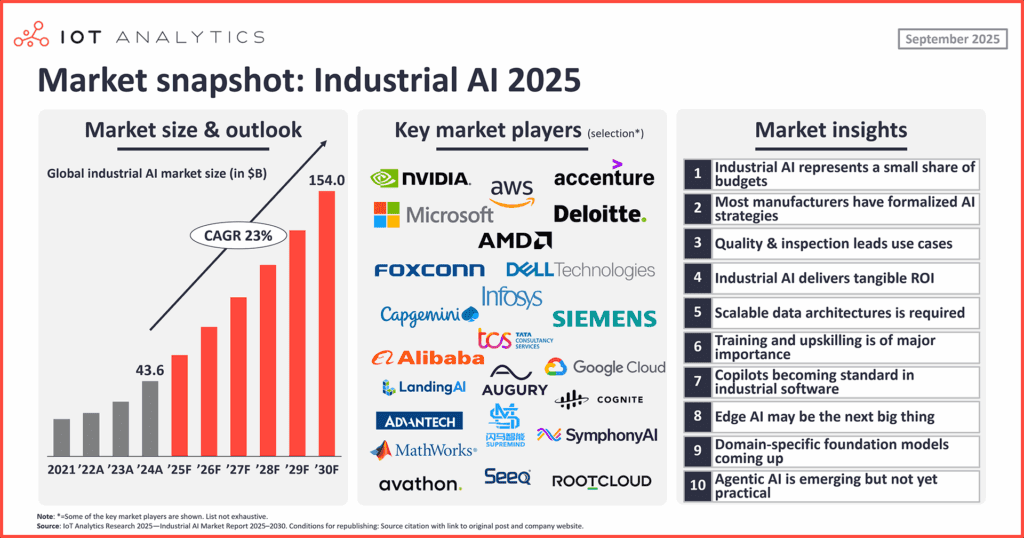
The data paints a picture of a technology that has crossed from early-adopter into mainstream territory — but where the gap between early movers and followers is still wide enough to matter enormously.
Perhaps the most important data point sits inside the McKinsey numbers: while 88% of firms use AI in some function, only about one-third have started scaling it across the enterprise. That delta — between use and scale — is exactly where competitive advantage is being won and lost right now.
“2026 will separate companies that only use AI as a productivity assistant from companies that use AI to redesign how work moves across the organisation.”
— CFlow AI Workflow Automation Trends Report, 2026Types of AI Automation: Knowing What You’re Actually Deploying
One reason AI automation projects fail is that organisations deploy the wrong type for the problem they’re solving. Here is a clear taxonomy of what exists today.
| Type | What it does | Best for | Maturity |
|---|---|---|---|
| RPA (Robotic Process Automation) | Mimics human clicks & keystrokes across UIs to move structured data | High-volume, rule-bound, UI-dependent tasks (data entry, copy-paste) | Mature |
| Intelligent Document Processing (IDP) | Reads & extracts data from invoices, contracts, forms using OCR + ML | AP/AR, compliance, legal ops, insurance claims | Mature |
| Conversational Agents | Handle customer/internal support via NLP, pulling from knowledge bases & CRMs | Customer service, IT helpdesk, HR queries | Production |
| Decisioning Agents | Prioritise risks, score leads, forecast demand in real time | Credit underwriting, demand planning, fraud detection | Production |
| Orchestration Agents | Connect actions across SaaS, ERP, and RPA systems to complete multi-step workflows | Supply chain, procurement, finance close | Scaling |
| Generative Agents | Create content, code, summaries; execute actions based on goals stated in natural language | Marketing ops, software development, legal drafting | Scaling |
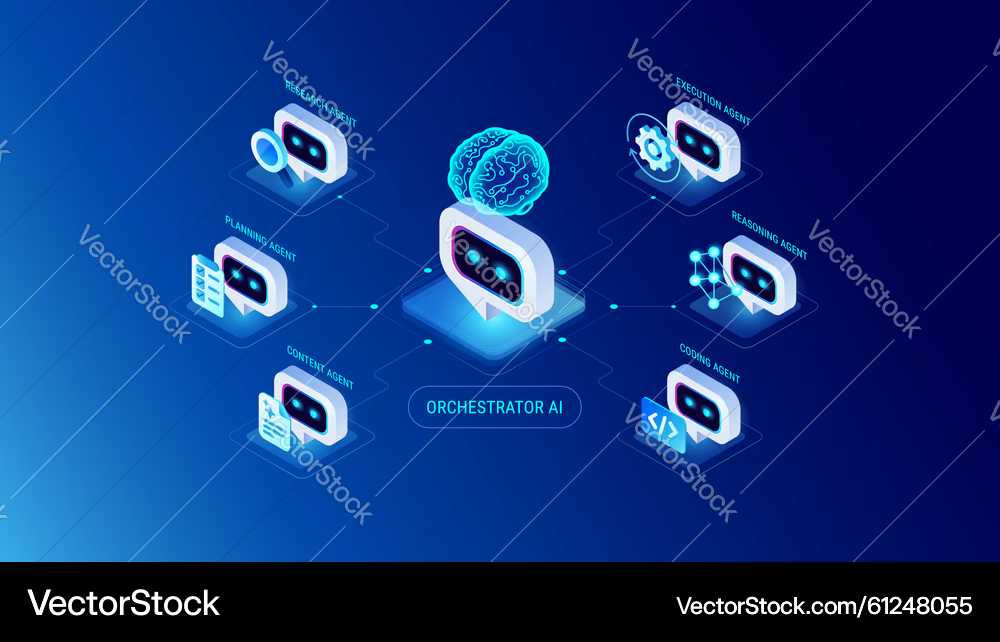
| Multi-Agent Systems | Multiple specialised agents working in orchestrated coordination (planner, researcher, executor, critic) | Complex end-to-end processes, R&D, enterprise transformation | Early Majority |
| Hyperautomation | Convergence of RPA, AI, analytics, and process mining to automate everything automatable | Organisation-wide transformation; requires full data & integration maturity | Early Majority |
Don’t start with hyperautomation. Start with a single, high-volume, measurable process — invoice processing, customer support triage, contract red-lining — prove ROI in 90 days, then expand. Every successful enterprise-wide deployment started this way.
The Agentic AI Revolution: Why 2025–2026 is the Inflection Point
The biggest shift of the last 18 months isn’t a new model — it’s a new architecture. Agentic AI refers to systems that don’t just respond to prompts but that plan, use tools, take actions in the world, and adapt based on what happens. According to UiPath’s 2026 AI and Agentic Automation Trends Report, 78% of executives say they’ll have to fundamentally reinvent their operating models to capture agentic AI’s full value.
This is a qualitative shift, not just a quantitative one. Generative AI tools like early copilots improved individual productivity. Agentic AI transforms end-to-end processes. The Kore.ai State of AI report identifies this gap precisely: 78% of enterprises deployed GenAI in at least one function, yet 80% said it hadn’t improved productivity, cost, or revenue in any meaningful way. The reason? Isolated tools that stayed at the surface. Agentic workflows that cross system boundaries are where the real gains are.
How an Agentic Workflow Actually Operates
A well-designed agent follows five operational phases, often called the Sense → Reason → Act → Learn → Collaborate model:
- S
Sense
The agent ingests inputs: structured data from databases, unstructured data from documents or emails, real-time signals from APIs or IoT sensors. Unlike an RPA bot, it can interpret ambiguous or variable-format inputs.
- R
Reason
It applies reasoning — drawing on its model weights, any retrieved context (via RAG), and explicit decision rules — to determine what the appropriate next action is. For multi-agent systems, this may involve delegating sub-tasks to specialist agents.
- A
Act
It takes action: writing to a database, calling an API, sending a message, generating a document, triggering another workflow, or flagging for human review when it detects an edge case it can’t resolve confidently.
- L
Learn
Feedback loops — from human approvals, outcome data, and performance metrics — update the agent’s behaviour over time. This is where the compounding advantage lives: an agent deployed today will be meaningfully better in six months.
- C
Collaborate
In multi-agent architectures, individual agents coordinate: a “planner” agent breaks a complex task into sub-tasks, dispatches them to specialised agents, and an “orchestrator” synthesises the results. This is the architecture behind JPMorgan’s 450+ active AI deployments and Google’s enterprise agent platforms.
43.84% CAGR 2025–2034. Source: Landbase Agentic AI Statistics, April 2026
Enterprise Case Studies: Verified ROI, Not Vendor Hype
The following case studies draw on enterprise deployments verified between 2025 and 2026, sourced from public company reporting, case study publications, and third-party research. Each has a named organisation, a defined use case, and a quantified outcome. Source: AI Monk Enterprise Case Studies 2025–2026.
Klarna’s AI customer service agent handled the equivalent workload of 853 full-time employees by Q3 2025, processing 2.3 million conversations in its first month of deployment. The agent operated at parity with human agents on customer satisfaction scores while delivering dramatically faster resolution times.
JPMorgan’s agentic AI systems now generate investment banking presentations in 30 seconds — work that previously consumed hours of junior analyst time. The system drafts M&A memos, automates trade settlement checks, and operates 450+ distinct agentic AI use cases in production daily across the organisation’s $18 billion annual technology budget.
Salesforce’s internal legal-ops team deployed an AI agent to draft, red-line, and analyse contracts autonomously. The agent processes unstructured document data that previously required billable outside counsel hours, delivering one of the cleanest ROI attributions in the agentic AI category.
Further verified cases: AI Monk’s full 12-case study analysis covers healthcare, retail, and supply chain deployments with similarly rigorous ROI attribution.
Industry-by-Industry: Where AI Automation Delivers Most
Financial Services
IDC projects banks will spend $80 billion+ on AI infrastructure in 2025. The returns justify it: McKinsey reports that banks implementing agentic AI for KYC/AML workflows are achieving 200%–2,000% productivity gains. Fraud detection, real-time transaction monitoring, document-heavy compliance workflows, and loan origination are the primary use cases.
Healthcare
AI-powered document processing in billing and claims can cut turnaround time by 50%, boost accuracy to 99.5%, and deliver around 30% ROI — a finding consistent across multiple hospital system deployments tracked by Zoho Creator’s 2025 analysis. Clinical documentation automation frees nurses and physicians from administrative burden that AIMúltiple’s research shows consumes up to 40% of their working hours.
Manufacturing
More than 64% of manufacturing activities are now considered automatable, per Zoho Creator. Automated predictive maintenance reduces downtime by up to 50% and extends machine life by up to 40%. A leading automotive manufacturer reported a 35% reduction in production errors and 42% improvement in predictive maintenance accuracy after deploying AI workflow agents across its facilities (OneReach 2026).
Retail & E-Commerce
Agentic AI in retail has demonstrated 4–7x conversion rate improvements in personalised outreach workflows, and 70% cost reductions in customer support operations — figures that have held across multiple independent deployments according to Landbase’s April 2026 agentic AI statistics report.
| Industry | Primary Use Cases | Proven ROI Range | Maturity |
|---|---|---|---|
| Financial Services | KYC/AML, fraud detection, trade settlement, document processing | 200%–2,000% productivity gains | Leader |
| Healthcare | Clinical documentation, billing/claims, scheduling, patient triage | 30–50% turnaround reduction | Accelerating |
| Manufacturing | Predictive maintenance, quality control, inventory, production planning | 35–50% error/downtime reduction | Accelerating |
| Retail / E-com | Personalisation, supply chain, demand forecasting, customer service | 4–7x conversion uplift | Growing |
| Legal | Contract drafting, due diligence, compliance monitoring, e-discovery | $5M+ cost reduction (Salesforce) | Growing |
| HR / People Ops | Candidate screening, onboarding, policy queries, performance analytics | 25–40% time saved on admin | Emerging |
| Public Sector | Permitting, benefits processing, citizen services, fraud detection | 105% YoY increase in AI use cases (US Federal, 2025) | Emerging |
Tools & Platforms to Know in 2026
The tooling landscape has consolidated meaningfully since 2023. Below are the categories and leading platforms that enterprise buyers are actually deploying — not an exhaustive list, but a map of what matters.
The dominant enterprise automation platform, now deeply integrating agentic capabilities. Their 2026 Trends Report is required reading for enterprise architects. Strong governance and audit trail features.
Deeply embedded in the Microsoft 365 ecosystem. Excellent for organisations already on Azure/M365. Copilot integration enables natural-language workflow creation for non-technical teams.
Workflow automation tool with 200,000+ users and 5x revenue growth in 2024. Self-hostable, highly extensible, and a favourite among technical teams who want flexibility without vendor lock-in.
The entry point for non-technical automation. Best for connecting SaaS tools with simple trigger-action flows. AI capabilities are improving but still limited for complex, multi-step reasoning workflows.
Google Cloud’s enterprise agent platform. Tightly integrated with BigQuery, Workspace, and Gemini models. The ROI of AI 2025 report from Google Cloud is one of the most reliable data sources on agent outcomes.
Salesforce’s agentic platform built directly into its CRM ecosystem. Particularly strong for sales, service, and marketing workflows. The $5M+ legal cost case study above ran on this platform.
Leading platform for IT service management automation. AI-powered incident resolution, change management, and service request automation. Particularly strong for ITSM and HR service delivery.
Integration Platform as a Service tools that sit at the connective tissue layer. Essential when you need workflows that span multiple enterprise systems (ERP, CRM, HCM) in real time.
The Implementation Framework: From Zero to Scale
Based on patterns across successful enterprise deployments, the following six-phase framework reflects how organisations that actually achieved scale did it — as opposed to the ones that ran pilots that never graduated.
- 1
Audit & Prioritise Workflows
Map every process in your target department. Score each on three dimensions: volume (how often does it run?), rule-density (how many clear decision rules govern it?), and measurability (can you quantify the current cost and quality?). The processes that score highest on all three are your pilots.
- 2
Fix the Data Foundation First
AI automation is only as good as the data it touches. Before deploying agents, ensure the systems they’ll connect to have clean, accessible, well-documented data. Bain’s 2025 Technology Report identifies data fragmentation as the single most common cause of AI project underperformance. This step is unglamorous. It is also non-negotiable.
- 3
Run a 90-Day Focused Pilot
Pick one process. Deploy one well-scoped agent. Measure obsessively: process time before and after, error rate, cost per transaction, employee satisfaction. 60% of organisations achieve ROI within 12 months of implementation when they start this way (Kissflow, 2026).
- 4
Build Integration Infrastructure
60% of executives identified legacy system integration as their primary scaling challenge (Deloitte AI Study 2025). Before expanding, invest in an API layer — or an iPaaS platform — that gives your agents clean, real-time access to all the systems they’ll need to touch. Skipping this creates technical debt that compounds painfully.
- 5
Implement Governance from Day One
As UiPath’s 2026 report puts it: “governance-as-code is the new must-have.” Build audit trails, set clear thresholds for when agents escalate to humans, establish LLMOps practices for monitoring model drift, and define how you’ll handle edge cases. This is not a later-stage concern — it is architecture.
- 6
Scale by Function, Then Cross-Functionally
Once your pilot proves ROI, expand to adjacent workflows within the same department. Then, once you’ve built institutional knowledge in one function, carry it into the next. The organisations achieving the biggest gains are not those that deployed everywhere at once — they are the ones that built compounding efficiency quarter by quarter.
The Pitfalls: Why 40% of AI Automation Projects Fail
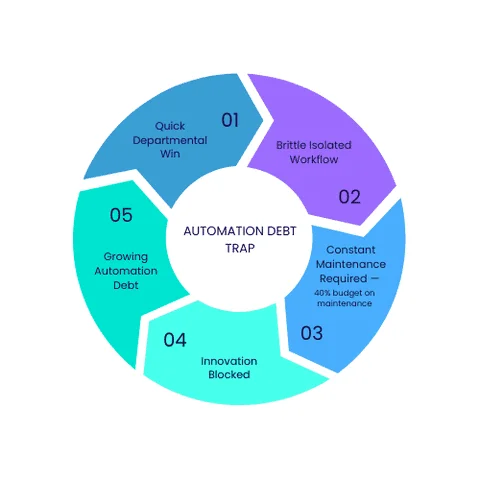
The data is blunt: Landbase’s 2026 statistics show that 40% of agentic AI projects fail due to inadequate infrastructure. Understanding the failure modes is as important as understanding the success patterns.
Automation amplifies whatever it runs on. If your invoice processing workflow has five manual exception paths, an AI agent will reproduce all five at scale — faster. Map and fix the underlying process before you automate it.
Google Cloud’s ROI of AI report is explicit: AI tools that operate in silos — producing insights but failing to drive end-to-end outcomes — deliver modest, below-expectation productivity gains. An AI that summarises your customer emails but doesn’t connect to your CRM, helpdesk, or billing system is a very expensive autocomplete.
Klarna, notably, partially reversed its AI-only customer service approach because complex, emotionally charged queries required human judgment the AI could not reliably provide. Best-in-class implementations define in advance exactly which scenarios require human escalation, and design those handoffs gracefully.
Agentic AI systems face 15 categories of unique security threats, per Landbase’s security analysis. With cybercrime costs projected at $10.5 trillion annually by 2025, automated systems that handle sensitive data without zero-trust architecture and role-based access controls are significant liability vectors.
Before going to production with any AI workflow: ✓ Process mapped and cleaned ✓ Data sources accessible & documented ✓ Success metrics defined ✓ Escalation logic specified ✓ Audit trail configured ✓ Rollback plan exists ✓ Ongoing monitoring assigned to a named owner.
What’s Next: 2026–2028 Trajectory
The signals in the data point to four developments that will define the next two years of enterprise automation.
1. Multi-Agent Systems Become Standard Architecture
Solo agents are being replaced by coordinated agent networks. Landbase’s 2026 report shows 66.4% of the current market already focuses on multi-agent coordination rather than single-agent solutions. By 2028, Gartner projects that 33% of enterprise software applications will include agentic AI, enabling 15% of day-to-day work decisions to be made autonomously.
2. The Rise of “Agent-Native” Enterprise Design
The most forward-thinking organisations are not asking “how do we automate our existing processes?” — they’re asking “if we were designing this process knowing agents could handle most of it, how would we design it?” This is the agent-native shift, and it is where the most radical productivity gains will come from. As OneReach’s enterprise analysis frames it: “The enterprises that succeed in 2026 will redesign business processes based on agent capabilities rather than layering AI onto outdated workflows.”
3. Governance and Observability as Competitive Differentiators
As organisations run dozens or hundreds of agents simultaneously, the ability to monitor, audit, and correct agent behaviour becomes a competitive capability in itself. Expect significant investment in LLMOps tooling, agent observability platforms, and regulatory-compliant audit infrastructure — especially in financial services and healthcare where regulatory environments require deterministic, auditable outcomes.
4. Edge AI Enters Workflow Automation
By end of 2025, Gartner estimated 75% of enterprise data would be processed on edge computing devices rather than central cloud infrastructure. For manufacturing, logistics, and field operations, this means AI workflow decisions happening in milliseconds, at the point of action, without round-trips to the cloud.
“The agentic era isn’t coming — it’s here. The question isn’t whether AI agents will reshape business operations, but whether your organisation will lead that change or follow it.”
— Google Cloud, ROI of AI Report 2025Explore More on Trendix
Deep dives into AI, technology trends, and business transformation
Agentic Workflows: How AI Systems Are Actually Taking Over Knowledge Work
AI Customer Service Tools Ranked: Chatbots, Live Chat & Hybrid Solutions
AI Agents & Multi-Agent Systems: The Definitive 2026 Guide
AI Agents & Multi-Agent Systems: Everything Changes This Year
AI Business Agents: The Complete Enterprise Guide
AI Industry Applications: The Definitive 2026 Field Guide