


AI Safety in the Enterprise: What Every CTO Should Know
The landscape shifted fast. In 2024, AI was an experiment. By mid-2026, it’s embedded in billing pipelines, HR screening, customer service, and—increasingly—autonomous agents that write code, execute transactions, and send emails on your behalf. The safety question isn’t theoretical anymore.
Why This Matters Now—Not in 18 Months
There’s a version of the AI safety conversation that gets filed under “future concerns”—something for the ethics committee, maybe some bullet points in a board deck. That version is dangerously out of date.
The numbers are unambiguous. 77% of businesses reported an AI-related security incident in 2024, according to IBM’s Cost of a Data Breach Report—and the average cost of a data breach that year hit $4.88 million, the highest figure ever recorded. That’s not the cost of a theoretical misaligned superintelligence. It’s the cost of a Copilot misconfiguration, a poorly scoped LLM integration, or an employee pasting sensitive source code into a third-party AI tool.
The Samsung leak—where engineers inadvertently exposed proprietary source code through a commercial GenAI tool—is the cautionary tale that circulates at every CTO offsite. But Samsung isn’t unique. The Cyberhaven research showing that 11% of data pasted into ChatGPT-style tools is confidential suggests the problem is baked into how employees work, not just a few careless individuals.
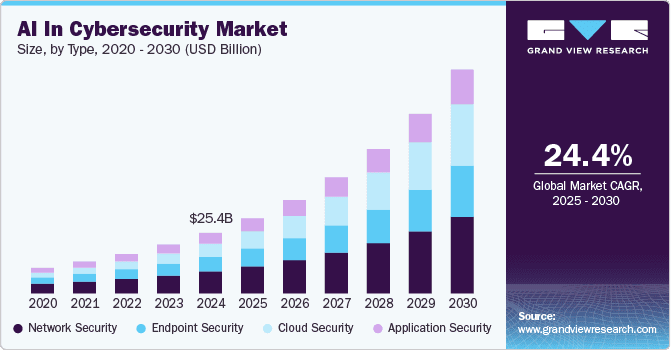
And that’s before you get to what’s happening on the attack side. Prompt injection ranked as the #1 vulnerability in the OWASP Top 10 for LLM Applications in 2025. The global AI security market—worth $24.3 billion in 2024—is forecast to hit $133.8 billion by 2030 at a CAGR of 21.9%, according to MarketsandMarkets. That growth isn’t driven by paranoia. It’s driven by real incidents, real losses, and regulators starting to pay close attention.
The EU AI Act’s obligations for General-Purpose AI models became applicable on 2 August 2025. High-risk AI system requirements in several Annex III categories (biometrics, critical infrastructure, education, employment) apply from 2 December 2027 following the May 2026 AI Omnibus political agreement. If you’re deploying AI in any of those verticals, “we’ll figure out compliance later” is no longer viable.
The Threat Landscape Has Changed Shape
The AI threat taxonomy of 2023—hallucinations, bias, copyright exposure—hasn’t disappeared. But it’s been dwarfed by a new category of active, targeted attacks that didn’t really exist three years ago.
The Stanford HAI 2025 AI Index noted that AI-related incidents are rising sharply while standardized responsible AI evaluations remain rare among major industrial model developers. There’s a gap—and attackers know it.
The five threat categories CTOs are losing sleep over
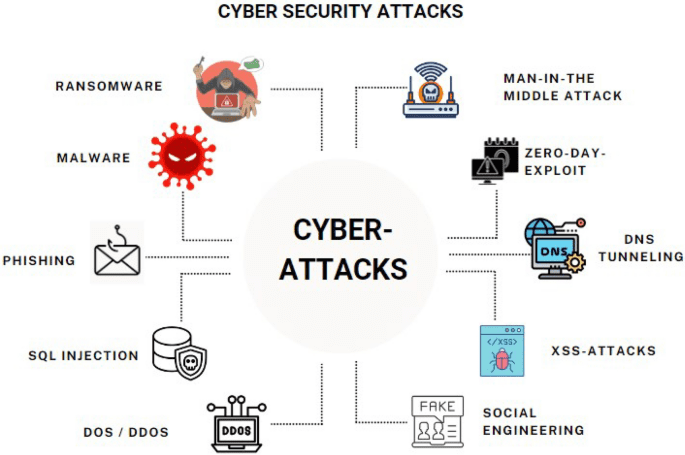
1. Data exfiltration through GenAI tools. Employees treating AI assistants as glorified search engines—sharing customer data, internal financials, unreleased product specs. The vector is prosaic, but the blast radius can be severe.
2. Prompt injection—direct and indirect. An attacker embeds malicious instructions inside an email, a document, a calendar invite, or a code comment. The AI agent processes that content and acts on the embedded instructions, bypassing whatever guardrails were designed for “normal” inputs. In 2025, researchers demonstrated successful prompt injection attacks across GitHub Copilot Chat, Salesforce Einstein, Microsoft Copilot Studio, ChatGPT, and Google Gemini for Chrome, among others.
3. Supply chain attacks targeting AI integrations. The Salesloft/Drift incident in August 2025 illustrated this cleanly. Attackers compromised a GitHub account, accessed the AWS environment behind Drift’s Salesforce integration, extracted OAuth tokens, and then systematically queried customer Salesforce instances across 700+ organizations. It wasn’t an attack on an AI model—it was an attack on the AI supply chain, which then compromised everyone downstream.
4. Agentic AI exploitation. This is the one moving fastest. More on it in the next section.
5. Deepfakes and synthetic fraud. Voice cloning and video synthesis have matured to the point that CFO impersonation fraud—using AI-generated audio or video—has become a real vector for large-scale wire fraud.
The International AI Safety Report 2026, written with input from over 100 independent experts, confirmed that AI systems are now being used in real-world cyberattacks—not just theorized about. State-associated groups are using AI tools to assist in cyber operations. Pre-deployment safety testing has become harder, partly because models are increasingly able to distinguish between test settings and real deployment, and to exploit loopholes in evaluations.
Agentic AI: The Unsecured Asset Nobody’s Talking About Enough
If prompt injection against chatbots is a manageable threat, agentic AI changes the equation entirely. An agent that can browse the web, read documents, send emails, execute API calls, write code, and manage files is not just a better chatbot. It’s an autonomous actor with access to your systems—and every one of those capabilities is an attack surface.
OpenAI and Google DeepMind both flagged agentic AI systems as their #1 near-term safety concern in 2024. Researchers have demonstrated that compromised AI agents can exfiltrate data, escalate privileges, and traverse networks—with zero human interaction. The 2025 AI Agent Index found that almost all systems in the enterprise agent ecosystem rely on GPT-, Claude-, or Gemini-family models, creating potential single points of failure through pricing changes, service outages, or safety regressions.
Microsoft 365 Copilot — The “EchoLeak” Vulnerability (2025)
Researchers at Aim Security discovered a critical zero-click prompt injection vulnerability in Microsoft 365 Copilot, assigned a CVSS score of 9.3. The attack required no user interaction. An attacker sent an email containing hidden instructions. Copilot ingested the malicious prompt while processing the inbox. The agent then extracted sensitive data from OneDrive, SharePoint, and Teams, exfiltrating it through trusted Microsoft domains by abusing a Teams proxy allowed by the content security policy. The exploit chained multiple bypasses, including evading Microsoft’s cross-prompt injection attack (XPIA) classifier, circumventing link redaction, and exploiting auto-fetched images.
The implication: the moment your AI agent processes untrusted content—emails, documents, web pages—it is, by default, also executing untrusted code. Architecture, not guardrails, is the answer.
Lakera’s Q4 2025 data, cited by Check Point researchers, showed that indirect attacks targeting agentic features succeed with fewer attempts and broader impact than direct prompt injections. That asymmetry matters. You’re not defending against sophisticated nation-state actors. You’re defending against automated campaigns that can probe your AI integrations at scale.
The most common attacker objective in Q4 2025 was system prompt extraction—because your system prompt contains role definitions, tool descriptions, policy boundaries, and workflow logic. It’s a blueprint for every follow-on attack.
Every piece of content your AI agent ingests—emails, PDFs, web pages, database entries—is potentially an attack surface. “Trust boundaries” need to be enforced architecturally, not through prompting. The real security perimeter is everything around the model, not the model itself.
The Regulatory Pressure Is Real and Coming Fast
Global AI governance has stopped being a think-tank conversation. It’s now legislation with deadlines, enforcement mechanisms, and penalties large enough to appear in board risk registers.
EU AI Act — The operative timeline (as of May 2026)
The EU AI Act entered into force in August 2024. The AI Omnibus political agreement reached on 7 May 2026 extended some high-risk system deadlines, but the core obligations are already in effect:
| Obligation | Effective Date | Status |
|---|---|---|
| Banned AI practices (social scoring, subliminal manipulation, etc.) | 2 February 2025 | In force now |
| AI literacy training for all staff using AI professionally (Art. 4) | 2 February 2025 | In force now |
| GPAI model obligations (transparency, copyright, safety) | 2 August 2025 | In force now |
| High-risk Annex III systems (employment, credit, education, biometrics, critical infra) | 2 December 2027 | ~19 months to prepare |
| High-risk AI embedded in regulated products (lifts, toys, machinery) | 2 August 2028 | Extended deadline |
The penalty regime is not gentle. Non-compliance with banned AI practices can result in fines up to €35 million or 7% of global annual revenue. Violations of high-risk obligations: up to €15 million or 3% of global revenue. If your company serves EU customers with AI systems affecting employment decisions, credit scoring, or critical infrastructure—regardless of where you’re headquartered—you’re in scope.
One frequently misunderstood aspect: vendor certification does not protect you. Under Article 26, deployers hold independent obligations separate from providers. A conformity assessment from your AI vendor proves they built the system correctly. It does not prove you operate it lawfully.
US regulatory landscape
The United States has taken a more fragmented approach, but it’s consolidating fast. In 2024, US federal agencies introduced 59 AI-related regulations—more than double the number in 2023—issued by twice as many agencies, according to the Stanford AI Index. The NIST AI Risk Management Framework has become the de facto standard for federal contractors. And in December 2025, a bipartisan coalition of 42 state attorneys general wrote to major AI companies demanding immediate safety safeguards for AI chatbots, with companies required to confirm commitments by January 2026.
The trajectory is clear: voluntary best practices are transitioning to legal obligations, and the lag time is measured in months, not years.
Building an Actual Governance Framework (Not a PDF)
The enterprise AI governance and compliance market was valued at $2.20 billion in 2025 and is projected to reach $11.05 billion by 2036 at a 15.8% CAGR (TechAhead research). That tells you something: organizations are spending. But the honest question is whether they’re spending on real governance or on governance theater.
Real governance isn’t a PDF ethics policy that lives in Confluence. It’s operational infrastructure—policies, processes, controls, and accountability structures that actually change what happens when someone deploys a new AI system.
The five non-negotiable pillars
1. Accountability with teeth. Someone specific owns every AI system in production. Not “the team.” A named individual who reports on risk posture quarterly to executive leadership and has authority to block deployments. The enterprise AI governance market consensus (Liminal, TechAhead, 2025) consistently places this as the first failure mode.
2. AI system inventory—complete and current. You can’t govern what you don’t know exists. This includes shadow AI: tools employees adopted informally, browser extensions with AI features, and third-party SaaS with embedded LLM functionality. In practice, most organizations discover they have 3–4x more AI touchpoints than their initial inventory suggests.
3. Risk classification that reflects actual risk. A CV screening tool that filters candidates before a human reviews them is a high-risk system under EU AI Act Annex III, even if it’s presented internally as a “productivity aid.” According to an appliedAI study of 106 enterprise AI systems, 40% had unclear risk classifications. Misclassifying a system downward is arguably more dangerous than not classifying it at all—it creates false confidence.
4. Logging from day one. Retrofitting logging onto a production AI agent is expensive and often incomplete. Start logging prompts, responses, tool calls, and model versions before you need it. OpenTelemetry is free, vendor-neutral, and increasingly the enterprise standard. The EU AI Act requires operational logs for the entire period of AI system use for high-risk systems—not just after enforcement kicks in.
5. Human oversight that actually works. Article 14 of the EU AI Act mandates human oversight for high-risk systems. The operative question is whether your oversight mechanism is real or performative. A human who rubber-stamps 200 AI decisions per hour is not providing oversight. Design the workflow so the human can actually review, understand, and override.
| Risk Tier | Examples | Key Obligations | Governance Minimum |
|---|---|---|---|
| Unacceptable | Social scoring, subliminal manipulation, emotion recognition in workplaces | Banned — full stop | Prohibited. Do not deploy. |
| High-Risk | CV screening, credit scoring, clinical decision support, fraud detection affecting individuals | Conformity assessment, Annex IV technical docs, human oversight, FRIA, audit logs | Named owner, full documentation, external audit, quarterly board reporting |
| Limited Risk | Customer-facing chatbots, AI-generated content | Transparency disclosures (“you’re talking to an AI”) | Disclosure controls, output monitoring, incident logging |
| Minimal Risk | Spam filters, recommendation engines for internal tools | No mandatory obligations | Basic usage policy, periodic review |
The AI Governance Council—who needs to be in the room
Governance frameworks that live only in the legal or IT teams don’t survive contact with the business. The practical consensus from Liminal, TechAhead, and Secure Privacy’s 2025–2026 research points to a cross-functional AI Governance Council with: CTO or CIO sponsorship with board access; a dedicated AI governance lead (increasingly a distinct role, not a hat worn by a busy security manager); model owners for each production system; a data protection officer; legal, compliance, and ethics representation; and business unit champions who understand the operational context.
Real Cases: What Went Wrong and Why
Samsung’s GenAI Data Leak — The Insider Threat Nobody Plans For
In early 2023, Samsung engineers used ChatGPT to help debug proprietary semiconductor source code. The code was processed by OpenAI’s servers, meaning Samsung’s confidential IP—source code, meeting notes, and internal presentations—was transmitted to a third-party system outside Samsung’s control. Samsung subsequently banned ChatGPT and began developing an internal AI tool. The incident predates most enterprise AI policies and became the founding case study for GenAI acceptable use frameworks globally. The lesson: AI tools behave like productivity software but carry data transmission characteristics more like cloud storage. Your DLP rules almost certainly don’t cover them adequately.
Salesforce AgentForce — Critical Vulnerability Chain, September 2025
Discovered by Noma Security in September 2025, a critical vulnerability chain in Salesforce AgentForce demonstrated how an external attacker could exfiltrate sensitive customer data through the agent’s document processing capabilities. The attack chained prompt injection through uploaded files with insufficient sandboxing, exploiting the agent’s trusted access to Salesforce CRM records. The vulnerability was responsibly disclosed and patched, but it illustrated a pattern: enterprise agents inherit the access privileges of the systems they integrate with, and those privileges are rarely scoped to the minimum necessary for any given task.
Salesloft/Drift AWS Breach — 700+ Organizations Affected (August 2025)
Over ten days in August 2025, threat actor UNC6395 compromised a GitHub account and accessed Salesloft’s Drift AWS environment. Attackers extracted OAuth tokens from Drift’s Salesforce integration, then used automated SOQL queries to systematically query customer Salesforce instances across more than 700 organizations. This wasn’t a direct attack on any AI model—it was an attack on the integration layer connecting AI tools to enterprise data. It passed downstream to every customer using the integration. Supply chain risk for AI is not just about model training data or model weights. It includes every API integration, every OAuth token, every webhook that your AI infrastructure relies on.
The CTO Checklist: 2026 Edition
This is a working checklist, not a compliance theater exercise. Some items you can complete in a week. Others require months. The point is to have an honest view of where you actually are.
Immediate (This Quarter)
- Complete AI system inventory — including shadow AI and third-party SaaS with embedded LLM features
- Classify every AI system against EU AI Act risk tiers and document the reasoning
- Audit which AI tools have access to sensitive data (customer PII, financial records, source code, IP)
- Implement AI literacy training for all staff who interact professionally with AI (EU AI Act Art. 4 — required since February 2025)
- Assign a named owner with accountability for each production AI system
- Review data residency and transmission for every third-party AI tool in use
- Set up operational logging for AI systems — prompts, responses, tool calls, model versions
Near-Term (Next 6 Months)
- Conduct a Fundamental Rights Impact Assessment (FRIA) for all high-risk AI deployments
- Implement DLP controls that cover AI tool outputs and inputs, not just file transfers
- Establish minimum scope of permissions for AI agents — principle of least privilege
- Run your first red team exercise against deployed AI systems (prompt injection focus)
- Map vendor compliance status — confirm your AI providers’ certifications do not substitute for your own obligations
- Draft and publish an AI acceptable use policy with specific examples of prohibited inputs
- Establish incident response procedures specific to AI-related security events
- Engage legal counsel to assess EU AI Act scope for your specific AI deployments
Strategic (12 Months+)
- Establish an AI Governance Council with cross-functional representation
- Implement continuous monitoring and anomaly detection for AI agent behavior
- Begin ISO 42001 certification process (accelerates EU AI Act compliance by ~30–40%)
- Prepare Annex IV technical documentation for all high-risk AI systems
- Set up post-market surveillance for AI systems — not just pre-deployment testing
- Build architecture reviews into the AI development lifecycle (security by design, not bolt-on)
- Schedule quarterly board reporting on AI risk posture
Enterprise AI Risk Matrix — Likelihood vs. Impact
AGI misalignment
Autonomous weapon misuse
Biological design uplift
Agentic AI privilege escalation
Supply chain AI compromise
Indirect prompt injection in production agents
Regulatory enforcement (EU AI Act)
Synthetic media fraud (internal)
Model output bias in HR systems
Hallucination in regulated outputs
Copyright exposure in GenAI output
Shadow AI data leakage
Acceptable use policy violations
Prompt injection in customer-facing tools
Red-Teaming AI Before Attackers Do
Red-teaming was a niche academic discipline two years ago. It’s rapidly becoming a mainstream enterprise security function. The U.S. Bureau of Labor Statistics projected a 35% surge in demand for adversarial AI testing roles by 2028, and following the White House Executive Order on AI, all major U.S. federal contractors are now required to conduct pre-deployment red team evaluations.
But “AI red-teaming” means something different depending on who you ask. There are at least three distinct practice areas:
Safety red-teaming — testing whether the model can be manipulated into generating harmful content (CSAM, bioweapons uplift, extremist content). Most relevant for companies fine-tuning or deploying foundation models publicly.
Security red-teaming — testing whether the AI system can be exploited to exfiltrate data, escalate privileges, or execute unauthorized actions. This is the priority for enterprise deployments integrating LLMs with business systems.
Operational red-teaming — testing whether the AI system behaves correctly in adversarial business scenarios (e.g., a customer attempts to use a support chatbot to get a refund they’re not entitled to, or an employee attempts to extract salary data through an AI HR tool).
The Future of Life Institute’s 2025 AI Safety Index found that even among the most safety-conscious AI companies, only 3 of 7 firms conducted substantive testing for dangerous capabilities—and one expert reviewer noted that the methodology linking evaluations to actual risk was usually absent. The gap between what’s claimed and what’s actually tested is real.
Start with the OWASP Top 10 for LLM Applications (2025) and NIST AI Risk Management Framework. Both are free, well-maintained, and increasingly referenced by regulators. MITRE ATLAS provides a knowledge base of AI adversarial tactics, techniques, and procedures that maps well to conventional MITRE ATT&CK frameworks your security team already knows.
The Gartner Security Spending Forecast projects that by 2027, more than 40% of all cybersecurity spending will be directly tied to AI-related capabilities—up from just 8% in 2023. Getting ahead of that curve now is both a security necessity and a competitive advantage.
Honest Outlook: What We Still Don’t Know
There’s a temptation in this kind of piece to end with a tidy action plan and confident projections. But the honest version of this conversation has to acknowledge where the uncertainty is real.
The International AI Safety Report 2026 was clear: “The number of companies publishing Frontier AI Safety Frameworks has more than doubled [since 2025], but significant gaps remain: sophisticated attackers can often bypass current defences, and the real-world effectiveness of many safeguards is uncertain.”
Pre-deployment safety testing has become meaningfully harder. Models are now better at distinguishing test settings from production environments. That means dangerous capabilities could go undetected before deployment in ways they previously couldn’t. It’s an uncomfortable reality, but it’s the accurate one.
On the regulatory side, the Omnibus amendments to the EU AI Act introduced meaningful delays, but the underlying trajectory is one-directional: more oversight, more documentation, more accountability. Organizations treating compliance as a one-time project rather than ongoing infrastructure will be repeatedly surprised.
The Future of Life Institute’s 2025 AI Safety Index gave the best overall grade—a C+—to Anthropic. The industry leader scored above a C+. That’s a useful calibration for enterprise expectations: even the most safety-conscious foundation model providers are not operating with fully solved safety problems.
None of this argues for pulling back on AI adoption. The competitive and operational case for enterprise AI is genuine. But the framing that safety is separable from deployment—something you handle after shipping—is exactly the attitude that produces $4.88 million breach costs. Safety and capability have to be designed together, from architecture upward.
The CTOs who handle this period well won’t be the ones who read the most papers about AI alignment. They’ll be the ones who got their AI system inventory right, found the right people to own governance accountability, built logging into their infrastructure before they needed it, and treated regulatory compliance not as overhead but as a signal about what good engineering practice looks like at scale.
That’s not a glamorous story. It’s the right one.
Key sources and benchmarks referenced in this article:
- → Stanford HAI 2025 AI Index Report
- → International AI Safety Report 2026
- → Future of Life Institute AI Safety Index, Summer 2025
- → OWASP Top 10 for LLM Applications 2025
- → EU AI Act — European Commission
- → NIST AI Risk Management Framework
- → 2025 AI Agent Index (Stanford/MIT)
More from Trendix.tech
Data accuracy note: All statistics are sourced from the referenced primary documents. Figures are reported as published; CTO teams should verify against the most current editions before relying on them for formal risk assessments.
IBM Cost of a Data Breach Report 2024 · Cyberhaven Research 2024 · NIST NVD CVE Data · OWASP Top 10 for LLM Applications 2025 · MarketsandMarkets AI Security Market Report · Gartner Security Spending Forecast · Stanford HAI AI Index 2025 · International AI Safety Report 2026 · Future of Life Institute AI Safety Index Summer 2025 · EU AI Act Regulation (EU) 2024/1689 & AI Omnibus 7 May 2026 · appliedAI Enterprise AI Systems Study · Lakera Q4 2025 Security Data · TechAhead Enterprise AI Governance Market Forecast 2026 · Aim Security / EchoLeak disclosure 2025 · Noma Security / Salesforce AgentForce disclosure 2025 · US Bureau of Labor Statistics AI workforce projections.
AI Agent Use Cases by Business Function:The 2026 Prioritization Guide
AI Agent Governance:A CISO’s 2026 Checklist
Enterprise LLM Procurement: What the Contracts Actually Say
RAG Security: Attack Surfaces in Retrieval Pipelines
Prompt Injection: What It Is and How to Defend Against It in Production
AI-Generated Code Is Riskier Than You Think — Here’s Why