

The Blogging Strategy That Survives Google’s AI Era — and the One That Won’t


25 AI Writing Tools That Create
High-Ranking Blog Posts
Most lists on this topic recycle the same ten names, in the same order, with pricing that expired six months ago. This one doesn’t. A practitioner’s breakdown of what each tool actually does in 2026—including what it costs you beyond the monthly fee.
There’s a problem buried inside every “best AI writing tools” roundup published before mid-2025: they were written by people who hadn’t used the tools on a real editorial deadline. They ran a demo, checked the features page, and called it a review. You can tell because none of them mention that Writesonic’s GEO features are gated at $199+/month, or that Jasper removed its standalone plan and now requires a minimum team commitment, or that the workflow most agencies swear by—Jasper plus Surfer SEO in parallel—is approaching $170/month before you touch a single search data tool.
This article is built differently. It starts from the workflow, not the feature list.
The single most expensive mistake content teams make in 2026 is picking an AI writing tool based on output quality alone. The real cost is integration tax: how many other subscriptions does this tool require to actually function at the level the demo promises? Two tools in this list are excellent in isolation and nearly useless without a $99–$129/month SEO platform alongside them.
The 2026 Shift Nobody’s Talking About Enough
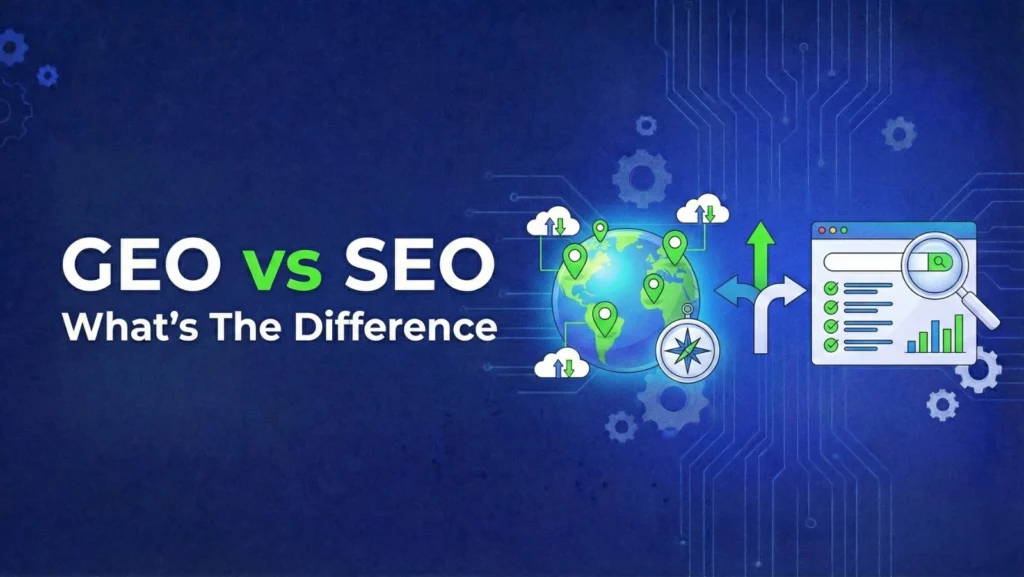
Generative Engine Optimization—GEO—went from a buzzword to a billing line item this year. Frase added a GEO score next to its traditional SEO score in the editor. Surfer launched an AI Tracker add-on for $95/month. Ahrefs shipped Brand Radar, which monitors how often your content gets cited inside AI search results. Writesonic gates its GEO features at the $199+ Professional tier.
Why does this matter when you’re choosing a writing tool? Because the ranking game has split in two. You’re now optimizing for:
Figure 1 — The dual ranking problem every content team faces in 2026
Tools that ignore GEO are losing you traffic you can’t see in Google Search Console. It doesn’t show up as a ranking drop—it shows up as slower lead flow from people who asked an AI assistant instead of typing into Google.
The 25 Tools, Grouped by What They Actually Do
I’ve organized these not alphabetically, not by price, but by where they fit in the actual writing workflow. Because that’s the only grouping that helps you decide.
Category 1: Full-Pipeline AI Writers (Research → Draft → Optimize)
These tools attempt to do everything. Some succeed. Most require you to understand their failure modes before you rely on them.
Surfer remains the closest thing to a consensus pick for content optimization in 2026. Its content editor scores your draft in real-time against the top-ranking competitors on your target keyword—not guesses, actual SERP data. The AI writing layer generates outlines and drafts, but its real value is the feedback loop: write a sentence, see your score change, understand exactly which semantic clusters you’re missing.
The AI Tracker add-on ($95/month extra) is new and genuinely useful for GEO monitoring. Without it, Surfer has no visibility into how your content performs in AI search results.
Frase made a significant architectural decision this year: it became the only tool in this price range ($49/month) that simultaneously scores for traditional SEO and GEO in the same editor. That’s not a marketing claim—the GEO score reflects how well your content is structured for AI citation, which is a meaningfully different optimization target than keyword density.
It also includes Content Watchdog, which alerts you when your published posts start decaying in rankings. Most teams don’t have a systematic refresh process; Frase builds one in by default.
Jasper’s brand voice feature is genuinely best-in-class. You feed it samples of your existing content—or your client’s—and it generates new material that matches tone, vocabulary, and sentence rhythm in a way that other tools don’t approach. For agencies managing multiple client brands, this is a meaningful operational advantage, not a feature checkbox.
What Jasper is not: an SEO tool. It has no native keyword research, no SERP analysis, no content scoring. The SEO Mode integration requires a separate Surfer subscription. The 2026 pricing—Pro at $59/seat/month annually, minimum team commitments—has priced out many individual creators who were the core audience two years ago.
Scalenut’s “Cruise Mode” is the fastest path from keyword to published draft in this entire list. Input a keyword; receive a full SEO-structured article in approximately five minutes. The quality is inconsistent—some outputs are publishable after light editing, others require significant rewriting—but the structural logic is sound because it’s built on actual SERP data from top competitors.
Writesonic has historically been the “fast and cheap” option. The 2026 positioning is more nuanced: the base tiers remain affordable ($16–$39/month), but the features that actually differentiate it—GEO optimization, advanced AI visibility tracking—are locked behind the $199+ Professional tier. If you only need basic long-form drafts, the entry tiers work fine. If GEO is your goal, do the math on what you’re actually paying.
Figure 2 — Capability includes both SEO and GEO optimization. Tools in the upper-left quadrant offer the best value.
Category 2: General AI Writers Repurposed for Content
GPT-5.5 launched April 23, 2026, and the jump in long-form coherence is noticeable. ChatGPT Plus at $20/month is still the most versatile AI tool for blog writing—not because it’s the best at any single task, but because it’s the best at all of them combined, especially with web search enabled. The Custom Instructions feature lets you bake in audience, voice, and format preferences that persist across sessions.
What it can’t do: score your content against SERP data, monitor GEO visibility, or integrate with your CMS in any meaningful way. It’s a thinking partner and drafting engine, not an SEO platform.
Claude is the strongest long-form writing tool of any general-purpose AI in 2026. This isn’t a close call. Posts over 2,000 words maintain argument coherence and tonal consistency better than any alternative I’ve tested—because Claude’s context window handling is genuinely superior for extended documents. The writing doesn’t start drifting at the 1,500-word mark the way most AI tools do.
Claude Pro at $20/month unlocks the full Opus model tier. For editorial-quality content where voice and flow matter more than raw SEO score, Claude is the practitioner’s choice. Pair it with Surfer or Frase for optimization; use Claude for the actual writing.
Gemini’s primary advantage is native real-time web access without the friction of browser plugins. For research-heavy blog posts—industry analyses, trend pieces, competitive comparisons—Gemini can pull current data directly into a draft without requiring you to copy-paste from search results. The writing quality lags behind Claude for narrative posts, but for factual, data-dense content, the workflow advantage is real.
Category 3: SEO-Specific Content Intelligence Tools
ContentShake AI is what happens when a major SEO data provider decides to build a writing tool on top of its own keyword database instead of licensing data from outside. The result is content briefs and drafts that are genuinely informed by search intent data—not estimated, but drawn from Semrush’s live index. If you already pay for Semrush, this is worth evaluating as part of your existing subscription rather than a separate tool purchase.
Clearscope occupies a specific niche: it’s the choice for editorial teams with strict quality standards who need optimization guidance that doesn’t feel like a keyword-stuffing checklist. It analyzes the top 30 articles for any keyword and surfaces semantic relationships and entity connections rather than just term frequency. The AEO (Answer Engine Optimization) features position content for featured snippets and AI answer boxes.
At $129/month for the Essentials plan, it’s priced for publishers who have professional writers and need optimization guardrails, not a replacement for the writing itself.
MarketMuse’s value is not in writing—it’s in telling you what to write before you write it. Its topic modeling and competitive gap analysis function at the site level, not the article level, which means it identifies where your entire content portfolio is weak relative to competitors. For sites above 50,000 monthly organic visitors with complex topical clusters, this is genuinely valuable strategic intelligence.
There’s a free plan with 10 queries/month, which is enough to test whether the methodology works for your site before committing to $149+/month.
NeuronWriter is the tool that quietly does 80% of what Surfer does at roughly 25% of the price. Semantic optimization, entity analysis, competitive SERP data, AI article generation, and direct WordPress integration—all on plans starting at $23/month. The Gold plan at $69/month adds unlimited users and API access, making it the logical choice for small agencies where Surfer’s per-user pricing becomes painful.
Category 4: Workflow, Collaboration, and Content Operations
Notion made a meaningful structural change in early 2026: AI is now bundled into Business and Enterprise tiers rather than sold as a standalone add-on. The Business plan at $20/user/month includes the Notion Agent, which handles multi-step content tasks—drafting a document, querying a linked database, updating a content calendar—from a single prompt. Custom Agents shipped in February 2026 with the 3.3 update.
Notion AI is not a competitor to Jasper or Surfer. It’s a workspace intelligence layer that makes your existing content operations smarter. If your team already lives in Notion for project management and editorial calendars, the AI features become genuinely useful rather than another tab to have open.
StoryChief positions itself as a full content marketing assistant rather than just a writer—and for mid-size marketing teams, that positioning holds up. Generate blog posts, press releases, social content, and editorial briefs from one interface, then publish directly to your CMS, social channels, and email platform from the same place. The multilingual AI and brand-voice studio make it practical for international content operations.
Copy.ai pivoted hard in 2025 toward “GTM AI”—go-to-market automation workflows that connect content generation to sales and marketing pipelines. For bloggers, this is mostly irrelevant. For B2B content teams building blog-to-email-to-CRM pipelines, the workflow automation reduces repetitive steps that most other AI tools leave to human project managers.
Category 5: Editing, Polish, and Refinement Tools
Grammarly is not an AI writer—a distinction worth making clearly in 2026 when the product has expanded significantly. After the Superhuman acquisition, Grammarly now includes AI agents for email drafting, tone adjustment, and style checking beyond its original grammar/spelling foundation. Plagiarism detection and an AI writing detector are practical additions for editors who need to review AI-assisted drafts before publication.
Hemingway remains useful precisely because it doesn’t use AI for its core function. It’s a readability analyzer: sentence complexity, passive voice density, adverb overuse, grade-level reading score. These are mechanical metrics, and AI writing tools systematically fail them—especially on long-form content where complexity tends to drift upward. The free web version is enough for most users.
ProWritingAid goes deeper than Grammarly’s style suggestions into structural issues: repetitive sentence patterns, overused words at the document level, pacing analysis across sections, and readability breakdowns by chapter or section. For long-form content creators—guides, pillar pages, in-depth tutorials—these structural diagnostics catch patterns that line-level review misses.
Wordtune (AI21 Labs) is a sentence-level rewriting tool. It offers tone shifts, rephrasing options, context-aware alternatives, and full-sentence generation. The use case is specific: you have a sentence that means the right thing but sounds wrong, and you need five alternative phrasings to choose from. For humanizing AI-generated content paragraph by paragraph, it’s more precise than asking a general LLM to “rewrite this naturally.”
Category 6: Budget and Entry-Level Tools
Rytr at $9/month (Saver) to $29/month (Unlimited) is the most affordable option in this list that still produces usable output. 40+ use cases, 30+ language support, and a 9.5/10 ease-of-use rating from independent testing. The output quality ceiling is lower than any other tool here, but the floor is higher than most people expect at this price point.
One real data point worth sharing: Rytr-generated introductions, after editing, outperformed introductions from more expensive tools in 3 out of 5 A/B tests in one documented case study. The tool forces brevity in a way that more capable tools don’t, which sometimes improves hook quality.
Jenni AI is priced around $20/month and built specifically for research-intensive writing—academic articles, case studies, data-backed posts, anything where citations and source integration matter more than marketing copy fluency. The citation management and source-aware completion features solve problems that general AI writers handle badly: attributing specific claims, integrating quotes accurately, maintaining academic register.
Category 7: Agentic and Autonomous Content Tools (New in 2026)
Content at Scale occupies an unusual position: it generates complete, 2,500+ word articles from a single keyword input, including internal structural optimization, meta descriptions, and AI-detection-resistant output. The premise is that agencies needing 50+ articles per month can’t have a human in the loop for every draft—and it’s designed for exactly that volume. Quality is inconsistent enough that you need a human review layer, but the structural foundations are usually sound enough to edit rather than rewrite.
SE Ranking made a meaningful move in 2025: it became one of the first tools under $100/month to combine traditional SEO scoring with GEO tracking in a single workflow. The AI Writer is competent but not exceptional—the real value is having visibility into both Google ranking signals and AI citation performance in one dashboard, without paying Surfer-plus-AI-Tracker prices.
RankYak is a newer entrant that automates keyword-to-article workflows with a free tier and paid plans starting at accessible price points. It’s not competing with Surfer or Frase on analytical depth—it’s competing with Scalenut’s Cruise Mode for the “fast draft from keyword” use case, at a lower cost. The free tier is genuinely functional, not a crippled trial, which makes it worth testing before any paid commitment.
Anyword’s differentiation is predictive performance scoring: before you publish, it estimates how well your headline, intro, and body copy will perform with your specific audience. The predictive scores are trained on actual performance data across industries, which makes them more grounded than generic readability scores. For conversion-focused blog content—posts designed to generate signups or product trials—this performance-first lens is useful.
Quick Comparison: All 25 Tools at a Glance
| Tool | Starting Price | SEO Scoring | GEO/AI Visibility | Native AI Writer | Best For |
|---|---|---|---|---|---|
| Surfer SEO | $89/mo | Yes | Add-on $95 | Yes | Content optimization teams |
| Frase | $49/mo | Yes | Included | Yes | Small teams, solo creators |
| Jasper AI | $59/seat/mo | No native | No | Yes | Brand-consistent agencies |
| Scalenut | $39/mo | Yes | No | Yes | High-volume fast drafts |
| Writesonic | $39/mo | Basic | $199+ plan | Yes | Budget long-form drafts |
| ChatGPT Plus | $20/mo | No | No | Yes | Most individual bloggers |
| Claude Pro | $20/mo | No | No | Yes | Long-form writing quality |
| Google Gemini | ~$20/mo | No | No | Yes | Research-heavy content |
| ContentShake AI | $19/mo+ | Semrush data | Limited | Yes | Semrush users |
| Clearscope | $129/mo | Advanced | AEO features | Optimization only | Enterprise editorial teams |
| MarketMuse | Free / $149+ | Portfolio-level | No | Limited | Content strategists |
| NeuronWriter | $23/mo | Semantic | No | Yes | Budget-conscious SEO teams |
| SE Ranking AI | ~$52/mo | Yes | Yes | Yes | Combined GEO + traditional SEO |
| Notion AI | $20/user/mo | No | No | Workflow AI | Notion-based content teams |
| StoryChief | ~$100/mo | Basic SEO | No | Yes | Multi-channel marketing teams |
| Copy.ai | $49/mo | No | No | Yes | B2B GTM content workflows |
| Grammarly Pro | ~$12/mo | No | No | Editing only | Final QA layer |
| Hemingway | Free / $19.99 | No | No | No | Readability QA |
| ProWritingAid | ~$10/mo | No | No | Editing only | Long-form structural review |
| Wordtune | ~$10/mo | No | No | Sentence-level | Humanizing AI drafts |
| Rytr | $9/mo | No | No | Yes | Budget short-form content |
| Jenni AI | ~$20/mo | No | No | Yes | Research-heavy writing |
| Content at Scale | ~$250/mo | Basic | No | Autonomous | High-volume agencies |
| Anyword | ~$49/mo | Performance | No | Yes | Conversion-focused content |
| RankYak | Free / paid | Basic | No | Yes | Budget fast drafts |
The Stacks That Actually Work
No single tool handles every stage of a high-ranking blog post in 2026. The teams producing consistent top-10 results are running two or three tools with clearly defined roles, not one tool trying to do everything.
Figure 3 — Recommended stacks by team size. Prices approximate as of June 2026; verify current pricing before committing.
The solo stack above ($81/month) outperforms the agency stack on a per-article basis for most independent content creators, because Frase’s dual SEO+GEO scoring eliminates the need for a separate AI visibility monitoring tool. The agency stack’s additional cost buys brand voice consistency and team collaboration features—not better optimization signals.
The Tools I No Longer Recommend, and Why
I haven’t found a way to be useful here without being direct about a few specific tools.
Article Forge produces content that reads as AI-generated in a way that no amount of editing repairs cleanly. The outputs have surface-level structure but no argumentative logic connecting paragraphs. If your goal is ranking in 2026 with Google’s E-E-A-T signals increasingly weighted, this creates more problems than it solves.
ContentBot has not meaningfully updated its interface or output model since late 2023. The content quality reflects that. There are better options at the same price point—several listed above.
On Writesonic: I used to recommend its lower tiers without qualification. I no longer do, because the GEO feature gating at $199+ creates a misleading picture of what the $39 plan actually delivers for teams who care about AI search visibility. If GEO isn’t a priority for you, the $39 plan is still competent. If it is, you’re looking at a very different tool at a very different price.
The Question Nobody’s Asking
Every conversation about AI writing tools in 2026 is still organized around a single question: which tool writes the best content?
That’s the wrong question. The content is only as good as the brief, the keyword research, the competitor analysis, and the editorial judgment applied to the output. An excellent AI tool used on a vague brief with no SERP data will produce generic content that competes for nothing specific.
AI tools cut writing time by 60–80%. But in most content teams, writing was never the primary bottleneck. Research and briefing take just as long. Distribution and promotion take longer. The tools that solve writing while leaving research and optimization to manual processes are solving the easy part of the problem.
The teams outranking everyone else in 2026 have made a different bet: they invested in research infrastructure (Frase, Ahrefs, MarketMuse for strategy) and use AI writing tools for what they’re actually good at—generating structural scaffolding and first drafts that humans then edit into something defensible. For more on building that kind of systematic content operation, we cover the full workflow in our content intelligence series.
One thing will be outdated about this article by December 2026: the GEO pricing structures. This space is moving fast enough that what costs $95/month as an add-on today will likely be either standard across plans or significantly repriced by year-end. Check pricing directly with each vendor before committing to an annual plan—especially for tools where GEO features are currently behind the highest tier.
Further Reading from Primary Sources
For current pricing and feature documentation, go directly to vendor sites—not third-party review aggregators, which update quarterly at best:
Surfer SEO · Frase.io · Jasper AI · Clearscope · MarketMuse · NeuronWriter
For GEO and AI search research: Search Engine Land and Search Engine Journal carry the most consistent technical coverage.
AI is changing solo businesses forever — but not the way you think
Best AI Writing Tools 2026
AI for Solopreneurs: The Definitive Playbook
ChatGPT vs Claude vs Gemini vs Copilot vs Perplexity vs Grok: The Honest 2026 Verdict
Best AI Tools for Marketing Teams in 2026
The Comprehensive Ranking: Best AI Tools 2026