

AI Coding Agents:
The Complete Guide for 2026
From terminal agents to cloud-based orchestrators — everything developers and engineering leaders need to know right now. Real benchmarks, real ROI data, zero hype.
What you’ll find in this guide
- What AI coding agents actually are
- The $12.8B market: key numbers
- The 6 dominant tools compared
- SWE-bench & performance data
- Productivity: real vs. perceived gains
- ROI: what the math actually says
- Security risks you can’t ignore
- Enterprise deployment playbook
- The agent horizon: what’s next
- Verdict: which tool for which team
What AI Coding Agents Actually Are
Not all AI developer tools are the same. There is a spectrum, and confusing where a tool sits on it leads to disappointment — or wasted budget. The most useful mental model divides today’s landscape into three distinct categories:
Code Assistants
IDE plugins that suggest the next line or block as you type. Think GitHub Copilot’s inline autocomplete. Fast, low-friction, limited to a local view of your code. The original paradigm, dating to 2016.
AI-Enhanced IDEs
Editors rebuilt around AI — Cursor, Windsurf. They retain the editor feel but extend into multi-file chat, codemap navigation, and limited autonomous editing. Best of both worlds for IDE loyalists.
Coding Agents
Autonomous systems that plan, execute, verify, and iterate. Claude Code, OpenAI Codex, Gemini CLI. They read your whole codebase, run commands, fix test failures, and create pull requests without line-by-line guidance.
The term “AI coding agent” specifically describes that third category. These are not autocomplete on steroids. They represent a fundamentally different architecture: an LLM given persistent tools — shell access, file read/write, git, package managers — and the autonomy to use them toward a stated goal with minimal human steering.
An AI coding agent is an LLM-powered system that can plan a multi-step coding task, execute shell commands and file operations, evaluate results, and iterate — all within a real development environment, not a sandboxed simulation. It is measured not by suggestion quality but by task-completion rate.
The clearest signal that this distinction matters: benchmark trajectories. When OpenAI introduced the SWE-bench Verified benchmark in August 2024 — a real-world test of fixing bugs in live open-source repositories — the top models solved only 33% of issues. By mid-2025, leading agents consistently cleared 70%. That is not incremental improvement. That is a category change.
The Market: Key Numbers for 2026
The AI coding tools market has moved past the “interesting experiment” phase with velocity. Here is where it stands heading into mid-2026:
Behind those headline numbers, however, the picture is more nuanced. The Stack Overflow 2025 Developer Survey found that positive sentiment toward AI tools has fallen from 70%+ in 2023 and 2024 to just 60% in 2025. Adoption is at an all-time high; enthusiasm is cooling. The gap reveals what professionals are actually experiencing: tools that accelerate individual output but don’t automatically translate to better team-wide delivery metrics.
Only 29% of developers trust AI output to be accurate; 46% actively distrust it. This matters enormously for workflow design. Teams that integrate AI agents without strengthening review processes don’t ship faster — they just ship more code that gets caught (or doesn’t) in QA.
The 6 Dominant Tools: A Comprehensive Comparison
The agent landscape solidified considerably between late 2025 and mid-2026. Here is a structured breakdown of every platform worth evaluating, drawn from real production usage data, not vendor marketing.
| Tool | Type | Interface | Starting Price | SWE-bench* | Best For |
|---|---|---|---|---|---|
| Claude Code | Agent | Terminal CLI | $20/mo (Pro) | 87.6% | Complex refactors, large codebases |
| GitHub Copilot | Assistant + Agent | VS Code, JetBrains, Xcode, web | Free tier / $10/mo | Multi-model | Enterprise teams, IDE workflow |
| Cursor | AI IDE | Forked VS Code | Free tier / $20/mo | Via Sonnet/GPT-5 | Power users, day-to-day editing |
| OpenAI Codex | Agent | App + CLI + IDE ext. | ChatGPT Plus ($20) | Top-ranked (GPT-5.5) | Multi-surface OpenAI users |
| Gemini CLI | Agent | Terminal CLI | Free (API key) | Competitive | Google ecosystem, open-source |
| OpenCode | Agent | Terminal CLI (OSS) | Free + API costs | Model-dependent | Air-gapped, local model users |
* SWE-bench Verified scores: Claude Code uses Claude Opus 4.7 (87.6%); Codex uses GPT-5.5 (exact figure not publicly disclosed at time of writing). Scores evolve as models update.
Claude Code: The Terminal-Native Agent
Launched by Anthropic in May 2025, Claude Code is philosophically different from every other tool on this list. It runs in your terminal alongside whatever editor you already use. No new IDE required. It operates, as Anthropic describes it, “at the project level” — reading the codebase, planning a sequence of actions, executing them with real development tools (git, package managers, language tooling), evaluating the result, and adjusting.
The May 2026 release of Claude Opus 4.7 pushed SWE-bench Verified scores from 80.8% to 87.6%, placing it among the highest-performing agents in production use. New features added since launch include Routines (scheduled cloud agents), a Monitor tool for observing agent actions in real time, and doubled rate limits for Pro and Max plans. One independent engineering firm reported using Claude Code Max plan to replace 2–3 days of senior engineer time per legacy migration — making the $200/mo cost structure economically defensible for the right use case.
GitHub Copilot: The Platform Play
GitHub Copilot crossed 20 million users in July 2025 — a 400% year-over-year growth rate that no other tool in this space can match. What makes Copilot distinctive in 2026 is model breadth: it powers itself with GPT-5.4, Claude Sonnet 4.6, Gemini 2.5 Pro, and other rotating frontier models, giving engineering leaders optionality rather than lock-in.
Copilot’s significant 2026 move was the June 1 transition to usage-based billing via GitHub AI Credits tied to token consumption. Agent Mode is now generally available in VS Code and JetBrains, including custom agents, sub-agents, and a plan agent for JetBrains users. The Copilot Coding Agent can be assigned a GitHub issue and then works asynchronously in the background via GitHub Actions — a genuinely useful capability for teams already living inside the GitHub ecosystem.
The most common high-performance pattern among professional teams in 2026: Cursor for daily editing + Claude Code for complex multi-file tasks. They are complementary, not competitive. Free tier exists on both; the combo costs roughly $40/mo for the Pro tiers of each.
OpenCode: The Open-Source Wildcard
OpenCode deserves a special mention. It hit 147,000 GitHub stars and 6.5 million monthly developers by April 2026, growing 4.5× faster in star velocity than Claude Code. GitHub’s official Copilot partnership lets all paid Copilot subscribers authenticate directly into OpenCode. For teams where security policies block proprietary cloud tools, OpenCode’s ability to run entirely offline with local models is a decisive enterprise advantage.
SWE-bench & Performance: Reading the Numbers Honestly
SWE-bench Verified has become the de facto standard for comparing AI coding agents. It uses real GitHub issues from popular open-source repositories, with author-written tests as the evaluation mechanism. When a model solves a SWE-bench issue, it has passed the same test the original human developer would pass.
SWE-bench Verified Score Progression
SWE-bench measures automated test passage. It does not measure code style, documentation quality, security posture, architectural appropriateness, or the ability to pass a human code review. A METR study from July 2025 found that benchmark scores can systematically overestimate real-world productivity by measuring self-contained tasks that “don’t require prior context” — unlike real work. Use SWE-bench as one signal, not the only one.
That caveat noted, the trajectory is undeniable. The compound improvement rate from 33% to 87.6% over roughly 20 months represents faster capability growth than almost any technology in software history. Engineering leaders should assume these numbers continue to move — any tool comparison written today will need revisiting within 6 months.
Productivity: The Real Story Behind the Headlines
The productivity question is where honest analysis diverges sharply from vendor narratives. The data is not simple, and anyone presenting it as simple is either selling something or hasn’t looked closely enough.
“While 52% of developers say agents have affected how they complete their work, the primary benefit is personal productivity. The most recognized impacts are personal efficiency gains — not team-wide impact.”
What the data actually shows
Here is a synthesis of the most credible independent and enterprise-scale studies available as of May 2026:
-
3.6 hours saved per developer per week — the average figure from a DX dataset of 135,000 developers. Daily AI users merge ~60% more PRs. (Source: Panto AI, 2026)
-
46% reduction in routine coding task time according to McKinsey survey data. Code review cycles shortened by 35% for teams with strong review governance.
-
69% of AI agent users agree they have seen a personal productivity increase. (Stack Overflow 2025)
-
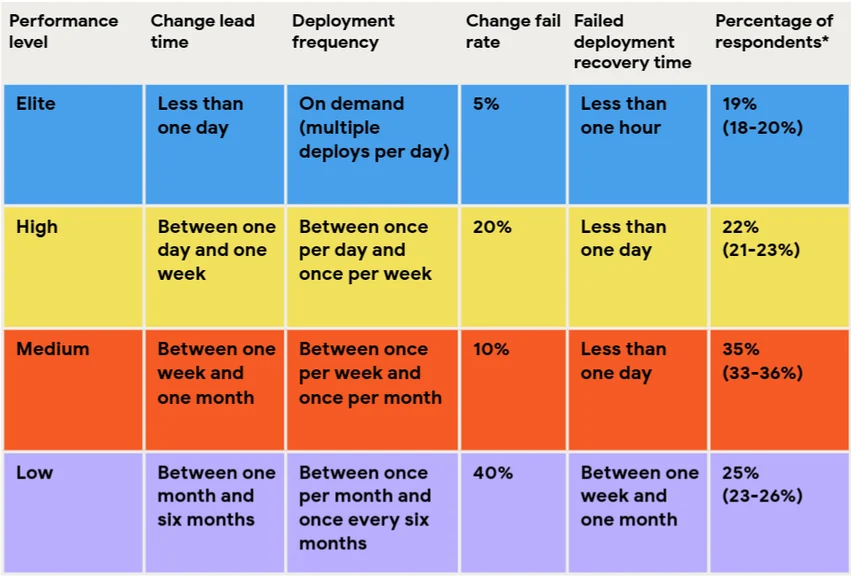
No measurable improvement in company-wide DORA metrics in several enterprise pilot studies. PR review time reportedly ballooned by ~91% in some teams — AI generates more code than reviewers can absorb. (Faros AI, 2025)
-
Code churn rose from 3.3% (pre-AI baseline) to 5.7–7.1% by 2024–2025. AI-assisted code has materially higher short-term turnover than human-written code. (GitClear)
-
~1.7× more issues in AI-coauthored PRs than in human-only PRs, per CodeRabbit’s December 2025 analysis. Without new review patterns, AI can increase review tail and defect density simultaneously.
The most precise framing comes from Faros AI’s 2025 research: “AI Is Everywhere. Impact Isn’t. 75% of engineers use AI tools — yet most organizations see no measurable performance gains.” The explanation is Amdahl’s Law applied to software delivery: speeding up code generation only improves overall velocity if the downstream steps — review, testing, deployment — keep pace. They often don’t.
“Developers with AI expertise are seeing a clear salary advantage: AI roles pay $90K–$130K vs. $65K–$85K in traditional dev jobs. The higher pay reflects the specialized skills required — not just using the tools, but knowing when not to trust them.”
ROI: What the Math Actually Says
The ROI picture has changed dramatically since 2024, primarily because the cost side of the equation is no longer just a seat license. Agentic tools like Claude Code Max can run $200–$2,000+ per engineer per month in token spend. That changes the calculation entirely.
Source: Larridin Developer Productivity Benchmarks 2026, derived from aggregated, anonymized engineering data.
The Hidden Cost Trap
Many teams compute ROI using only the seat license cost — $10–$20/mo per developer. This is increasingly wrong. Agentic tools bill on token consumption. A power-user session with Claude Code on a large codebase can consume hundreds of thousands of tokens. At scale, total AI tool cost for agentic-heavy workflows is realistically $200–$600/mo per engineer — not $30–60 as older estimates assumed.
Top-quartile teams achieve 4–6× ROI not by spending less, but by deploying tools more precisely: inline completion handles easy tasks cheaply; expensive agentic tools are reserved for Medium and Hard complexity work that would otherwise require 4+ hours of senior engineering time. Calibrate by task complexity, not by tool preference.
The Metrics That Actually Matter
Traditional KPIs — lines of code, PR count, commit frequency — are actively misleading with AI assistance. A developer using Cursor or Copilot can generate 3–5× more lines per session, but raw volume says nothing about whether that code survives its first month in production. The metrics framework that leading engineering teams use in 2026:
| Metric | What it measures | Healthy target | AI impact signal |
|---|---|---|---|
| DORA Lead Time | Commit to production time | Trending down | Flat or down if review is bottleneck |
| Change Failure Rate | Post-release bug rate | <5% | Can tick up with AI if review is weak |
| 30-day Code Churn | Code rewritten within 30 days | <18% (1.3× pre-AI baseline) | 5.7–7.1% industry average with AI |
| AI Acceptance Rate | % of AI suggestions kept | 25–45% | >45% signals uncritical acceptance |
| PR Review Time | Time from open to merge | Stable or improving | Can balloon 91% without new process |
Security Risks You Cannot Afford to Ignore
This is where the conversation most frequently gets skipped — and where the consequences are most severe. The security threat model for AI coding agents is fundamentally different from any prior software category, because the attack surface has shifted from code to the reasoning process itself.
A global survey found that 97% of security leaders expect a material AI-agent-driven security incident this year. Yet only 6% of security budgets are currently allocated to this risk. (Lasso Security, 2026)
The Primary Threat Vectors
Prompt Injection
Malicious instructions embedded in code files, documentation, or external content that the agent reads. When the agent ingests these, the injected instructions can override its intended behavior — redirecting actions, exfiltrating data, or creating backdoors.
Supply Chain Poisoning
Attackers disguise malicious MCP servers or tool plugins as legitimate integrations. Once a developer integrates one, the malicious code runs every time that tool is invoked — accessing the agent’s permissions, memory, and connected systems. OWASP has classified this as a top-level risk in its Agentic AI Security Framework.
Privilege Escalation
AI agents often inherit sweeping permissions from whoever set them up. An agent with read/write access to a production database, email, and financial systems is a significant blast radius waiting to be triggered — whether by an attacker or an agent making a bad autonomous decision.
Memory Poisoning
Attackers inject instructions into an AI agent’s persistent memory through prior interactions or compromised tool responses. These injected instructions persist and influence future tasks — even tasks assigned by different users. A particularly insidious vector for enterprise deployments.
Overpermissioned Identities
IBM’s X-Force Threat Intelligence Index (2026) reported a 44% rise in attacks exploiting public-facing applications, many enabled by weak authentication. AI systems tied to permissive API accounts are particularly exposed — a single compromised agent can provide lateral movement across the entire stack.
Shadow Agent Deployment
More than 80% of technical teams are in active testing or production deployment of agents. Yet only 14% go live with full security and IT approval. The remainder run without visibility, scoped permissions, or governance. This creates an unknown quantity of unauthorized agents inside enterprise environments.
The Security Governance Framework
The most current and reliable frameworks for managing AI agent security in enterprise environments:
-
NIST AI Risk Management Framework (AI RMF) — The primary enterprise starting point. Covers Govern, Map, Measure, Manage pillars. Required reading for any CISO deploying agents at scale. (NIST AI RMF)
-
OWASP LLM Top 10 — Application-layer threat coverage specifically for LLM systems. Includes prompt injection, supply chain, and memory poisoning as named categories. (OWASP LLM Top 10)
-
ISO/IEC 42001 — Organization-wide AI management controls. The EU AI Act’s phased timeline makes 2026 a key compliance year (full applicability scheduled August 2, 2026) — ISO/IEC 42001 is the compliance bridge.
-
Least-privilege agent identities — Every action taken by an AI agent should be traceable to an authenticated user. Eliminate shared service accounts. Scope agent permissions to exactly what the task requires, no more. Per-user audit trails are non-negotiable.
Enterprise Deployment Playbook
For engineering leaders moving from pilot to production, this is the sequence that consistently separates the 4–6× ROI quartile from the teams that see marginal or negative returns.
Phase 1: Foundation (Weeks 1–4)
Define your AI tool policy (which tools, which data, which environments). Establish a model governance registry: which models are approved, on which plans, with which data access. Set baseline DORA metrics before any rollout so you have a before/after comparison. Identify 2–3 “AI champions” per engineering team — senior developers who will lead adoption and review quality.
Phase 2: Controlled Rollout (Weeks 5–12)
Start with the highest-leverage, lowest-risk use case: code explanation and documentation generation. This builds trust in the tooling, trains developers on prompt hygiene, and produces measurable value (75% of developers report it reduces toil work) without touching production code paths.
Then expand to: automated test generation, code review assistance, and refactoring of non-critical modules. Only after 6–8 weeks of structured use should you introduce agentic task delegation — and then only for engineers who have demonstrated strong AI output review habits.
Phase 3: Scale & Govern (Week 13+)
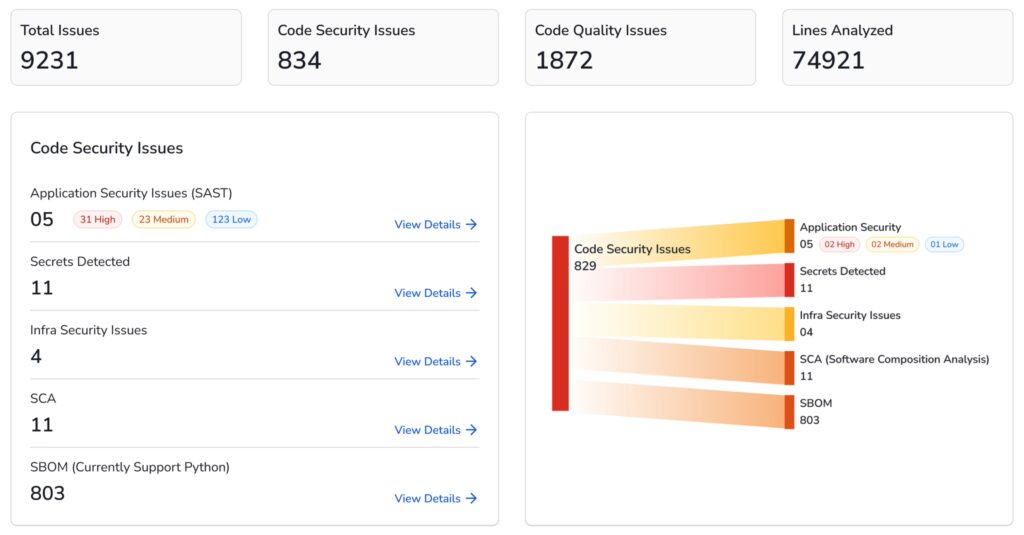
At scale, Gartner and IDC both recommend sandboxing and model governance as table stakes. Enterprises typically deploy AI coding tools together with: access controls, logging, approved model policies, and CI policy gates. Add automated code quality scanning specifically configured for AI-generated code patterns (CodeRabbit, Checkmarx, and Snyk have all added AI-specific detection capabilities in 2025–2026).
Monitor your team’s AI suggestion acceptance rate. The healthy range is 25–45%. Teams above 45% should audit whether accepted suggestions are surviving code review and production deployment without disproportionate rework. An acceptance rate above 45% often indicates uncritical acceptance — which is a leading indicator of future defect debt.
The Agent Horizon: What’s Coming Next
The current state of AI coding agents represents, by most informed estimates, somewhere between the very early innings and the middle of a very long game. Here is what the near-term trajectory looks like based on current development vectors and publicly announced roadmaps.
Asynchronous Cloud Agents
Claude Code’s Routines feature (scheduled cloud agents) and GitHub Copilot’s background coding agent (assign an issue and it works asynchronously via GitHub Actions) point to a paradigm where agents don’t just respond to prompts — they operate on schedules. A developer goes home; the agent continues addressing the backlog. By 2027, background agent work may be as normalized as scheduled CI/CD runs.
Multi-Agent Orchestration
The most sophisticated teams are already experimenting with agent networks: one agent handles planning and task breakdown, sub-agents handle discrete implementation tasks, a review agent checks output against standards, and a monitoring agent tracks behavioral anomalies. LangChain (used by 33% of agent developers), Ollama (51%), and emerging agent-native orchestration frameworks are the current infrastructure layer for this architecture.
The Skill Atrophy Question
MIT Technology Review surfaced a concern that deserves serious attention: Luciano Nooijen, an engineer who used AI tools heavily at work, began a side project without access to those tools and found himself struggling with tasks that previously felt instinctual. A Stanford University study found that employment among software developers aged 22–25 fell nearly 20% between 2022 and 2025 — coinciding with the rise of AI-powered coding tools. The long-term effects on the profession’s skill base are a live, unresolved question. Teams that care about engineering craft are beginning to implement deliberate “no-AI” practice protocols, much as athletes still run drills.
By 2026, Gartner estimates that up to 40% of enterprise applications will integrate with task-optimizing AI agents. The bottleneck is no longer model capability — it is governance, trust calibration, and the organizational capacity to review AI output at the pace AI produces it. The teams that win will be those who solve the review bottleneck, not those who simply deploy the most powerful model.
Verdict: Which Tool for Which Team
No single tool dominates every scenario. Here is the decision matrix, built from real production experience rather than vendor demos:
| Your Situation | Primary Recommendation | Secondary | Skip |
|---|---|---|---|
| Solo developer, fast iteration | Cursor (Pro) | Claude Code (Pro) | Sourcegraph Cody |
| Enterprise, GitHub-locked environment | GitHub Copilot (Business/Enterprise) | OpenCode (offline) | Claude Code Max |
| Complex legacy codebase migration | Claude Code (Max) | Cursor (for daily editing) | Inline-only tools |
| Air-gapped / security-first environment | OpenCode (local models) | Cline (OSS) | Any cloud-only agent |
| Startup team, OpenAI ecosystem | OpenAI Codex | Cursor | Sourcegraph ($16K/yr) |
| Google/GCP-native team | Gemini CLI | GitHub Copilot | Claude Code (if non-essential) |
The Hybrid Workflow Is the Competitive Advantage
The developers and teams extracting the most value from AI coding agents in 2026 are not those who found the single “best” tool — they are those who built deliberate hybrid workflows that leverage each tool’s genuine strengths. Fast inline editing (Cursor or Copilot) + complex autonomous refactoring (Claude Code) + open-source flexibility (OpenCode for sensitive workloads) is a stack that reflects how these tools actually complement each other.
The bottleneck has moved. It is no longer how fast you can write code. It is how fast your team can review, validate, and ship code that meets production standards. Optimize for that, and the choice of which AI coding agent to use becomes secondary to the quality of the process surrounding it.
The single most important thing any engineering organization can do in 2026 is measure AI’s actual impact with system data, not self-reported sentiment. Teams that track DORA metrics, code churn, and defect rates alongside AI adoption will identify what’s working and what isn’t. Teams that measure only developer satisfaction will accumulate technical debt they can’t see coming.
Explore More on Trendix.tech
Deep analysis on AI, developer tools, and the future of technology
Best AI Tools for Developers in 2026
A comprehensive ranked guide across every category of developer tooling, from code review to deployment.
Read now →The AI Productivity Paradox Explained
Why 84% adoption hasn’t translated to enterprise-wide delivery gains — and what actually moves DORA metrics.
Read now →AI Security Framework Guide for CTOs
NIST, OWASP, ISO/IEC 42001 — the governance playbook every engineering leader needs before deploying agents at scale.
Read now →Vibe Coding: Rise, Reality, and What Comes Next
From Andrej Karpathy’s viral term to production workflows — an honest assessment of the no-code-via-AI movement.
Read now →Claude Code: The Complete Guide (2026)
Installation, configuration, prompt strategies, and real-world use cases — everything you need to get value from Claude Code.
Read now →How to Measure AI ROI in Engineering Teams
The metrics framework used by top-quartile teams achieving 4–6× ROI: beyond LOC and PR counts.
Read now →Multi-Agent Orchestration in Software Development
How leading engineering orgs are building networks of specialized agents — and the infrastructure stack making it possible.
Read now →The Future Role of the Software Engineer
Skill atrophy, junior employment declines, and the shift from writing code to orchestrating agents — what it means for your career.
Read now →GitHub Copilot vs Cursor: Which IDE Plugin Wins?
Cursor vs Claude Code: Developer Workflow Deep Dive
AI for Developers & Indie Hackers: The 2026 Reality Check
Cursor vs Claude Code: 6 Months in Production — Which Is Actually Better?
Prompt Engineering for Non-Techies: The Solopreneur’s Complete Guide
AI Coding Assistants: The Complete 2026 Guide