

AI Lead Generation · June 2026
21 AI Lead Generation Techniques That Actually Work
61% of B2B teams now use AI for lead scoring. Up from 23% just eighteen months ago. The gap between the teams at the top quartile — 28% MQL-to-SQL — and the median at 13% has never been wider. These 21 techniques explain that gap. Not theory. Not the product of three blog posts synthesized into one. Operational specifics, failure modes included.
Here’s the uncomfortable starting point: AI lead generation programs that remove humans from the qualification step produce more meetings but 41% fewer opportunities. The technology isn’t the problem. The deployment model is. Most articles on this topic skip that caveat. This one won’t.
I’ve watched demand-gen teams in SaaS, professional services, and manufacturing adopt AI tooling over the past two years with wildly divergent results. The common factor in programs that stall isn’t the choice of tool. It’s the assumption that automation is a replacement for judgment rather than an amplifier of it. What follows is a technique-by-technique breakdown of what’s working — with the non-obvious failure modes beside each one, because those are what the vendor comparisons leave out.
Category 01 — Identification
Knowing Who to Call Before They Raise Their Hand
The old model: a prospect fills out a form, an SDR calls the next morning. The problem is that by the time a B2B buyer submits a form, they’ve already consumed 70–80% of their decision-relevant content elsewhere. You’re late to a conversation that started without you. The following techniques move the identification window earlier — sometimes weeks earlier.
Dark Funnel Intent Capture via 6sense / Bombora
The “dark funnel” isn’t a metaphor — it’s a real category of anonymous buyer activity: reading G2 reviews, downloading competitor comparison PDFs, searching in private browser tabs. 6sense and Bombora tap into publisher co-op networks and anonymous session IDs to surface accounts that are researching your category before they’ve touched your domain. The Forrester Wave named 6sense a Leader in B2B Revenue Marketing Platforms (Q1 2026) specifically for this capability.
What it actually does: Surfaces accounts 3–6 weeks before they would normally appear in your pipeline. That window is where deals get shaped. According to 6sense’s own 2025 State of B2B Marketing report, intent-qualified outreach produces 40–60% higher reply rates versus cold volume approaches.
Failure mode: Intent signal accuracy degrades below about 70–85% for smaller accounts with low website traffic volume (per Improvado’s 2026 tool analysis). Don’t chase long-tail accounts with intent data — the signal-to-noise ratio collapses.
Predictive ICP Refinement with Machine Learning
Most ICPs are built once during a planning session and go stale immediately. A predictive model built on your own CRM data continuously reweights the attributes that correlate with closed-won deals — which are almost never the attributes your sales team would guess. I’ve seen teams discover that “companies that switched project management tools in the last 6 months” was a stronger closed-won signal than “Series B funding.” Nobody put that in the original ICP.
What it actually does: Tools like Clay combined with Salesforce Einstein or HubSpot’s predictive scoring ingest historical CRM data and re-rank ICP attributes by predictive power. The critical prerequisite: clean CRM data. Garbage in, garbage out isn’t a cliché here — it’s the primary reason these implementations fail. Sync your CRM, website analytics, enrichment tools, and social platforms into a unified pipeline before you touch a prediction model.
AI-Powered Website Visitor De-Anonymization
Roughly 98% of website visitors leave without converting. IP-resolution tools — Clearbit Reveal, Warmly, Dealfront — match anonymous sessions to company records in real time. The 2026 version of this technology goes further: it layers in the visiting page, session depth, and return visit frequency to generate a micro-intent score per account, not just an identity.
What it actually does: Turns your analytics from a rear-view mirror into a live prospecting stream. A VP of Engineering who spent 11 minutes on your pricing page and then visited your security documentation is a different signal than someone who bounced from the homepage. Warmly (Y Combinator-backed) integrates this directly into Slack alerts for SDRs, so that outreach happens within the same business day — not the next week when the window has closed.
Worth noting: GDPR and privacy laws vary. B2B visitor identification is generally defensible (you’re identifying companies, not individuals), but verify your legal basis if you’re targeting EU accounts.
Technographic Targeting via BuiltWith / Datanyze
If your product replaces or integrates with specific tools, technographic data — what software stack a company is running — is a precision signal that firmographics can’t replicate. A company running Salesforce + Marketo + Outreach is a fundamentally different buyer than a company on HubSpot. Tools like BuiltWith, Datanyze, and ZoomInfo’s technographic layer scrape public-facing technology signals and enrich prospect records.
What it actually does: Narrows cold lists dramatically. One SaaS company I tracked reduced their outbound list from 40,000 accounts to 6,200 using technographic filters — and their reply rate tripled because every message could reference the specific tool they were integrating with. Not “we integrate with your CRM.” “We integrate with Salesforce’s flow builder, which you appear to be using on your career page.”
Category 02 — Scoring & Enrichment
Stop Ranking Leads. Start Predicting Buyers.
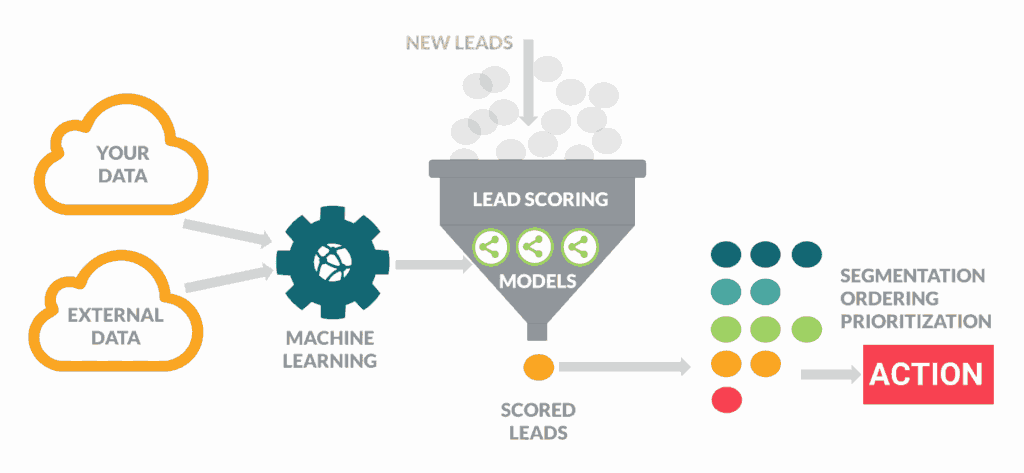
Traditional lead scoring is a human-designed point system that ages badly. Someone decided “webinar attendance = 5 points” and “pricing page visit = 10 points” in 2022 and hasn’t touched it since. AI-driven scoring rewrites those weights continuously against actual conversion data. The difference in output accuracy is not marginal.
Predictive Lead Scoring with Dynamic Weight Adjustment
The key word is “dynamic.” A static predictive model trained on last year’s data will drift as market conditions shift. The platforms doing this well — Salesforce Einstein, 6sense, HubSpot’s predictive engine — retrain their models on rolling windows of conversion data, not a single historical snapshot. This means the score for a given lead changes as new behavioral data comes in, not just when the lead takes an obvious action.
What it actually does: Reduces wasted SDR time on false positives. Digital Applied’s Q1 2026 benchmark (n=1,500) shows AI lead scoring crossed majority B2B adoption at 61% — up from 23% in 2024 — specifically because the ROI is measurable in reduced time-per-qualified-lead.
Implementation note: Configure the model to ingest behavioral data (website visits, email engagement, content downloads), firmographic data (company size, industry, revenue), and intent signals. Don’t treat these as equal inputs — weight behavioral recency more heavily than firmographic fit for accounts already in the funnel.
Waterfall Data Enrichment (Clay’s Multi-Source Model)
Single-source data enrichment fails at an embarrassing rate — email bounce rates confirm this more bluntly than vendor claims do. Waterfall enrichment runs each data field (email, phone, job title, LinkedIn URL) through a priority stack of providers until a valid result is found. Clay’s approach sequences providers differently per field: ZoomInfo for direct dials, Apollo for work emails, LinkedIn scraping for current title. The result: materially higher contact accuracy without paying for enterprise contracts across all providers simultaneously.
What it actually does: Prospeo (a competing enrichment tool) claims 98% email accuracy at $0.01/lead. I haven’t independently verified that figure, but even a 15% improvement in deliverability has a compounding effect on reply rates that compounds further with each step of the funnel.
The real cost: Clay requires meaningful setup time and workflow design competence. It’s not a plug-and-play tool. Factor 40–60 hours of configuration before it runs cleanly at scale.
Buying Committee Mapping with AI Graph Analysis
Enterprise B2B deals don’t have one buyer — they have buying committees averaging 6–10 people across IT, finance, legal, and the business unit. Outbound programs that target only the economic buyer fail when the champion hasn’t socialized the solution internally. ZoomInfo’s GTM Context Graph (2026 update) analyzes billions of signals to identify active stakeholders in an account’s evaluation process — not just the person with budget authority, but the person building the internal business case.
What it actually does: Surfaces the champion (the internal advocate), the blocker (usually legal or IT security), and the economic buyer as separate personas requiring separate messaging. Smartsheet documented an 84% MQL lift using ZoomInfo’s account prioritization layer after implementing buying committee mapping as a pre-outreach step.
Category 03 — Outreach & Personalization
Why “Personalization at Scale” Has an Expiration Date
The phrase “personalization at scale” is 18 months from becoming meaningless. When every SDR team uses the same LLM to generate “personalized” cold emails referencing the prospect’s last LinkedIn post, the prospect’s inbox starts filtering for exactly that pattern. The techniques that work now are the ones that use AI for signal processing and human writers for the sentences the prospect actually reads.
Signal-Triggered Outreach (not Scheduled Sequences)
A scheduled 5-email sequence sent to everyone who hits “ICP = true” is automation theater. Signal-triggered outreach fires based on a specific event: a prospect’s company just raised funding, their primary competitor just had a product failure, they just posted about a pain point your product addresses. AiSDR and Apollo.io’s AI layer monitor these signals continuously and generate outreach within hours of the event, not the following Monday.
What it actually does: AiSDR ran a case study showing response rates going from 0% to 10.71% by switching from time-based sequences to signal-based outreach. That’s not a marginal improvement. The mechanism is simple: timing relevance is the most underrated personalization dimension. A message that arrives while someone is actively thinking about a problem converts at a fundamentally different rate than the same message sent three weeks later.
If you’re running Apollo sequences on a Tuesday/Thursday cadence because “those are the best days to send,” stop and reconfigure around trigger events instead. You don’t need more touchpoints. You need better-timed ones.
AI Video Personalization at Scale (Sendr / Vidyard AI)
AI video personalization — where a 60-second video is dynamically rendered with the prospect’s name, company logo, and a personalized first line — crossed the uncanny valley in late 2025. Sendr’s lipsync and voice cloning technology now generates genuinely human-feeling video at roughly $0.12 per fully enriched lead. The platform combines a 479M lead database with video generation, making it possible to send prospect-specific video introductions at SDR-team scale without SDR-team headcount.
What it actually does: The 2024–2025 data on video in cold outreach shows 30–50% higher reply rates versus text-only email, though these numbers vary significantly by industry and buyer persona. Technical buyers are more skeptical of the format; marketing and creative roles respond better. Segment accordingly before deploying.
The catch: LinkedIn’s 2025 algorithm update penalizes bot-like outreach behavior. Automated LinkedIn video + connection request sequences are being detected and suppressed. Use video via email first, LinkedIn second.
LinkedIn AI Prospecting with Sales Navigator + CoPilot AI
LinkedIn’s Sales Navigator added an AI Assistant layer in 2024–2025 that recommends accounts based on activity signals, identifies decision-maker changes (a consistent predictor of openness to new vendors), and surfaces leads that match your closed-won patterns from CRM sync. CoPilot AI runs on top of Sales Navigator to identify high-intent prospects before they engage with your content — similar to dark funnel logic, but native to LinkedIn’s own engagement data.
What it actually does: LinkedIn converts visitors to leads at 2.74% — versus 0.77% on Facebook and 0.69% on X (data via Martal.ca, 2026). That 3.5x conversion advantage justifies LinkedIn-specific investment. But 89% of B2B marketers already use LinkedIn for lead gen, which means standing out on the platform requires better segmentation, not more volume.
The specificity that works: targeting people who recently engaged with a competitor’s content, or who just started a new role (first 90 days in seat = highest receptiveness to new vendor conversations). Sales Navigator’s AI Assistant surfaces both signals natively as of Q1 2026.
Hyper-Personalized Email with AI + Human Editing
The hybrid model that’s producing the strongest results in 2026: AI drafts the first paragraph using prospect-specific signals (job change, recent post, company news), a human editor rewrites any sentence that sounds generated, and the send happens through a warmed domain with a deliverability monitor. The AI handles research and structure. The human handles voice. Neither is optional.
What it actually does: B2B email open rates have stabilized at 21.3%, but reply quality is up — fewer replies but higher intent (Forrester / Demand Gen Report, 2026). The implication: optimizing for open rate is the wrong metric. Optimizing for reply-to-meeting conversion is what the top quartile does differently.
Tools that work together here: Lemlist for AI draft generation + personalization variables, Instantly.ai for deliverability infrastructure, Clay for enriching the variables that go into Lemlist’s AI layer. The three-tool stack runs at approximately $400–800/month at mid-market scale.
AI Multi-Channel Sequence Orchestration
The channel coordination problem: an SDR sends an email on Monday, a LinkedIn connection request on Wednesday, and a call on Friday — without any intelligence linking those touchpoints. The prospect gets three disconnected impressions. AI orchestration tools (Outreach.io’s AI layer, Salesloft’s Signal) track cross-channel engagement and adjust the sequence dynamically: if the prospect opened the email three times but didn’t reply, that’s a buying signal that should accelerate the LinkedIn step, not restart the cadence from scratch.
What it actually does: Top performers now run 11-touch nurtures over 90 days versus the 7-touch/60-day average (Demand Gen Report 2026). The additional touchpoints are worthless without cross-channel context. AI orchestration provides that context automatically.
Category 04 — Inbound & Conversational AI
The Website Isn’t a Brochure Anymore
In early 2026, approximately 14% of B2B websites have deployed conversational AI for lead capture. Forrester projects that number hits 62% by Q2 2027. The teams building this infrastructure now are not trying to reduce headcount — they’re trying to remove the 47-minute average response time between a form submission and the first human contact. That window is where high-intent leads go cold.
AI Conversational Qualifier on High-Intent Pages
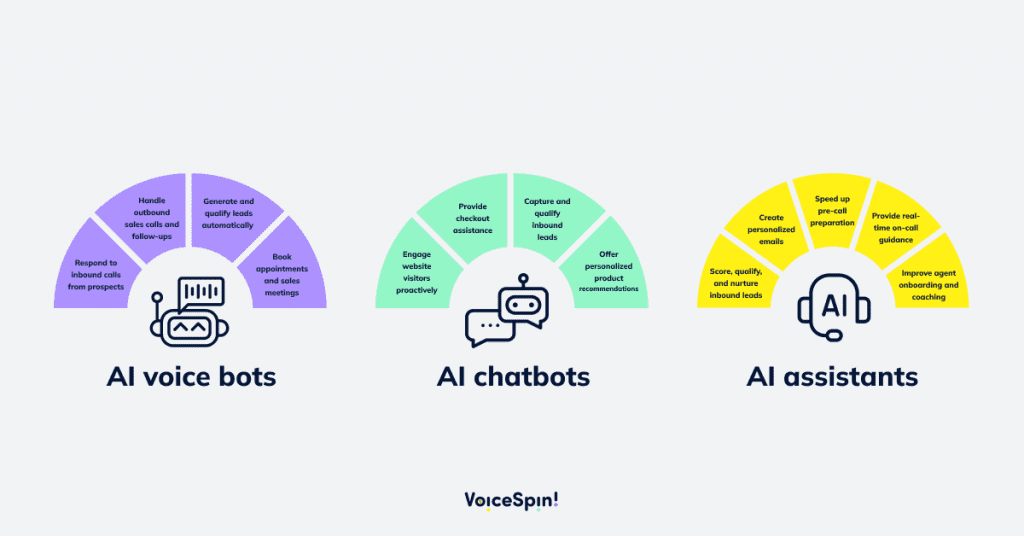
Deploying a chatbot on every page is not this technique. Deploying an AI qualifier specifically on pricing, demo request, and comparison pages — where visitor intent is already established — is. Drift, Qualified, and Intercom’s AI layer run qualification conversations that screen for ICP fit, timeline, and deal size before routing to a human. The qualification happens in under 3 minutes, 24/7.
What it actually does: The mechanism is response speed. Research cited by multiple 2026 lead gen analyses shows that responding to inbound within 5 minutes vs. 30 minutes increases the probability of qualifying the lead by roughly 21x. An AI qualifier eliminates the response time variable entirely for after-hours and weekend traffic — which is when a significant percentage of B2B research actually happens (when buyers have uninterrupted time).
The 41% problem: Forrester’s 2026 data shows pure-AI programs without human handoff produce 41% lower meeting-to-opportunity conversion. The handoff design matters as much as the AI layer. Build the escalation logic before you build the chatbot.
AI-Powered Webinar Lead Scoring
73% of B2B marketers say webinars produce their best-quality leads (Martal.ca, 2026 benchmark). The problem is that webinar attendee lists are treated as flat — everyone who registered gets the same follow-up sequence regardless of whether they watched 4 minutes or 47. AI scoring layers (built into Zoom Webinars, ON24, or via Zapier into your scoring model) now ingest attendance duration, Q&A participation, poll responses, and post-session content engagement to generate per-attendee intent scores within hours of the event ending.
What it actually does: Converts a webinar from a top-of-funnel volume play into a mid-funnel qualification engine. The attendee who stayed 90% of the duration and submitted two questions is a sales call. The registrant who joined for 8 minutes needs a different nurture track. Without AI scoring, SDRs either call everyone (wasted time) or call nobody (wasted event).
AI Interactive Content for Progressive Profiling
Interactive content (assessments, calculators, configurators) drives approximately 2x the conversion rate of static content gated behind forms — because it delivers value before asking for data, and because the data collected is behavioral rather than self-reported. An ROI calculator that asks for company size, current spend, and expected outcome generates a richer ICP signal than a form asking for company name and email.
What it actually does: Each interaction with the tool reveals intent that progressive profiling layers into your CRM over multiple sessions. Tools like Outgrow and Typeform’s AI features now score the quality of engagement in real time, triggering SDR alerts when an interaction pattern crosses a qualification threshold. You end up knowing the prospect’s budget range, problem severity, and evaluation stage before the first call — and so does your AI scoring model.
Category 05 — Agentic AI & Autonomous SDR
What “Agentic AI” Actually Means for Your Pipeline
Agentic AI in lead generation means a system that makes sequential decisions — finding a prospect, researching them, drafting outreach, sending it, handling an initial reply, and routing to a human — without human approval at each step. The operational reality is that agentic systems handle up to 80% of routine SDR tasks well and fail at two things: novelty (a reply that doesn’t fit the expected response pattern) and relationship (any moment that requires authentic human warmth). Those aren’t small edge cases. Design around them.
Agentic AI SDR for Top-of-Funnel Automation
AI SDR platforms — AiSDR, 11x, Artisan — run the full prospecting workflow: ICP-matched prospect research, enrichment, personalized sequence generation, send scheduling, and reply detection. For high-volume outbound (300+ sequences/week), the economics are compelling: one AI SDR at $2,000–$4,000/month handling work that would require 2–3 human SDRs at $60,000–$80,000/year each.
What it actually does: By mid-2026, agentic AI is reportedly managing up to 80% of routine SDR tasks (per Martal.ca’s 2026 workflow analysis). The remaining 20% — discovery calls, objection handling, champion coaching — requires human reps. The mistake is not designing the handoff between the 80% and the 20% with as much care as the agentic system itself.
Where it currently fails: Complex multi-thread replies, negative sentiment that requires empathy, inbound referrals where tone matters more than efficiency. AiSDR’s reply classification catches most of these edge cases, but “most” is the operative word. Keep a human monitoring the reply stream even in a full-automation deployment.
AI Voice Outreach for Executive-Level Prospecting
57% of C-level buyers prefer phone outreach when connecting with new providers (Martal.ca, 2026). That preference has not changed despite the proliferation of email automation — which is partly why it hasn’t changed. AI voice tools (Vapi, ElevenLabs-powered agents, Bland AI) can now conduct initial qualification calls, handle objections from a trained script, and book meetings on the SDR’s calendar without human involvement on the call.
What it actually does: Extends phone-first prospecting to a volume that human SDRs can’t sustain. A single AI voice agent can make 200+ calls per day versus 40–60 for a human SDR. The conversion rates are lower (executive buyers are skeptical of AI callers once they recognize the pattern), but the math favors deployment at scale when the cost delta is applied.
The ethical note: Several markets now require AI voice agents to disclose that they are not human. Build this disclosure into the call opening. Prospects who are told upfront tend to engage more honestly than those who feel deceived after the fact — which has a downstream effect on the quality of meetings booked.
Multi-Agent Lead Generation Workflows
A multi-agent workflow assigns different AI agents to different sub-tasks — one agent researches the account, another identifies the buying committee, a third generates the outreach copy, a fourth monitors replies and routes exceptions. These agents share context through a central data layer (typically a CRM with an API), not through sequential handoffs in a single prompt. The architecture looks more like a sales team than a chatbot.
What it actually does: Eliminates the context loss that occurs when a single AI agent tries to handle too many distinct cognitive tasks in sequence. Clay’s workflow builder and Make.com’s AI modules support basic multi-agent architectures at mid-market scale. True enterprise multi-agent systems (using OpenAI’s Assistants API or Anthropic’s tool-use framework) require dedicated engineering resources — plan 3–6 months of build time before expecting consistent output quality.
Category 06 — Content & SEO as Lead Engine
The Long Game Still Wins. The Playbook Has Changed.
Content marketing produces roughly 3x the leads at 62% lower cost than traditional channels (Martal.ca, 2026 benchmark). Companies that blog consistently generate up to 13x more leads. These numbers are real — and they come with a caveat that most people applying them don’t honor: this is a 6–12 month investment that compounds, not a quarter-end tactic. In a world where 72% of B2B leaders say AI-generated content has hurt brand distinctiveness, the only content that generates qualified leads is content that could not have been written by a competitor’s AI prompt.
AI-Augmented Thought Leadership (Not AI-Replaced)
The distinction matters: AI-augmented means a human expert’s original insight is turned into long-form content with AI assistance for structure, SEO optimization, and distribution. AI-replaced means an AI writes the content and a human reviews it. The performance gap in organic search and lead quality between these two approaches has widened in 2025–2026 as Google’s Helpful Content signals have improved at detecting informational depth.
What it actually does: Thought leadership delivers a 748% ROI versus PPC/SEM’s 36% ROI — but it eats only a fraction of the budget that PPC consumes (First Page Sage, 2026, via Prospeo). The catch is that 748% requires genuine insight that serves the reader’s actual problem, not a padded 2,000-word AI synthesis. The lead quality from authoritative original content also converts at significantly higher rates downstream, making CPL comparisons somewhat misleading.
For trendix.tech readers building content programs: Trendix covers AI content strategy at the operational level — the gap between content production and content that actually generates pipeline is where most B2B programs lose months.
AI-Powered Programmatic SEO for Bottom-Funnel Pages
Programmatic SEO — creating large volumes of landing pages targeting specific long-tail queries — has been a grey-area tactic for years. The 2025–2026 version uses AI to generate page structures and populate them with real data (pricing comparisons, feature breakdowns, use case specifics) rather than templated text. The differentiator is data uniqueness: pages that surface proprietary data or legitimate third-party comparisons rank; pages that rephrase existing content do not.
What it actually does: Bottom-funnel queries (“best [your category] for [specific use case]”) convert at dramatically higher rates than awareness-level traffic. Capturing this traffic at scale requires either a large editorial team or a well-designed programmatic architecture. AI makes the latter feasible for mid-market companies without a 15-person content team.
Google’s 2025 position: Scaled content created for search engines rather than users remains a spam signal. The working criterion is whether each page uniquely serves a user’s specific need. If you’re scaling a template, it needs to scale a real answer, not a keyword.
Category 07 — Data Infrastructure & Privacy
First-Party Data Is Now a Competitive Moat
Third-party cookie deprecation is fully in effect across major browsers as of 2026. The organizations that invested in first-party data infrastructure before this shift are now running AI models on behaviorally rich, owned datasets. The organizations that didn’t are paying premium rates for third-party intent data of variable quality. This is not a future problem — it’s the current landscape.
First-Party Data Orchestration for AI Lead Gen
Every AI lead generation technique in this article performs better with cleaner, richer first-party data. The infrastructure play — connecting CRM, website analytics, product usage data (if SaaS), event attendance, and customer success interactions into a unified customer data platform — is the multiplier that most teams delay because it feels like an IT project rather than a marketing project. It is an IT project. It’s also the decision that most determines how much return you get from every other technique on this list.
What it actually does: Improvado’s 2026 AI lead gen analysis shows that centralizing fragmented marketing and sales data into a unified, analysis-ready format is the foundational requirement for accurate AI models. Without clean, unified data: predictive scoring drifts, intent signals are misweighted, and personalization uses stale attributes. In 2022, 40% of B2B marketers ranked first-party data collection as their leading response to privacy challenges. By 2023, that dropped to 27% — reflecting competing priorities. The teams that maintained that investment now have 2–3 years of proprietary behavioral data that can’t be replicated by competitors starting today.
The practical entry point: Before buying a new AI tool, audit your CRM hygiene. Run a deduplication and data completeness report. If your contact records are missing fields in more than 30% of cases, fix that before building any AI layer on top of it. The AI will learn your data quality, not compensate for it.
More on building durable AI-assisted marketing infrastructure: Trendix covers AI workflow architecture for marketing and growth teams at a practical operational level, including CDP selection and data pipeline design for B2B environments.
Decision Framework
Which Technique for Which Stage
| # | Technique | Best For | Time to Results | Impact | Primary Tool(s) |
|---|---|---|---|---|---|
| 01 | Dark funnel intent | Enterprise ABM | 4–8 wks | Very High | 6sense, Bombora |
| 02 | Predictive ICP refinement | Scaled outbound | 6–12 wks | Very High | Clay + Einstein |
| 03 | Website visitor de-anon | All B2B | 1–2 wks | High | Warmly, Clearbit |
| 04 | Technographic targeting | Product integration | 1–2 wks | High | BuiltWith, Datanyze |
| 05 | Predictive lead scoring | Inbound + outbound | 4–8 wks | Very High | HubSpot, Salesforce |
| 06 | Waterfall enrichment | Outbound at scale | 2–4 wks | High | Clay, ZoomInfo |
| 07 | Buying committee mapping | Enterprise (6+ months) | 6–10 wks | Very High | ZoomInfo GTM Graph |
| 08 | Signal-triggered outreach | Mid-market SDR | 1–3 wks | Very High | Apollo, AiSDR |
| 09 | AI video personalization | Mid-market email | 1–2 wks | High | Sendr, Vidyard |
| 10 | LinkedIn AI prospecting | All B2B | 2–4 wks | High | Sales Navigator + CoPilot |
| 11 | Hybrid AI email | All B2B | 2–3 wks | High | Lemlist + Instantly |
| 12 | Multi-channel orchestration | Complex sales cycles | 4–6 wks | High | Outreach, Salesloft |
| 13 | AI conversational qualifier | High-intent inbound | 2–4 wks | High | Drift, Qualified |
| 14 | Webinar AI scoring | Content-first GTM | 1 event | High | ON24, Zoom AI |
| 15 | Interactive content scoring | SaaS + professional svcs | 6–10 wks | Med | Outgrow, Typeform |
| 16 | Agentic AI SDR | High-volume outbound | 4–8 wks | Very High | AiSDR, 11x, Artisan |
| 17 | AI voice outreach | Executive prospecting | 2–4 wks | Med | Vapi, Bland AI |
| 18 | Multi-agent workflows | Enterprise GTM | 3–6 mo | Very High | Clay + Make.com + API |
| 19 | AI thought leadership | Content-led growth | 3–6 mo | Very High | LLM + editorial |
| 20 | Programmatic SEO | SaaS, marketplace | 6–12 mo | High | Custom + LLM |
| 21 | First-party data infra | All teams (foundation) | 3–6 mo | Very High | CDP + CRM + pipeline |
“Pure-AI programs without human handoff produced higher meeting volume but 41% lower meeting-to-opportunity conversion. The economics favor hybrid programs: AI handles top-of-funnel sequencing, humans handle qualification and discovery.”
— Forrester / Demand Gen Report, 2026Where This Leaves You
The Implementation Sequence Nobody Publishes
Most articles on AI lead generation give you a technique list and leave the sequencing question unanswered. The sequencing is where most programs fail. Here’s what the data implies about where to start:
Month 1–2: Data audit and CRM hygiene. No AI technique performs well on dirty data. Run a contact completeness report, deduplicate, and establish a data quality standard before buying anything else. Install website visitor identification (Warmly or Clearbit Reveal) in week one — it’s low-cost, low-complexity, and immediately surfaces active intent you’re currently invisible to.
Month 2–4: Predictive lead scoring and signal-triggered outreach. These two have the highest measurable impact on pipeline quality and can be deployed without heavy engineering. Configure your CRM’s AI scoring layer, connect it to a signal monitoring tool, and retrain your SDR workflow around trigger events rather than scheduled sequences.
Month 4–6: Enrichment waterfall and LinkedIn AI prospecting. Once your scoring model is generating reliable priority signals, the enrichment layer makes those signals actionable with accurate contact data. LinkedIn’s Sales Navigator AI Assistant, combined with signal data from your scoring model, gives you a precision outbound motion that’s meaningfully different from the volume approach most teams are running.
Month 6+: Agentic systems and intent data (6sense, Bombora). These require the foundational infrastructure above to justify their cost. Enterprise ABM programs built on weak CRM data and manual scoring don’t get significantly better by adding intent data — they get faster at the wrong thing.
The top quartile — those 28% MQL-to-SQL teams — are not running more tools. They’re running fewer tools with cleaner data, better signal processing, and a deliberate human-in-loop design. The AI does the work that doesn’t require judgment. The humans do the work that does. That division is where the 41% meeting-to-opportunity gap closes.
Nobody knows exactly what this looks like in 2027. Agentic AI is moving fast enough that specific tool recommendations will change. The underlying logic — qualify precisely, engage at the right moment, never remove human judgment from the points where it matters — that part doesn’t expire on a schedule.
Sources referenced: Digital Applied B2B Lead Generation Statistics 2026 (n=1,500, Q1 2026); Forrester / Demand Gen Report 2026; Salesforce State of Marketing 2024 (n=5,000+); Martal.ca Lead Generation Workflow Analysis 2026; First Page Sage 2026 Industry Report; 6sense 2025 State of B2B Marketing; ZoomInfo 2026 GTM Context Graph documentation; HubSpot State of Marketing 2026; Improvado AI Lead Generation Tool Analysis 2026; AiSDR signal-based outreach case study data; Prospeo B2B Lead Generation Statistics 2026.