


AI Research Agents: The Definitive Guide for 2025–2026
Everything you need to understand, evaluate, and deploy the new generation of autonomous research agents — from architecture fundamentals to real-world ROI data and a head-to-head breakdown of every major platform.
01. What Are AI Research Agents?
An AI research agent is an autonomous system that can independently plan, execute, and synthesize multi-step research tasks — searching the web, reading documents, running code, evaluating sources, and producing structured reports — without continuous human supervision.
The term sounds deceptively simple. For most of the 2010s, “AI assistant” meant a system that answered one question at a time, with no memory between turns and no ability to self-direct. What changed in 2024–2025 was the convergence of three capabilities that had previously existed only in isolation: long-context reasoning, reliable tool use, and autonomous planning.
Put those three together and you get something qualitatively different: a system that can receive a high-level objective (“analyse the competitive landscape for B2B SaaS pricing in EMEA”) and spend the next 10–30 minutes actually doing the work — iterating on its own hypotheses, discarding dead ends, retrieving fresh data, and assembling a citations-rich report with minimal hand-holding.
“Deep research accomplishes in tens of minutes what would take a human research analyst many hours to produce.”
— OpenAI, introducing Deep Research, February 2025
AI research agents differ from standard chatbots in one fundamental way: they act iteratively. A chatbot responds to the last message; an agent formulates a plan, executes it step by step, evaluates intermediate results, revises the plan if needed, and only delivers the final output when the work is actually done.
The three defining capabilities
Autonomous Planning
The agent decomposes a high-level goal into sub-tasks, sequences them logically, and decides which tools to use at each step — without being told how.
Iterative Retrieval
Rather than querying a search engine once, the agent runs 20–50 targeted searches per session, refines queries based on what it finds, and cross-references conflicting sources.
Structured Synthesis
The final output is a coherent, cited report — not a list of links. The agent summarises, compares, and interprets across hundreds of source documents.
02. How They Work: The Architecture Explained
Under the hood, every major AI research agent today shares a common architectural skeleton, even if implementations differ dramatically. Understanding it helps you evaluate tools intelligently and anticipate their failure modes.
The core loop
Intent Establishment
The agent parses your query and — in the best implementations — asks clarifying questions before committing to a research direction. This step is more important than it looks: a vague prompt produces vague results regardless of how sophisticated the rest of the pipeline is.
Research Planning
A planning model (often lighter and cheaper than the reasoning model) creates a structured outline of sub-questions to answer, tools to use, and the logical order for tackling them. Cobus Greyling’s analysis of OpenAI’s architecture notes that each sub-task is matched to a different language model — a cost-efficiency technique that lets expensive reasoning only happen where it’s needed.
Multi-Pass Retrieval
The agent runs iterative search queries — typically 20–50 per research session. Results are ranked by relevance and recency, with the agent re-formulating queries based on gaps it identifies. Perplexity’s Deep Research draws from 100–300 sources per report; OpenAI’s equivalent analyses hundreds of web pages and PDFs.
Reasoning & Synthesis
This is where a large, capable reasoning model (OpenAI o3/o4, Claude Opus 4, Gemini 2.5 Pro) does the heavy lifting: resolving contradictions between sources, inferring conclusions not stated explicitly, and building the argumentative spine of the final report.
Report Generation & Citation
The synthesised insights are formatted into a structured, readable document with inline citations, section headers, and often an executive summary. Premium agents like OpenAI’s Deep Research include a transparent “reasoning trace” so you can audit exactly how conclusions were reached.
Multi-agent orchestration: the next layer
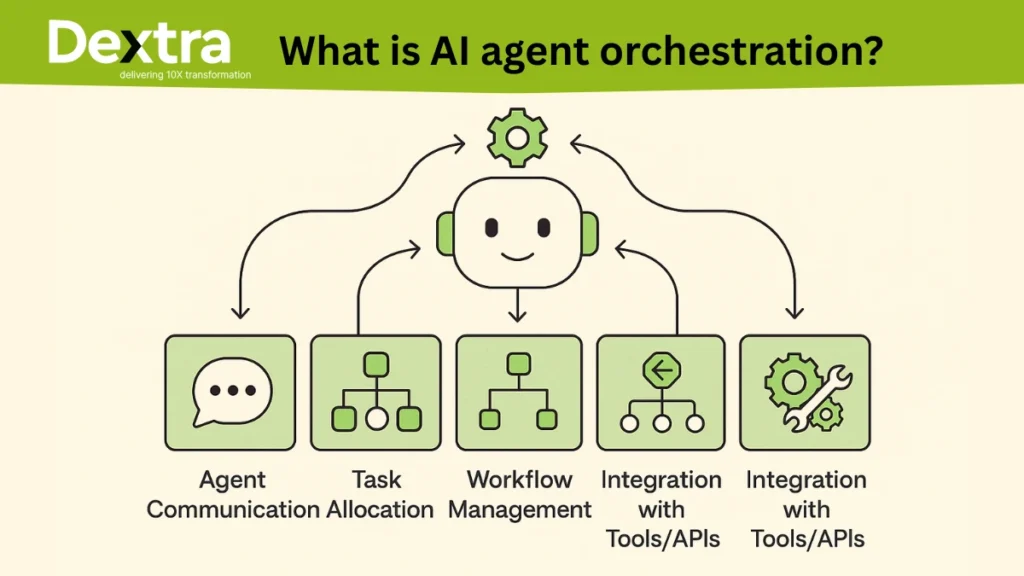
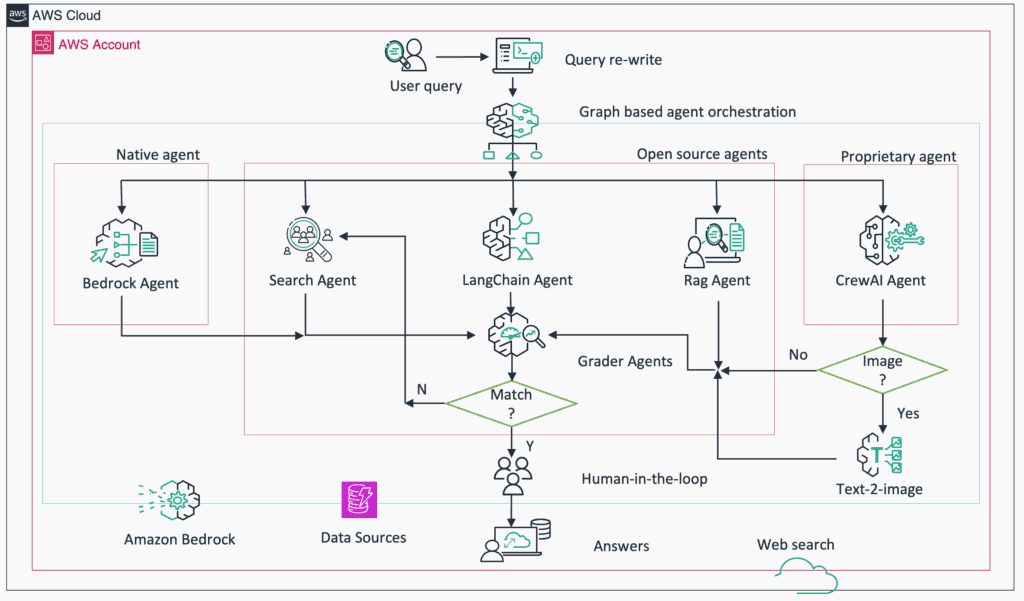
The most sophisticated production systems in 2026 don’t rely on a single monolithic agent. They use multi-agent orchestration — an orchestrator model delegates sub-tasks to specialist agents (a web-search agent, a code-execution agent, a document-reading agent, a fact-checker), collects their outputs, and assembles the result. This architecture is more resilient, more scalable, and more accurate than a single-agent approach, though it introduces new challenges around inter-agent communication and error propagation.
Long-context windows (100K–1M tokens) have become table stakes for research agents. Without them, agents lose track of earlier findings during a long session and produce incoherent reports. Always check context limits when evaluating a tool.
03. How We Got Here: The Evolution Timeline
04. Top AI Research Agent Platforms: Head-to-Head (2026)
There is now a well-defined first tier of research agent platforms, with Gemini 2.5 Pro, OpenAI Deep Research, Claude Research, and Kimi-Researcher clustered within four points of each other on the DeepResearch Bench. Here is an honest comparative breakdown.
| Platform | Best For | Speed | Source Volume | Free Tier | Status |
|---|---|---|---|---|---|
| OpenAI Deep Research | Complex analytical reports, multi-step reasoning | 7–20 min | 100–200 sources | 5 queries/mo | Production |
| Perplexity Deep Research | Fast-turnaround research, cited summaries | 2–4 min | 100–300 sources | Limited | Production |
| Google Gemini 2.5 Pro | Long-context synthesis, annotated research plans | 5–15 min | 100+ sources | Yes | Production |
| Claude Research (Anthropic) | Nuanced reasoning, long documents, code analysis | 5–15 min | 50–150 sources | Limited | Production |
| Kimi-Researcher (Moonshot) | Scientific literature, multilingual research | 8–20 min | 80–200 sources | Yes | Growing |
| Microsoft Copilot Deep Search | Microsoft 365 / SharePoint-centric orgs | 3–10 min | 50–100 sources | Limited | Growing |
| Glean | Enterprise internal knowledge research | 1–5 min | Internal only | No | Enterprise |
| You.com Research | Budget-friendly, transparent process view | 2–5 min | 50–100 sources | Yes | Growing |
OpenAI Deep Research vs. Perplexity: the practical difference
The bottom line: Perplexity wins on speed and source volume; OpenAI wins on reasoning depth and reliability for complex analytical tasks. For a quick competitive scan, Perplexity is often sufficient. For a research report that will inform a board decision, OpenAI’s greater methodical rigour pays dividends.
Match the tool to the task. Use Perplexity for fast literature scans (under 4 min), OpenAI Deep Research for high-stakes analytical reports, Gemini 2.5 Pro when you want to annotate the research plan mid-session, and Glean when the answers live in your own internal knowledge base — not on the public web.
05. Benchmarks and Performance Data
The field has developed increasingly rigorous evaluation frameworks. Three benchmarks now dominate the conversation: Humanity’s Last Exam (HLE), DeepResearch Bench, and BrowseComp.
Humanity’s Last Exam — accuracy scores
HLE is a 3,000-question test covering 100+ expert domains. It deliberately targets questions that require genuine expert-level knowledge, not just pattern matching. Scores below represent the state of play as of early 2026:
Note: HLE scores appear low in absolute terms — the test is intentionally extremely hard. Scores above 20% represent strong performance. Source: OpenAI, Perplexity AI, independent benchmarks 2025.
DeepResearch Bench — flagship cohort (2025)
| Model | DeepResearch Bench Score | Gap to Leader | Tier |
|---|---|---|---|
| Gemini 2.5 Pro | 48.9 | — | Tier 1 Leader |
| OpenAI Deep Research | 46.2 | –2.7 pts | Tier 1 |
| Claude Research | 45.8 | –3.1 pts | Tier 1 |
| Kimi-Researcher | 45.1 | –3.8 pts | Tier 1 |
| Perplexity Deep R. | 38.4 | –10.5 pts | Tier 2 |
| Microsoft Copilot | 33.1 | –15.8 pts | Tier 2 |
The remarkable story in the DeepResearch Bench data is the compression at the top: Gemini, OpenAI, Claude, and Kimi all sit within a 4-point spread. For most business use cases, the differences will come down to speed, cost, and ecosystem fit — not raw capability.
06. Real-World Use Cases and Verified ROI
Benchmarks measure capability under controlled conditions. What matters in practice is what organisations have actually achieved when they deployed these systems. The data below comes from named enterprise case studies published in 2025–2026.
| Organisation | Use Case | Outcome | Metric |
|---|---|---|---|
| Klarna | Customer service research agent | Handled workload of 853 FTE equivalents | $60M saved Q3 2025 |
| JPMorgan Chase | Investment banking presentations | Reports generated in 30 seconds vs. hours | 450+ use cases daily |
| Salesforce | Contract review automation | Automated legal document research | $5M legal cost reduction |
| AtlantiCare Health | Clinical note generation agent | 42% reduction in documentation time | 66 min saved per physician/day |
| Amazon | Product recommendation research | AI-driven product discovery | 35% of online sales influenced |
| Fortune 500 (avg) | Agentic AI across functions | Productivity and cost efficiency | 171% average ROI |
A 2026 Landbase analysis of enterprise deployments reports that 74% of executives achieved ROI within the first year of deploying AI agents, with 39% reporting productivity at least doubling. U.S. enterprises averaged 192% ROI — three times the return from traditional automation.
The research use case specifically
Within the broader agentic AI category, research and summarisation tasks have emerged as the single most common use case. A 2026 Langchain survey of over 1,300 professionals found that 58% cited research tasks and summarising large volumes of information as their primary application — ahead of workflow automation (53.5%) and customer service (45.8%).
Users of Perplexity Deep Research report 80–95% time savings on literature reviews and competitive analysis tasks, with consistently higher decision quality from the comprehensive, sourced output. Academic researchers using deep research tools complete PubMed literature reviews in under 4 minutes that previously took weeks.
07. Industry-by-Industry Breakdown
Financial Services
JP Morgan, Goldman Sachs, and major hedge funds now deploy research agents for earnings analysis, regulatory monitoring, and M&A due diligence. Investment research that took junior analysts days now runs in under an hour. Companies using AI agents for financial research report a 10–20% boost in sales ROI and up to 37% reduction in marketing research costs, per McKinsey.
Healthcare & Life Sciences
AI research agents are projected to generate up to $150 billion in annual healthcare savings by 2026 through automation and error reduction. Clinical literature review, drug interaction research, and regulatory submission drafting are the dominant applications. AtlantiCare achieved an 80% adoption rate among physicians within weeks of deployment.
Legal
Contract analysis, case law research, and regulatory change monitoring are natural fits for AI research agents. Salesforce cut $5 million in legal costs through contract automation. Law firms using AI research report 35% faster due diligence turnaround. The key advantage is that agents surface precedents human researchers commonly miss under time pressure.
Academic Research
A literature review that required weeks of PubMed crawling can now be completed in under 4 minutes, with 100+ cited studies, methodologies compared, and research gaps identified. DeepMind’s Demis Hassabis and John Jumper won the 2024 Nobel Prize in Chemistry for AlphaFold — an early signal of AI’s expanding role in scientific discovery.
Telecommunications
Telecom leads enterprise adoption of agentic AI at 48%, according to NVIDIA’s 2026 State of AI report. Network performance analysis, churn prediction research, and competitive benchmarking are primary use cases. The volume and complexity of network data makes it an ideal domain for autonomous research agents.
Retail & E-commerce
Retail & CPG adoption of agentic AI sits at 47%. Applications include market trend analysis, supplier research, competitor price monitoring, and consumer sentiment synthesis from thousands of review sources. Walmart, Target, and major European retailers have embedded research agents into their buying and category management workflows.
08. How to Deploy an AI Research Agent: A Practical Guide
The most common failure mode in enterprise AI agent deployments is not the technology — it is the organisational context around it. A 2025 McKinsey study found that nearly two-thirds of organisations have not begun scaling AI across the enterprise, despite 88% reporting regular AI use. The gap between using and scaling is closed by getting the deployment fundamentals right.
Identify a high-value, high-frequency research task
Start where the ROI is most visible. Competitive intelligence, literature reviews, regulatory monitoring, and contract analysis consistently deliver strong early returns. Avoid starting with tasks that require specialised internal data the agent cannot access.
Audit your data infrastructure first
70% of organisations discover fundamental data infrastructure limitations only after launching AI initiatives. Before deploying, ensure relevant data is structured, accessible, and governed. Research agents can only surface what they can reach.
Choose the right platform for your context
For public web research: Perplexity (speed) or OpenAI (depth). For internal knowledge bases: Glean or Microsoft Copilot. For scientific research: Gemini or Kimi. For regulated industries requiring data residency: evaluate enterprise tiers of each platform carefully.
Prompt with specificity and constraints
The quality of output scales directly with the quality of the initial prompt. Specify: the audience, the scope, the required depth, source preferences, the output format, and explicit exclusions. Vague prompts produce vague research. A well-structured research brief will consistently outperform an off-the-cuff query.
Implement a human review layer
AI research agents are powerful but not infallible. In 2026, even the best systems hallucinate approximately 5–10% of citations under pressure. Establish a human review stage — particularly for facts that will appear in client-facing or regulatory documents. This is especially critical in healthcare, legal, and financial contexts.
Measure, iterate, and scale
Track time-to-output, citation accuracy, and user satisfaction from week one. The fastest-ROI deployments are those where organisations ran structured pilots, measured hard metrics, and used the evidence to secure funding for broader rollout.
Prompt engineering tips for research agents
- Be explicit about scope. “Analyse the EMEA market for B2B SaaS pricing in 2024–2025, focusing on mid-market companies (50–500 employees)” will produce far more useful output than “research B2B SaaS pricing.”
- Specify your output format. Ask for executive summary + detailed sections + source list if that is what you need. Agents default to their own structure unless instructed otherwise.
- Define recency requirements. Instruct the agent to prioritise sources from the last 6 or 12 months for fast-moving topics. Without this, it may surface 2021 data for a fast-changing regulatory landscape.
- Use clarifying questions as a feature, not a friction point. Platforms like Gemini and Perplexity allow the agent to ask you follow-up questions before beginning research. Answer these thoroughly — they dramatically improve output quality.
- Iterate rather than regenerate. If the first output is 70% of what you need, follow up with specific corrections (“the section on regulatory compliance missed EU AI Act implications — please expand this”) rather than starting over. Context retention is now good enough to make iterative refinement faster than regeneration.
- Restrict to trusted domains for compliance-sensitive research. OpenAI Deep Research now supports restricting searches to specific trusted domains (February 2026 update). Use this for regulatory, medical, or financial research where source quality is non-negotiable.
09. Pitfalls, Risks, and Limitations
Honest assessment of limitations is as important as enthusiasm about capabilities. Here is what practitioners are actually encountering in production deployments.
Hallucination and citation errors
Even the best research agents fabricate citations at a non-trivial rate, particularly under long research sessions when context windows become strained. Never publish agent-generated citations without verification, especially in regulated domains.
Data privacy and security
37% of executives cite data privacy and security as their top concern when choosing an LLM provider. Research agents that query public web data may inadvertently surface proprietary information or expose search queries to third-party servers. Enterprise tiers with data residency guarantees exist but cost significantly more.
Infrastructure gaps
40% of AI agent projects fail due to inadequate data infrastructure. Research agents are only as good as their access to current, structured, and accurate data. Legacy systems built for human operators often cannot supply the continuous data access that agents require.
Integration complexity
60% of enterprise leaders cite legacy system integration as their primary scaling challenge, per Deloitte. Research agents that live in isolation — unable to write back to CRMs, wikis, or document management systems — deliver only half their potential value.
Lack of transparency
Stanford HAI’s 2025 Transparency Index flagged a concerning decline in transparency among major AI providers even as their models become more central to business operations. When deploying research agents in high-stakes contexts, insist on tools that expose their reasoning chains and source selection logic.
Web scraping ethics
Several research agent providers — including Perplexity, as reported by Cloudflare in August 2025 — have faced scrutiny for using undisclosed web crawlers that bypass robots.txt files. This creates compliance and reputational risk for enterprise users who may inadvertently rely on improperly gathered data.
“The companies seeing the most value from AI agents are more than three times more likely to say they intend to use AI to bring about transformative change — not just cost reductions.”
— McKinsey, The State of AI in 2025
10. What’s Coming Next: The 2026–2027 Horizon
The category is moving fast. Based on publicly announced product roadmaps, academic research, and signals from enterprise deployments, here are the developments that will define AI research agents over the next 12–18 months.
Multi-agent research teams
The DualGraph architecture (described in recent arXiv research) uses knowledge graph topology to systematically identify gaps in a research agent’s coverage. By 2027, expect research agents to internally spawn and coordinate specialist sub-agents for each domain, producing qualitatively deeper and more reliable outputs than today’s single-agent approaches.
Real-time enterprise data integration
MCP (Model Context Protocol) connectivity — already live in OpenAI Deep Research as of February 2026 — will proliferate across every major platform. Research agents that can simultaneously query your CRM, your internal documents, and the public web will make the distinction between “internal” and “external” research largely irrelevant.
Scientific discovery agents
Google’s AI co-scientist (built on Gemini 2.0), Anthropic’s Claude for Life Sciences, and OpenAI’s collaboration with Red Queen Bio (which improved a molecular-cloning procedure’s efficiency by 79x) point toward a near future where AI research agents operate as genuine scientific collaborators, not just literature browsers. Demis Hassabis has noted that AI could compress decades of biological research into years.
Guardian agents and governance
Gartner projects that “guardian agents” — systems that monitor and audit other AI agents — will capture 10–15% of the agentic AI market by 2030. As research agents are embedded in regulated workflows, the demand for AI-native compliance and auditing layers will drive a new product category.
Autonomous decision agents
Perplexity and Harvard’s large-scale field study found that users are primarily deploying agents for complex cognitive work, treating them as “thinking partners to scale their cognitive capabilities” rather than simple task-offloaders. By 2028, Gartner projects 15% of day-to-day enterprise work decisions will be made autonomously by AI agents — including research-informed recommendations.
AI research agents have moved from a compelling experiment to a proven productivity infrastructure. The organisations that are winning in 2026 are not those that adopted the technology earliest — they are those that deployed it most deliberately, with clear use cases, solid data foundations, and governance frameworks that allow them to scale confidently. The window to develop a meaningful head start is still open. But it is closing fast.
How to Write a Literature Review Using AI: Step-by-Step Guide
Personal AI Agents: Your Digital Self, Finally Unleashed
Notion + AI: From Smart Notes to Autonomous Agents
ChatGPT vs Claude vs Gemini vs Copilot vs Perplexity vs Grok: The Honest 2026 Verdict
9 AI Tools for Qualitative Researchers: Transcription, Coding, and Analysis Strategies That Actually Work
Cost Analysis: The Complete 2026 Guide
Qualitative Research Software in 2025: A Field Guide
Research Design Fundamentals: A Practical Framework